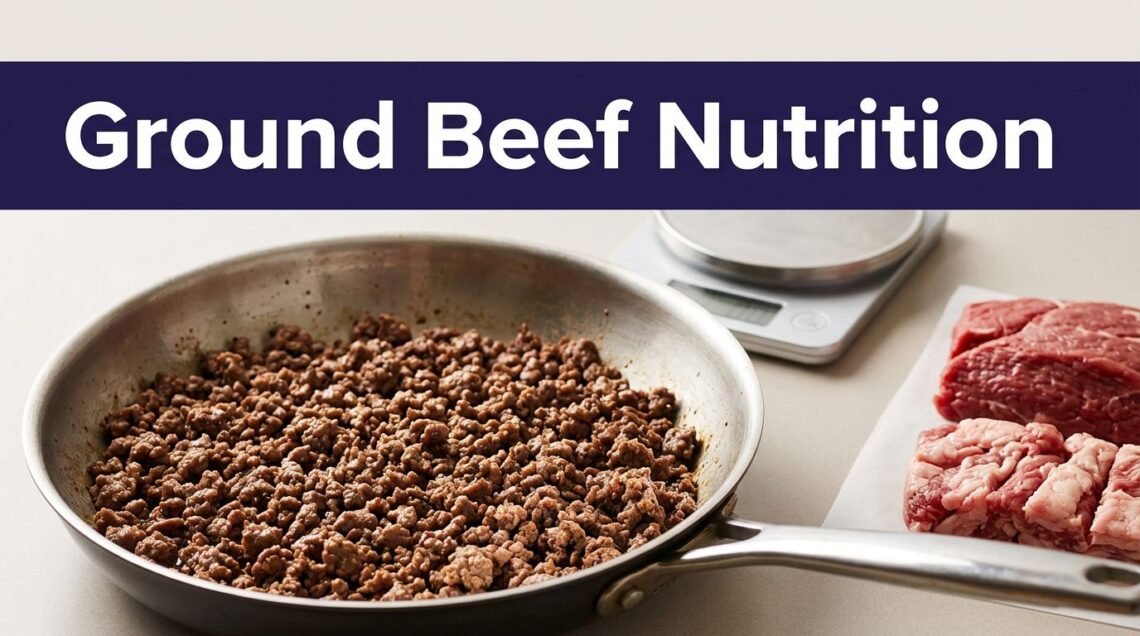
Ground beef can fit a high-protein dinner, a calorie-tracking plan, or a family taco night. The key is understanding ground beef nutrition and what the package percentage means before it hits the pan.
When you want to add red meat to your meal plan, remember that values change sharply between 80/20 and 93/7, even when the portion looks similar. Fat content affects calories most, while the protein content stays fairly steady across common blends.
Start with the serving size, then choose the lean ratio and cooking method that match your meal.
Key Takeaways
- Leaner ground beef has fewer calories and less total and saturated fat per serving, and choosing options like lean beef can further reduce fat intake.
- A 3-ounce cooked serving of 85/15 broiled ground beef provides about 213 calories, 22 grams of protein, and 13 grams of fat, while options such as grass-fed beef offer a slightly different nutrient profile.
- Package ratios describe lean meat and fat by weight before cooking, such as 90% lean and 10% fat.
- Cooking reduces the meat’s weight as water and fat leave the beef, so raw and cooked portions cannot be compared cup for cup.
- Draining cooked beef can lower saturated fat, though the final nutrition depends on the blend and cooking method.
Ground Beef Nutrition at a Glance
Ground beef nutrition starts with complete protein, meaning it provides all nine essential amino acids your body needs from food. By supplying a full profile of amino acids, it helps build and maintain muscle mass. It also supplies vitamin B12, zinc and iron, selenium, phosphorus, and several B vitamins.
A useful reference point is 3 ounces of cooked 85/15 ground beef, about the size of a deck of cards. A USDA-style listing for a broiled patty provides approximately:
- 213 calories per 3-ounce cooked serving
- 22 grams of protein per 3-ounce cooked serving
- 13 grams of total fat per 3-ounce cooked serving
- 5 grams of saturated fat per 3-ounce cooked serving
- 77 milligrams of cholesterol per 3-ounce cooked serving
- 61 milligrams of sodium per 3-ounce cooked serving
- 0 grams of carbohydrate per 3-ounce cooked serving
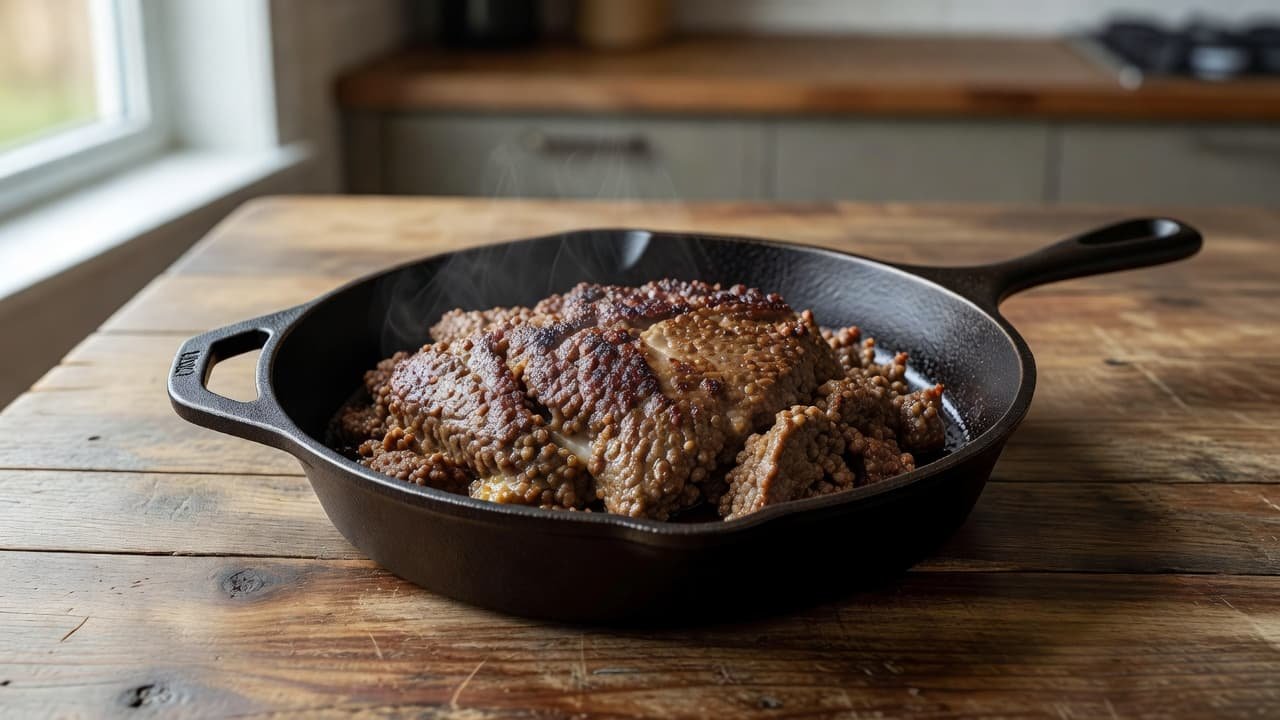
Beef is naturally low in carbohydrates, so it works well with beans, potatoes, rice, vegetables, or whole-grain pasta. However, ground beef itself isn’t a meaningful fiber source. The rest of the plate matters.
Nutrient values also vary by brand, cut blend, added ingredients, and preparation. For the most precise entry, search the package type and preparation method in USDA FoodData Central.
A package’s lean percentage describes the raw product. Your plate contains a smaller cooked portion after moisture and some fat cook out.
Ground Beef Nutrition by Lean-to-Fat Ratio
The number on a ground beef package is simple once you know the pattern. An 80/20 blend contains 80% lean meat and 20% fat by weight before cooking. A 93/7 blend contains 93% lean meat and 7% fat.
The following comparison uses a 4-ounce raw serving, or 113 grams, for every entry. Values are approximate USDA-style averages and may vary somewhat by product.
| Ground beef ratio | Calories per 4 oz raw | Protein per 4 oz raw | Total fat per 4 oz raw |
|---|---|---|---|
| 80% lean / 20% fat | About 287 | About 19 g | About 22 g |
| 85% lean / 15% fat | About 250 | About 21 g | About 17 g |
| 90% lean / 10% fat | About 199 | About 22 g | About 11 g |
| 93% lean / 7% fat | About 172 | About 24 g | About 8 g |
Moving from 80/20 to 93/7 reduces the calorie content and cuts dietary fat significantly per 4-ounce raw serving, while similar ratio differences apply when you choose grass-fed beef. Protein rises modestly because a greater share of the weight comes from lean tissue.
That doesn’t make regular ground beef a poor choice. An 80/20 blend often makes juicier burgers, meatballs, and chili. Lean beef has a drier texture, so it benefits from sauces, vegetables, broth, or ingredients such as mushrooms and onions.
For a detailed look at food entries for 80% and 90% lean products, use the USDA beef food search. Match raw entries with raw portions and cooked entries with cooked portions.
Why Cooked Ground Beef Weighs Less
A common tracking mistake starts with a raw package and ends with a cooked serving. Ground beef loses water during cooking, which concentrates the protein content and changes the overall weight. It can also lose rendered fat, especially when you crumble it in a skillet and drain it.
For example, 4 ounces of raw beef won’t remain 4 ounces after cooking. If you log the cooked weight using a raw food entry, calorie and protein estimates can drift. The opposite mistake can happen when you log raw beef with a cooked entry, which alters the expected calorie content if moisture loss isn’t accounted for properly.
Use one method consistently:
- Weigh the beef raw and log a raw entry that matches its lean ratio.
- Or weigh the finished beef and log a cooked entry that matches the preparation method.
Broiling, pan-cooking, baking, and simmering don’t produce identical results. A 3-ounce cooked serving of 85/15 broiled beef has about 213 calories, 22 grams of protein, and 13 grams of fat. A baked meatloaf-style preparation can retain more fat and calories per cooked serving.
Draining matters, but it doesn’t turn a higher-fat blend into extra-lean beef. Some fat remains in the meat, and any pan drippings left in chili, tacos, pasta sauce, or a casserole remain part of the meal. Rinsing drained crumbles with hot water may remove more surface fat, though it can also reduce flavor.
Protein and Micronutrients in Ground Beef
Protein gets most of the attention, yet ground beef offers more than macros. A 3-ounce cooked serving of 85/15 broiled beef provides an impressive protein content along with all the essential amino acids needed to support muscle growth.
Beef also supplies heme iron, which promotes much higher iron absorption than the form found in plant foods. It contains vitamin B12, which supports normal red blood cell formation and nerve function, plus zinc for immune function and wound healing. Other essential micronutrients include selenium, which helps support thyroid hormone metabolism.
The amounts vary by blend and portion, but leaner choices do not erase these nutrients. The larger difference is usually the fat and calorie total. That makes 90/10 or 93/7 practical for bowls, stuffed peppers, sauces, and weeknight skillets where you want a generous serving without many extra calories.
Ground beef contains little sodium before seasoning. A plain 3-ounce cooked serving of 85/15 broiled beef has about 61 milligrams of sodium. Taco seasoning, cheese, buns, jarred sauce, and salty condiments often contribute much more sodium than the beef.
Saturated Fat in Context
Ground beef contains saturated fat, and higher-fat blends contain more of it. In the 85/15 example, 3 ounces of cooked broiled beef supplies about 5 grams of saturated fat.
That amount doesn’t need to dictate a meal by itself. When considering how dietary fat impacts overall health, it helps to look at the full pattern of foods you eat across the day and week. If breakfast includes bacon and cheese, a 93/7 beef dinner may help keep the day’s saturated fat lower. If you choose an 80/20 burger, pair it with a vegetable-heavy side and skip adding multiple rich toppings.
Portion size also has more influence than many shoppers expect. Two 3-ounce cooked patties provide twice the calories, protein, fat, and saturated fat of one. A burger that begins as a large raw patty may still be a substantial serving after cooking.
For people monitoring blood cholesterol levels and navigating dietary guidance related to heart disease, leaner beef can make room for beneficial fatty acids, including monounsaturated fat, found in foods like olive oil, nuts, seeds, avocado, and fish. Because managing intake of saturated fat and cholesterol is just one piece of the puzzle regarding heart disease, no single food determines the quality of a diet. Frequency, portions, vegetables, fiber-rich foods, and overall calorie intake all count.
Choosing the Right Ground Beef for Your Meal
Choose 80/20 when richness and browning are central to the recipe. It works well for grilled burgers, smash burgers, and meatballs. Since it releases more fat, drain it before adding it to a sauce or casserole if you prefer a lighter finished dish. When selecting this type of conventional red meat, you get a higher concentration of monounsaturated fat compared to leaner options.
An 85/15 blend offers a middle ground. It still has enough fat for tender burgers and flavorful tacos, while its calorie count is lower than 80/20. For many home cooks, it balances taste and everyday flexibility.
Pick 90/10 or 93/7 for meals where the beef is mixed with other ingredients. Lean blends work especially well in lettuce wraps, burrito bowls, pasta sauces, shepherd’s pie, and stuffed vegetables. Add moisture through tomatoes, onions, stock, salsa, or finely chopped mushrooms instead of extra oil. Choosing lean beef options like grass-fed beef or grass-finished beef allows you to enjoy red meat while increasing your intake of beneficial fatty acids.
If you want to maximize your nutrition, consider buying grass-fed beef or grass-finished beef. These options typically contain higher levels of omega-3 fatty acids, conjugated linoleic acid, and overall omega-3 fatty acids than grain-fed alternatives.
Check the Nutrition Facts panel when comparing brands. Ground beef can differ slightly because of its source cuts and processing. Some products also include added seasonings or solutions, which change sodium and other numbers.
A Practical Portion Guide
A 3-ounce cooked portion is a useful baseline for one person. It provides a solid amount of protein without making this red meat the only feature of the plate, while conveniently delivering essential nutrients like vitamin B12 and selenium.
Build around it with foods that add what ground beef lacks:
- Add black beans, lentils, or whole grains for fiber and extra plant protein.
- Use leafy greens, peppers, tomatoes, broccoli, or squash for volume and micronutrients.
- Include fruit or a dairy food if the rest of your day needs calcium or potassium.
- Choose a flavor-forward sauce with moderate sodium rather than relying only on cheese or processed toppings.
This approach also makes lean ground beef more satisfying. A taco bowl with 3 ounces of 90/10 cooked beef, beans, salsa, corn, and greens feels generous because it combines protein, fiber, and volume.
Frequently Asked Questions
What does the 80/20 label mean on ground beef?
The numbers on the package represent the ratio of lean meat to fat by weight before cooking. An 80/20 blend contains 80% lean meat and 20% fat, which provides extra richness and juiciness for dishes like burgers.
Does ground beef lose weight and fat when cooked?
Yes, ground beef loses both water and rendered fat as it cooks in a skillet or oven. Because of this moisture loss, a 4-ounce raw serving will shrink down to a smaller cooked portion, changing the final weight and concentration of nutrients.
Which ground beef ratio is best for weight management?
Leaner options like 90/10 or 93/7 contain fewer calories and less total and saturated fat per serving than higher-fat blends. These lean ratios work well for everyday meals where you want a generous portion of protein without extra calories.
The Bottom Line on Ground Beef
Ground beef is a concentrated source of protein, B12, zinc, iron, and other nutrients. When you review comprehensive ground beef nutrition data, you can see how its calorie and fat content depends most on the lean-to-fat ratio and how much rendered fat stays in the finished dish. This makes red meat a versatile and nutrient-dense option for many eating patterns.
For everyday meals, compare products using the same 4-ounce raw serving or 3-ounce cooked serving basis. Then choose the blend that fits the recipe, your preferred portion, and the rest of your diet.
Healthy Nutrition Made Practical: A Flexible Guide to Balanced Eating