Losing weight doesn’t require skipped meals, bland chicken, or a rulebook that falls apart by Friday. A useful best healthy diet menu for weight loss in 2026 creates a modest calorie deficit while still giving you enough protein, fiber, healthy fats, and fluidHealthy Weight Loss in 2026: A Beginner’s Guide to Getting Starteds to feel steady.
The goal is to eat meals you can repeat on busy days. Use this seven-day menu as a flexible template, then adjust portions and ingredients to fit your appetite, budget, and routine.
How a Healthy Diet Menu for Weight Loss Should Be Built
A balanced menu starts with food quality and practical portions, not a tiny list of “allowed” foods. Your calorie needs depend on body size, age, activity level, medical history, and goals. Therefore, no menu can prescribe the right amount for every person.
Build most meals around vegetables or fruit, a protein source, a high-fiber carbohydrate, and a small amount of unsaturated fat. This pattern supports fullness while leaving room for foods you enjoy. The Dietary Guidelines for Americans also emphasize vegetables, fruits, whole grains, protein foods, and limits on added sugars and highly processed choices.
A modest calorie deficit matters because weight loss requires your body to use more energy than it takes in over time. However, severe restriction often increases hunger and makes the plan hard to sustain. Regular meals, water, and realistic portions work better than trying to “make up” for eating with long fasts.
### Use the plate method to balance portions
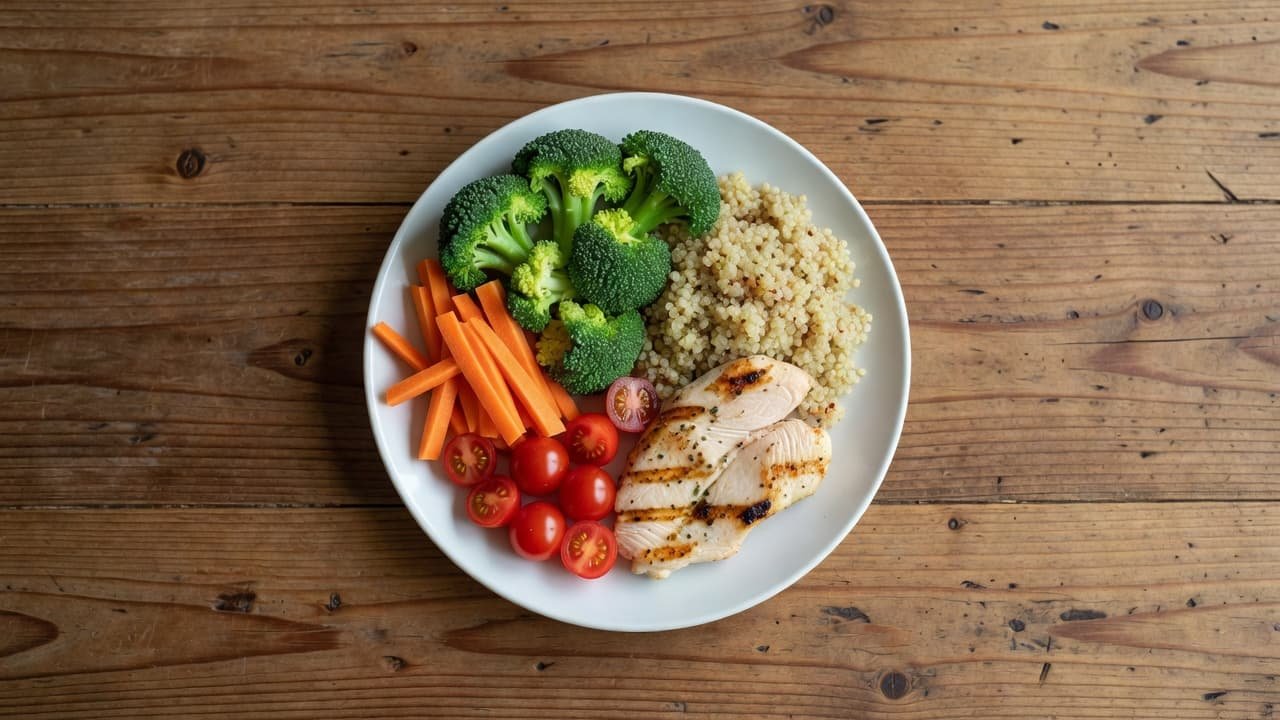
A simple plate guide keeps meals balanced without requiring a food scale. Fill about half your plate with nonstarchy vegetables, such as broccoli, salad greens, peppers, zucchini, or green beans. Reserve one quarter for protein and one quarter for a high-fiber carbohydrate.
For example, serve 4 to 6 ounces of chicken with roasted broccoli and 1/2 to 1 cup of brown rice. Or fill a plate with black beans, sauteed vegetables, avocado, and a whole-grain tortilla.
Add a small serving of healthy fat, such as olive oil, avocado, nuts, or seeds. Your portion needs may differ, especially if you exercise often. Still, the plate method gives meals a reliable shape without turning dinner into math homework.
Choose foods that keep you full
Protein and fiber help meals stay satisfying. Eggs, Greek yogurt, fish, chicken, tofu, beans, lentils, oats, potatoes, berries, and vegetables are all useful staples. Nuts and seeds add texture and healthy fats, although portions matter because they are calorie-dense.
Sugary drinks, chips, pastries, and highly processed snack foods are easier to eat quickly and in large amounts. You don’t need to ban them forever. Instead, make filling foods your default and enjoy richer foods in portions that fit your week.
No single food causes weight loss. Your overall eating pattern, portions, sleep, movement, and consistency carry more weight than any “fat-burning” ingredient.
A Seven-Day Healthy Diet Menu for Weight Loss
The best healthy diet menu for weight loss in 2026 is one you can make with ordinary groceries and repeat without boredom. At main meals, start with 4 to 6 ounces of protein, 1/2 to 1 cup of cooked grains or starchy vegetables, and at least 1 to 2 cups of vegetables.
Swap similar foods freely. Chicken can become tofu, brown rice can become potatoes, and salmon can become canned tuna or beans. The 2025-2030 Dietary Guidelines support a pattern built around nutrient-dense foods, including produce, protein foods, dairy, healthy fats, and whole grains.
Days one through three: simple meals for a strong start
Day 1: Have oatmeal topped with berries, Greek yogurt, and cinnamon for breakfast. Lunch can be a chicken or chickpea salad with mixed greens, cucumber, tomatoes, and olive oil vinaigrette. For dinner, eat salmon, a medium baked potato, and green beans. Choose an apple with cottage cheese if you need a snack.
Day 2: Scramble two eggs with spinach and serve them with whole-grain toast. Pack a turkey and vegetable wrap with fruit for lunch. Dinner is lentil soup with a side salad and a slice of whole-grain bread. Carrots with hummus make a filling afternoon option.
Day 3: Greek yogurt with oats, berries, and a spoonful of chopped walnuts works well in the morning. At lunch, eat leftover lentil soup or a tuna-and-white-bean salad. Make tofu stir-fry with frozen vegetables and brown rice for dinner. A small handful of nuts is enough for a snack.
Cook extra rice, lentils, chicken, or tofu on the first day. Those leftovers make lunch faster and reduce the urge to order takeout.
Days four through seven: more variety without extra work
Day 4: Eat eggs with whole-grain toast and orange slices. For lunch, make a bean burrito bowl with black beans, brown rice, salsa, lettuce, corn, and avocado. Turkey chili with a side of roasted vegetables makes a satisfying dinner. Finish with plain yogurt and berries if you want something sweet.
Day 5: Try overnight oats with milk or soy milk, chia seeds, and sliced banana. Lunch can be tuna with whole-grain crackers, tomato slices, and a side salad. Make chicken fajitas with peppers, onions, and corn tortillas for dinner. Have one or two squares of dark chocolate after dinner if that helps you avoid feeling deprived.
Day 6: Choose cottage cheese, berries, and a small serving of high-fiber cereal for breakfast. Eat a leftover fajita bowl for lunch. Dinner can be shrimp with brown rice, broccoli, and a light garlic-olive oil sauce. Edamame or fruit works well between meals.
Day 7: Make a vegetable omelet with potatoes or whole-grain toast. For lunch, eat hummus, vegetables, fruit, and a whole-grain pita. Keep dinner meat-free with whole-wheat pasta, marinara, white beans, mushrooms, and spinach. A yogurt or pear is an optional snack.
Dessert and snacks can fit a weight-loss menu when you portion them on purpose. A small bowl of ice cream after a balanced dinner is often easier to manage than an entire day of strict rules followed by late-night grazing.
Make the Menu Fit Your Calories, Preferences, and Lifestyle
Treat the sample menu as a starting point, not a test you can fail. If you feel hungry soon after meals, first add vegetables, protein, or a little more high-fiber carbohydrate. If your portions are large and weight changes have stalled for several weeks, reduce calorie-dense extras before cutting meals apart.
Start by using less oil, cheese, creamy dressing, sugary drinks, or oversized grain portions. Keep protein and vegetables generous because they help meals feel complete. On days with longer workouts or physical work, you may need an extra snack or more carbohydrate.
People with diabetes, kidney disease, food allergies, digestive conditions, or a history of eating disorders should ask a registered dietitian or other qualified clinician for individual guidance.
Smart food swaps for different diets and budgets
Beans, lentils, eggs, tofu, and canned fish can replace fresh meat at a lower cost. Frozen vegetables are nutritious, last longer, and cut down on waste. Oats and potatoes are usually less expensive than specialty grains, yet they can still fit a balanced meal.
For vegetarian meals, use tofu, tempeh, edamame, beans, or lentils. Choose corn tortillas, potatoes, rice, quinoa, or certified gluten-free oats when avoiding gluten. Greek yogurt and cottage cheese offer convenient higher-protein snacks, while soy yogurt can work for dairy-free eaters.
When buying packaged foods, check serving sizes, added sugar, and sodium. The USDA Food Plans offer additional examples of nutritious eating patterns across different budgets.
Adjust portions without losing balance
Tracking meals for a week or two can reveal patterns, especially liquid calories, frequent restaurant meals, or large evening snacks. However, a food log is optional. Hunger, energy, sleep, digestion, and consistency also tell you whether your routine is working.
Avoid cutting portions so far that you feel distracted by food all day. Persistent hunger, poor workout recovery, or low energy often mean the plan needs more food or better-balanced meals. Review progress weekly instead of reacting to a single day on the scale.
Meal Prep, Snacks, and Common Weight Loss Mistakes
A short preparation routine makes a healthy diet easier when life gets busy. Choose three or four dinners, make a grocery list, wash produce, and cook one protein and one grain ahead. Portion nuts, fruit, yogurt, or hummus into grab-and-go options.
Restaurant meals don’t erase progress. Order a protein-and-vegetable-based entree, share rich sides if you want them, and return to your regular meals afterward. Missed workouts and weekend treats are normal parts of life, not reasons to abandon the plan.
Build snacks that prevent overeating later
A snack helps when a long gap between meals leaves you overly hungry. Pair fiber with protein or healthy fat: an apple with peanut butter, yogurt with berries, hummus with vegetables, or a boiled egg with fruit.
Pay attention to drinks, too. Soda, sweet coffee beverages, alcohol, and juice can add calories without much fullness. Water, unsweetened tea, and sparkling water are useful everyday choices.
Avoid the mistakes that make menus hard to follow
Cutting calories too low often leads to rebound eating. Skipping protein at breakfast can make midmorning hunger worse. Too little fiber, forbidden-food rules, detoxes, and expectations of rapid results also make a menu harder to follow.
Check more than the scale each week. Notice waist measurements, energy, sleep, strength, and how often you followed your usual meals. Those markers give a clearer view of progress than one weigh-in.
A Menu You Can Keep Eating
The best healthy diet menu for weight loss in 2026 creates a manageable calorie deficit without leaving you hungry or disconnected from foods you enjoy. Build meals around protein, produce, high-fiber carbohydrates, and sensible portions.
Choose a few breakfasts, lunches, dinners, and snacks from this menu, then repeat them until they become easy. Plan tomorrow’s meals and shop for protein, vegetables, fruit, and high-fiber carbohydrates. Consistency will carry you further than a perfect menu ever could.
Healthy Weight Loss in 2026: A Beginner’s Guide to Getting Started