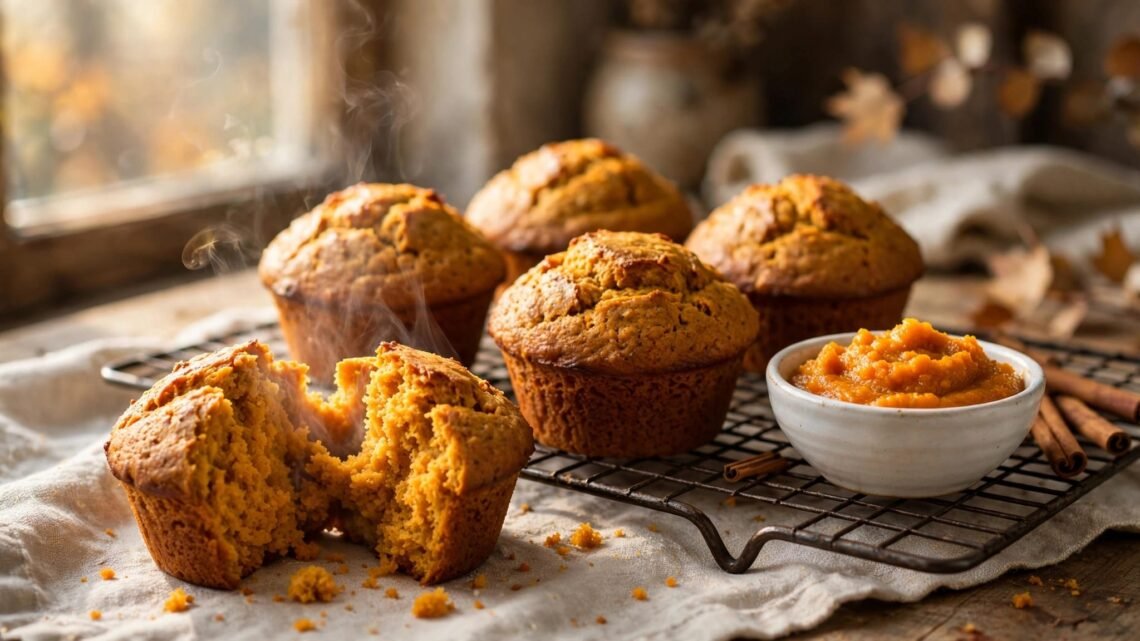
Soft, warmly spiced pumpkin muffins are easy to make with pantry staples, but too much moisture or an inaccurate measurement can leave them dense or soggy. This recipe uses plain pumpkin puree, so you can control the sweetness and spice while making easy pumpkin muffins.
This post may contain affiliate links. If you make a purchase through these links, I may earn a small commission at no extra cost to you.
Key Takeaways
- Use plain pumpkin puree, not pumpkin pie filling, so you can control the sweetness and spice.
- Measure the puree and flour as directed. Excess moisture or packed flour can make muffins dense or soggy.
- Mix wet and dry ingredients only until no dry patches remain. Bake at 350°F for about 20 to 25 minutes, until the centers are set.
- Cool muffins on a rack before storing them in an airtight container, or freeze extras for later.
- Pair a muffin with fruit or yogurt for a more substantial snack, and check these pumpkin muffin baking tips for texture guidance.
The Best Pumpkin Muffins Recipe, Step by Step
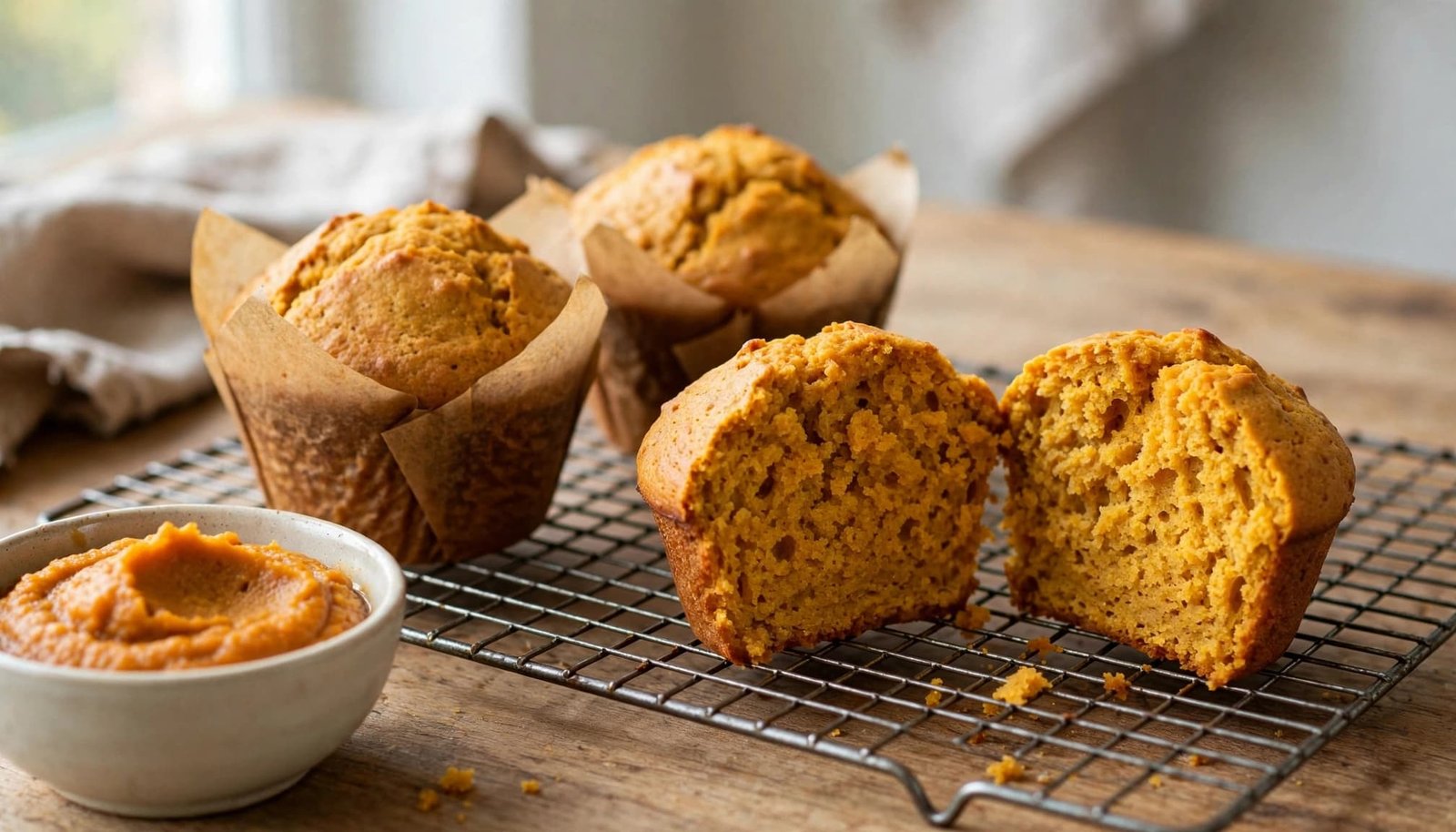
These muffins use plain canned pumpkin puree, rolled oats, and warm spices for a soft texture and balanced flavor. The recipe makes eight muffins and takes about 10 minutes to prepare, plus 20 to 25 minutes to bake.
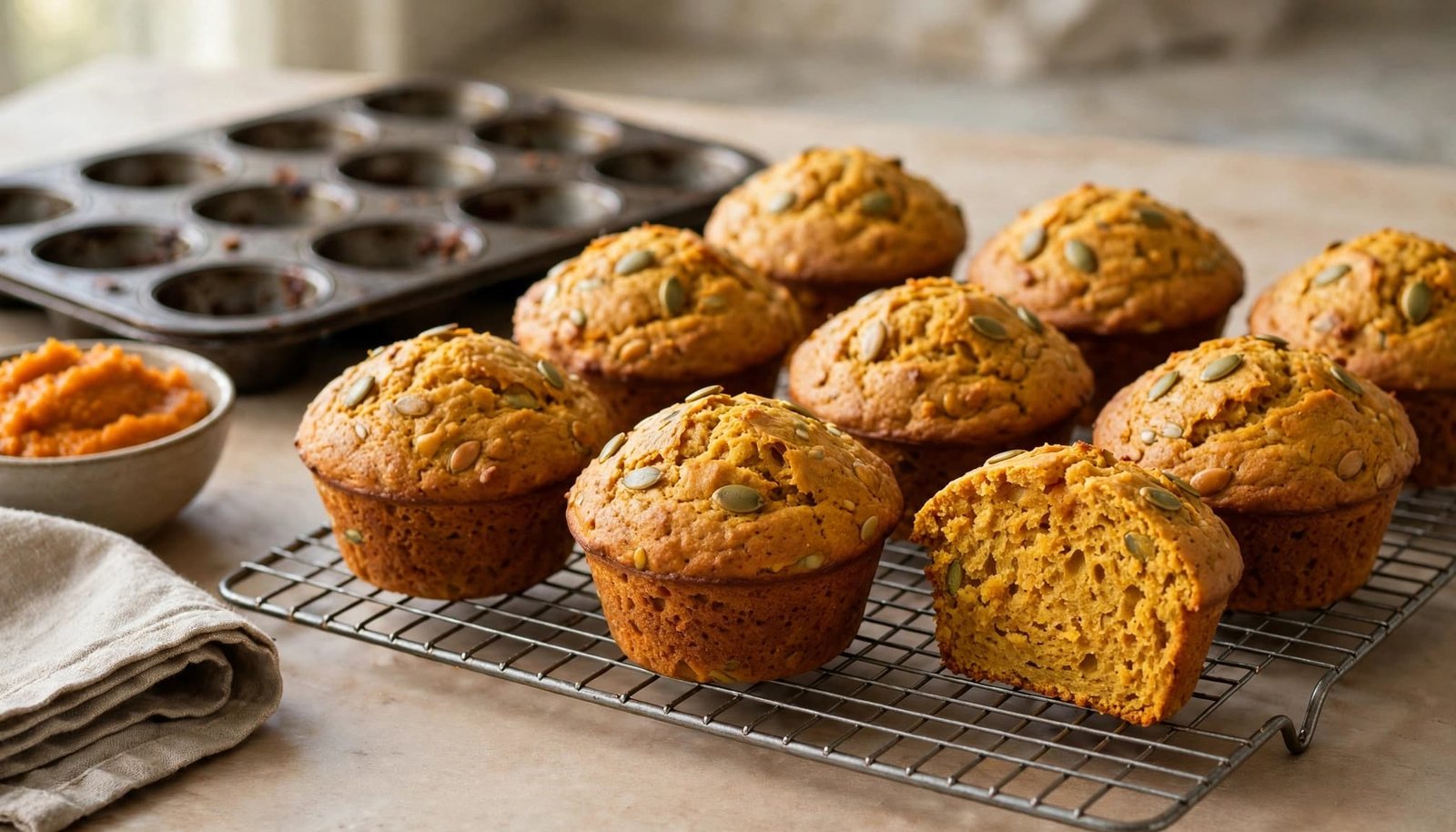
Ingredients that make muffins tender, moist, and flavorful
Pumpkin adds moisture and mild flavor, but it doesn’t replace the egg or oil. The egg helps hold the batter together, while oil keeps the crumb tender. Flour provides structure, and oats add texture. Baking powder and baking soda help the muffins rise, while salt balances the flavors.
Prep time: 10 minutes Bake time: 20 to 25 minutes Oven temperature: 350°F Yield: 8 muffins
- 1 cup whole-wheat flour
- 1/2 cup rolled oats
- 1 teaspoon baking powder
- 1/2 teaspoon baking soda
- 1 teaspoon ground cinnamon
- 1/4 teaspoon ground ginger
- 1/8 teaspoon ground nutmeg
- 1/4 teaspoon salt
- 1/2 cup plain canned pumpkin puree
- 1/2 cup plain yogurt
- 1 large egg
- 1/4 cup vegetable oil
- 1/3 cup packed brown sugar
- 1 teaspoon vanilla extract
For a simpler spice blend, substitute 1 1/2 teaspoons pumpkin pie spice for the cinnamon, ginger, and nutmeg. For an even batter, bring the egg and yogurt to room temperature before mixing. For a doubled batch, use two large eggs.
Measure the puree as written, rather than adding extra for more pumpkin flavor. Too much moisture can leave the centers wet. For flour, spoon it into the measuring cup and level the top without packing it down. Packing flour can add more than the recipe needs. If you use a scale, follow the recipe’s weight when provided; King Arthur Baking’s flour-measuring guide explains why volume measurements can vary.
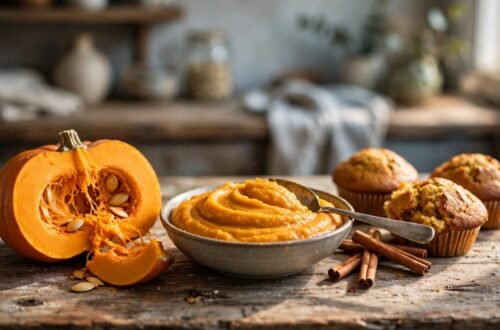
Plain canned pumpkin gives you more control than pumpkin pie filling, which may already include sugar and spices. For more ways to use plain pumpkin, see these Healthy Recipes Guide for Balanced, Flavorful Meal
Mix, fill, and bake without overworking the batter
- Heat the oven to 350°F. Line eight cups of a muffin tin with paper liners.
- In a medium bowl, whisk the flour, oats, baking powder, baking soda, cinnamon, ginger, nutmeg, and salt.
- In a separate bowl, whisk the pumpkin, yogurt, egg, oil, vanilla, and sugar until smooth.
- Pour the wet ingredients into the dry ingredients. Fold gently until no dry patches remain. A few small lumps are fine; mixing until completely smooth can make the muffins dense.
- Divide the batter evenly among the eight lined cups. Bake for 20 to 25 minutes, until the tops are golden brown.
- Check the center with a toothpick. A few moist crumbs are expected, but it should come out clean or without wet batter. Color alone doesn’t confirm the centers are baked.
- Let the muffins cool briefly in the pan, then transfer them to a wire rack. Wait until they are cool before covering, since trapped steam can soften the tops.
Keep the sugar amount close to the recipe for the first batch. Reducing the brown sugar substantially can change the muffins’ tenderness and browning, so make smaller adjustments if you want them less sweet.
Five Easy Pumpkin Muffin Variations for Different Needs
A few ingredient changes can adjust flavor, texture, and suitability for different diets, but baking ratios still matter. Use a recipe developed for your variation instead of swapping ingredients without adjusting the rest of the batter. Whole grains, less added sugar, or added protein can change the crumb, and none automatically makes a muffin healthy.
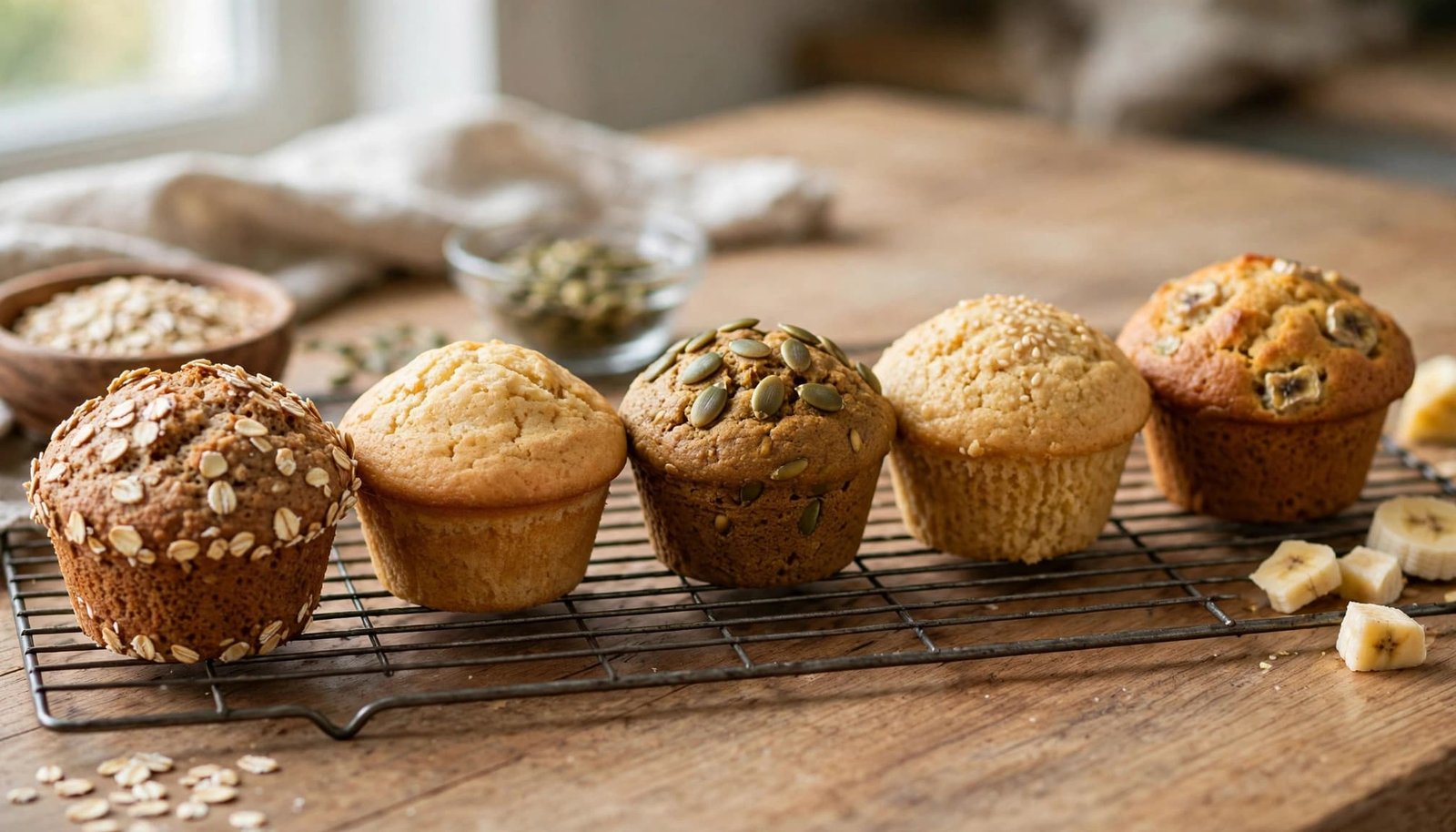
Whole-wheat oat pumpkin muffins
Whole-wheat flour and rolled oats add whole grains and fiber, with a heartier texture than muffins made with refined flour. The recipe above already uses both, so keep those amounts as written. If adapting another recipe, don’t replace all-purpose flour with whole-wheat flour cup for cup.
Whisk the flour, oats, leavening, spices, and salt together first. In a separate bowl, whisk the pumpkin, yogurt, egg, oil, and sugar until smooth. Fold the mixtures together just until no dry patches remain. Overmixing can make the muffins dense. Nuts or raisins can add texture, but measure them and fold them in at the end.
Lower-sugar pumpkin muffins
For a modest reduction, use a recipe developed with less sugar or reduce the amount by a small measure, such as using 1/4 cup instead of 1/3 cup. If the recipe uses brown sugar, whisk it with the other liquid ingredients so it distributes evenly, then fold the mixture into the flour mixture without overmixing.
Sugar adds sweetness, but it also affects tenderness and browning. Removing too much can leave muffins drier and paler, so don’t expect a large reduction to behave like the original recipe. Begin checking for doneness at the recipe’s stated time. A toothpick should come out without wet batter, even if the tops look less browned. King Arthur Baking’s guide to reduced-sugar baking explains why texture and color can change.
Vegan pumpkin muffins
Egg and dairy replacements vary in how much moisture and binding they provide. A vegan recipe is more reliable than a last-minute swap in a batter designed for eggs and yogurt. Choose one that specifies plant-based milk or unsweetened plant yogurt and an egg replacement, such as a prepared flax mixture.
Measure the pumpkin puree and other wet ingredients as directed, then whisk them together before combining with the dry ingredients. Fold only until the flour is incorporated, divide the batter among lined cups, and follow the recipe’s baking time and doneness cues. Plant-based yogurt and milk differ by brand, so check the recipe notes if the batter looks unusually thick or loose.
Gluten-free pumpkin muffins
Choose a tested gluten-free muffin formula and use the baking blend it calls for. A blend with a binder, such as xanthan gum, helps provide structure that wheat flour normally gives. Don’t substitute gluten-free flour cup for cup in a standard recipe unless the recipe specifically allows it.
Whisk the blend with the leavening and spices, combine the wet ingredients separately, then mix as directed. Gluten-free muffins can have a slightly different crumb, so follow the recipe’s cooling instructions before removing them from the pan. If you need to avoid cross-contact, check labels and preparation surfaces as well as the flour. The FDA’s gluten-free labeling guidance explains the federal requirements for foods labeled gluten-free.
Pumpkin banana muffins
Banana adds sweetness and flavor, but it also adds moisture. Use a pumpkin-banana recipe that balances mashed ripe banana with the pumpkin and other ingredients, rather than stirring banana into the base batter without changing the ratios.
Measure the banana after mashing, and keep the listed amounts of flour, oil, and other ingredients accurate. Whisk the liquid ingredients together, fold them into the flour mixture just until combined, then bake according to the recipe’s cues. If you want extra protein, choose a formula designed for that addition; protein powder can make muffins dry or firm when added without adjusting the other ingredients. Pairing a muffin with plain yogurt or fruit is another option, depending on your appetite. For more ideas, see these healthy pumpkin dessert recipes.
Six More Pumpkin Muffin Flavors Worth Baking
The base pumpkin muffins recipe can take a few carefully measured additions without changing its method. For a batch of eight, fold mix-ins in at the end, and keep an eye on the centers as they bake.
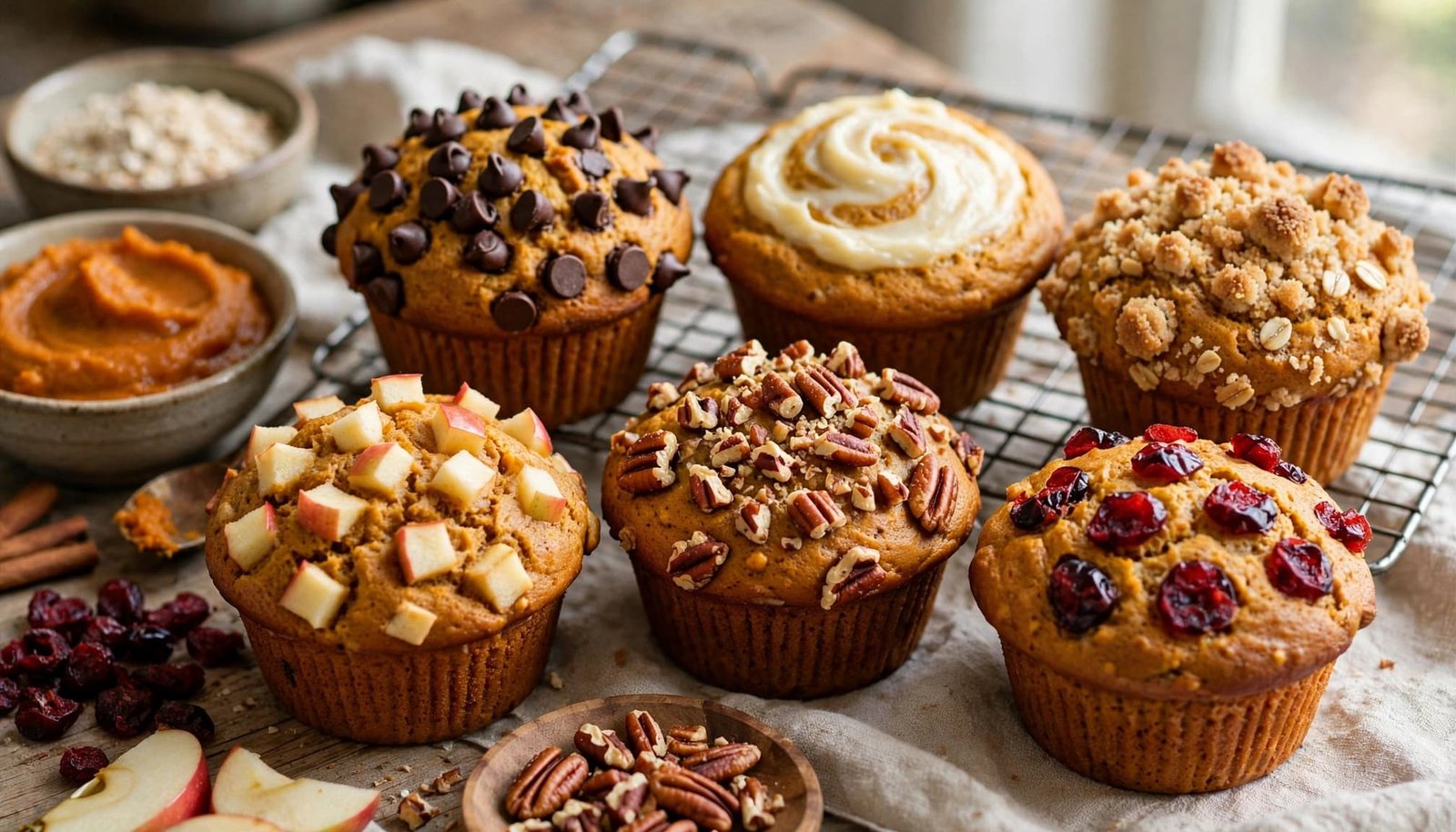
Pumpkin Muffins with Chocolate Chips
Fold about 1/2 cup chocolate chips into the finished batter with a spatula, stopping as soon as they’re evenly distributed. Stirring too much can make the muffins dense. If you like, scatter a few extra over each filled cup before baking.
Chocolate adds sweetness and richness, so the muffins may taste sweeter than the base recipe. Semisweet chips keep that change moderate; milk chocolate makes the flavor sweeter.
Pumpkin cream cheese swirl muffins
Stir 4 ounces softened cream cheese with 2 tablespoons granulated sugar and a small splash of vanilla extract until smooth. Fill each muffin cup partway, add a small spoonful of the cream cheese mixture, then cover with batter. Keep the cups below the usual fill line so the muffins have room to rise. Check the muffin crumb near the center, avoiding the filling, for wet batter.
Cool the muffins, then refrigerate them promptly. The FDA’s food storage guidance recommends refrigerating perishable foods within two hours.
Pumpkin streusel muffins
For a simple topping, mix 2 tablespoons flour, 2 tablespoons granulated sugar, and 1 tablespoon softened butter with a fork until small crumbs form. Sprinkle the streusel over the filled muffin cups just before they go into the oven. Don’t pack it down, since a loose layer bakes into a crumbly, crispy top.
The topping may brown before the centers finish. Follow the recipe’s bake time and check the centers for wet batter rather than judging by color alone.
Pumpkin apple cinnamon muffins
Finely chop about 1/2 cup apple, keeping the pieces small so they soften during baking. Fold them into the batter at the end, then divide it among the lined cups. A little extra cinnamon can complement the apple, but the fruit itself already adds flavor.
Fresh apple adds moisture, which can affect the crumb and baking time. Use a tested apple-pumpkin muffin recipe when possible, and check the centers carefully before removing the pan.
Pumpkin pecan or walnut muffins
Fold about 1/3 cup chopped pecans or walnuts into the batter just before portioning it. For more crunch on top, reserve a small handful and scatter the pieces over the filled cups. Keep the pieces modest in size so they distribute evenly.
Nuts add a toasted flavor and a firmer bite. If you’re serving the muffins to others, check for nut allergies and mention which nuts you used.
Pumpkin raisin or dried cranberry muffins
Fold about 1/3 cup raisins or dried cranberries into the batter after the wet and dry ingredients are combined. If the fruit feels very dry, soak it briefly in warm water, then drain and pat it dry before adding it. Excess soaking liquid can make the batter wetter.
Raisins taste sweeter, while cranberries are usually more tart. Both add concentrated sweetness, so choose the dried fruit that suits your preference.
Fix Common Pumpkin Muffin Problems and Store Leftovers Safely
A soft muffin should feel moist, but the center shouldn’t look wet or gummy. Small changes in puree, measuring, mixing, and baking can affect the texture. Proper cooling and storage help protect the batch you’ve already baked.
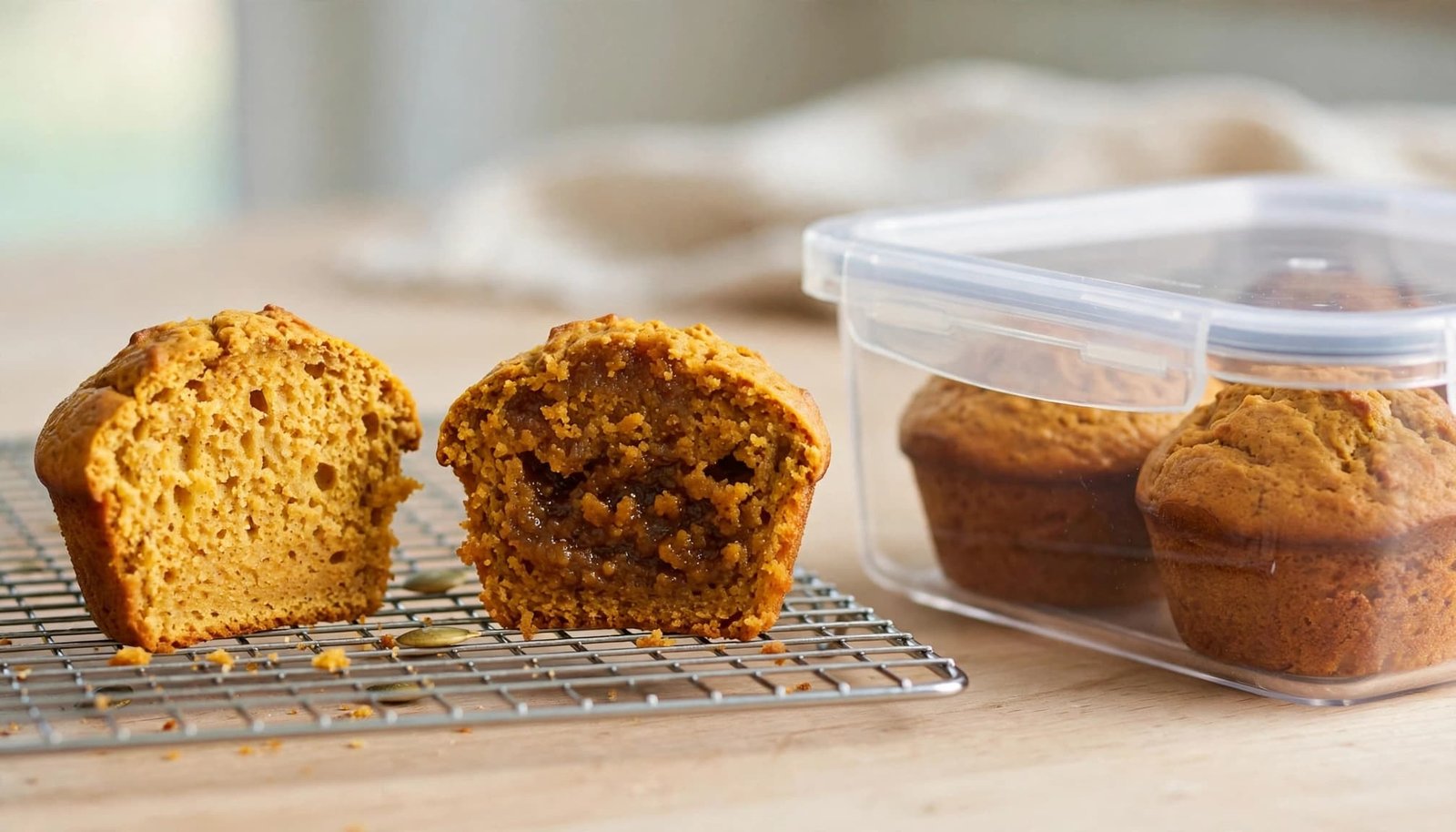
Keep the centers from turning wet or dense
Too much puree can cause wet centers. Measure the pumpkin puree as written, since adding more won’t replace the structure from flour and egg. Homemade or thawed puree may contain extra water. If it looks watery and the recipe calls for a thicker puree, drain off excess liquid before measuring.
Packed flour can make muffins dense, while overmixing can develop too much gluten and leave the crumb heavy. Spoon flour into the measuring cup and level it, or use the recipe’s weight if provided. When you combine the wet and dry ingredients, stop once no dry patches remain.
A muffin that browns on top may still need more time in the oven. An inaccurate oven temperature can also cause uneven baking, so check it with an oven thermometer if muffins repeatedly bake too quickly or slowly. Use the specified pan size and recipe doneness cues. A toothpick should come out without wet batter, though a few moist crumbs may be expected.
Store, refrigerate, or freeze muffins the right way
Let muffins cool fully on a wire rack before placing them in an airtight container. Covering warm muffins traps steam, which can soften the tops and make the surface damp. Plain muffins can usually stay on the counter when the recipe’s storage directions allow it. Keep them covered and follow any shorter recipe-specific guidance.
Cream cheese-topped or filled muffins need refrigeration. Cool them, then refrigerate them promptly in a covered container. Don’t leave perishable muffins out for more than two hours, or more than one hour when the temperature is above 90°F. Use refrigerated leftovers within three to four days, and check FoodSafety.gov’s FoodKeeper storage guidance if you’re unsure about a particular ingredient or preparation.
Freezing works well for muffins you won’t eat soon. Once fully cool, wrap each muffin tightly, then place the portions in a freezer-safe bag or container to limit air exposure. Label the package with the date. Thaw cream cheese-filled muffins in the refrigerator. Plain muffins can thaw on the counter; keep thawed muffins covered and follow the recipe’s storage directions.PRACTICAL GUIDE AND ALL YOU NEED TO KNOW ABOUT, PUMPKIN RECIPES
Frequently Asked Questions
A few ingredient and baking details can affect how these muffins turn out. Use these answers to adjust ingredients carefully and check doneness before serving.
Can I use pumpkin pie filling instead of pumpkin puree?
Pumpkin pie filling usually contains added sweetener and spices, so it changes the flavor and balance of the batter. Use plain pumpkin puree unless the recipe specifically calls for pie filling. Reducing the recipe’s sugar or spices may not fully account for the filling’s other ingredients.
Can I make this pumpkin muffins recipe with fresh pumpkin?
Yes. Cooked pumpkin puree can work, but homemade puree may hold more water than canned puree, which can make the muffins too moist. Blend it until smooth, measure the amount the recipe calls for, and drain excess liquid if it looks watery; Michigan State University Extension’s guide to homemade pumpkin puree explains how to prepare fresh pumpkin.
How do I know when pumpkin muffins are done?
Start checking at the beginning of the recipe’s bake-time range, since ovens can vary. Insert a toothpick into the center of a muffin; it should come out clean or with the crumbs expected for that recipe, but without wet batter. A browned top alone doesn’t confirm that the center is baked.
Can I freeze pumpkin muffins?
Cooled, unfrosted pumpkin muffins generally freeze well when wrapped tightly and stored in an airtight freezer-safe container. Thaw only the portions you plan to eat, either at room temperature or according to the recipe’s storage instructions. Check the recipe before freezing muffins with cream cheese filling or topping, since their texture and storage needs may differ.
How can I make pumpkin muffins without eggs or dairy?
Vegan pumpkin muffins are possible, but the right egg and dairy replacements depend on the recipe’s ingredient ratios. Choose a tested formula developed without eggs or dairy instead of replacing those ingredients one for one in this recipe. Check the mix-ins and toppings too, since chocolate chips and cream cheese may contain dairy.
Why did my muffins turn out soggy even though the tops looked baked?
Watery puree, inaccurate measuring, or an underbaked center can leave muffins soggy. Measure the puree and flour as directed, drain excess liquid from watery homemade puree, and check the center before removing the pan. If the problem persists, confirm the oven temperature with an oven thermometer.
Conclusion
Start with the base recipe, then choose one variation to try. Plain pumpkin puree, accurate measuring, and gentle mixing help keep the texture on track. Check the centers for wet batter before taking the muffins out of the oven.
Cool them fully before covering, and store leftovers as directed or freeze extras for later. These small, careful steps make homemade pumpkin muffins easier to bake successfully again.