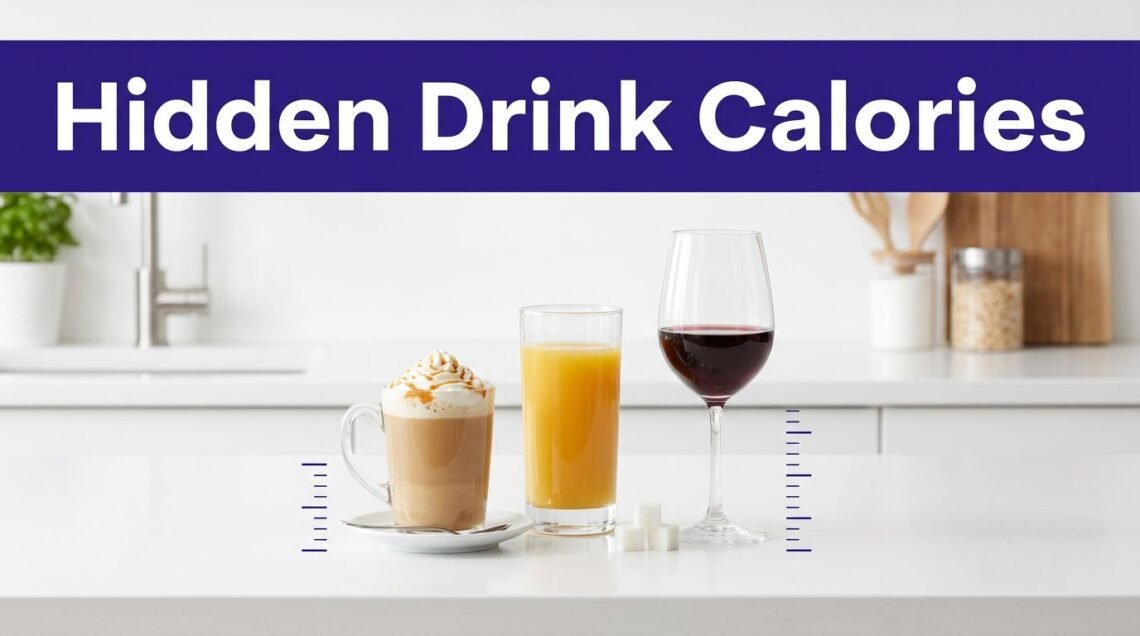
A coffee on the commute, juice at lunch, and wine at dinner can add more to your day than expected. If “hidden calories drinks” is the question on your mind, the answer often lies in extras, portion sizes, and how often a drink becomes routine.
Drinks can fit into an enjoyable, balanced way of eating. Still, seeing what is in your glass helps you make choices that match your goals without giving up every favorite.
Key Takeaways
- Liquid calories are easy to miss because drinks often feel less filling than solid food, especially when they contain added sugar.
- Serving size and extras such as syrups, cream, toppings, mixers, and juice bases can raise a drink’s calorie total quickly.
- Check the Nutrition Facts panel for serving size, calories, added sugar, and servings per container rather than relying on marketing language.
- A seven-day beverage log can reveal repeat purchases, large pours, and routines that contribute more calories than expected.
- Smaller portions, fewer add-ons, unsweetened drinks, and water between alcoholic beverages can reduce calories without giving up every favorite drink.
Why Calories in Drinks Go Unnoticed
Liquid calories are easy to overlook because drinks rarely feel like a meal. You can finish a large sweet coffee drink in minutes, then eat lunch as usual because it didn’t feel as filling as solid food.
Chewing, texture, and volume help food register as satisfying. In contrast, sweetened beverages pass quickly and often provide little fiber. As a result, you may not naturally eat less later to account for the drink.
Empty calories are calories that come with few nutrients that help meet daily needs, such as fiber, protein, vitamins, or minerals. Regular soda and many sugary energy drinks are common examples. Juice is different because it can provide nutrients, but a large glass can still contain concentrated sugar and offer less nutritional value than whole fruit.
Calorie needs and weight change vary by person. Activity, sleep, medications, health conditions, food intake, and routines all matter. One high-calorie drink won’t determine your health or weight, but a daily drink with 200 or 300 calories can raise calorie intake. Over time, that can contribute to weight gain when those calories weren’t intentional.
The American Heart Association advises most women to limit added sugar to no more than 25 grams per day, or 6 teaspoons. For most men, the limit is 36 grams, or 9 teaspoons. Many drinks can use up most or all of that amount in one serving. People who monitor blood sugar may also find the label’s sugar information useful. Harvard’s overview of sugary drinks explains why these beverages can provide substantial calories with little nutritional value.
Everyday Beverages That Add Up Fast
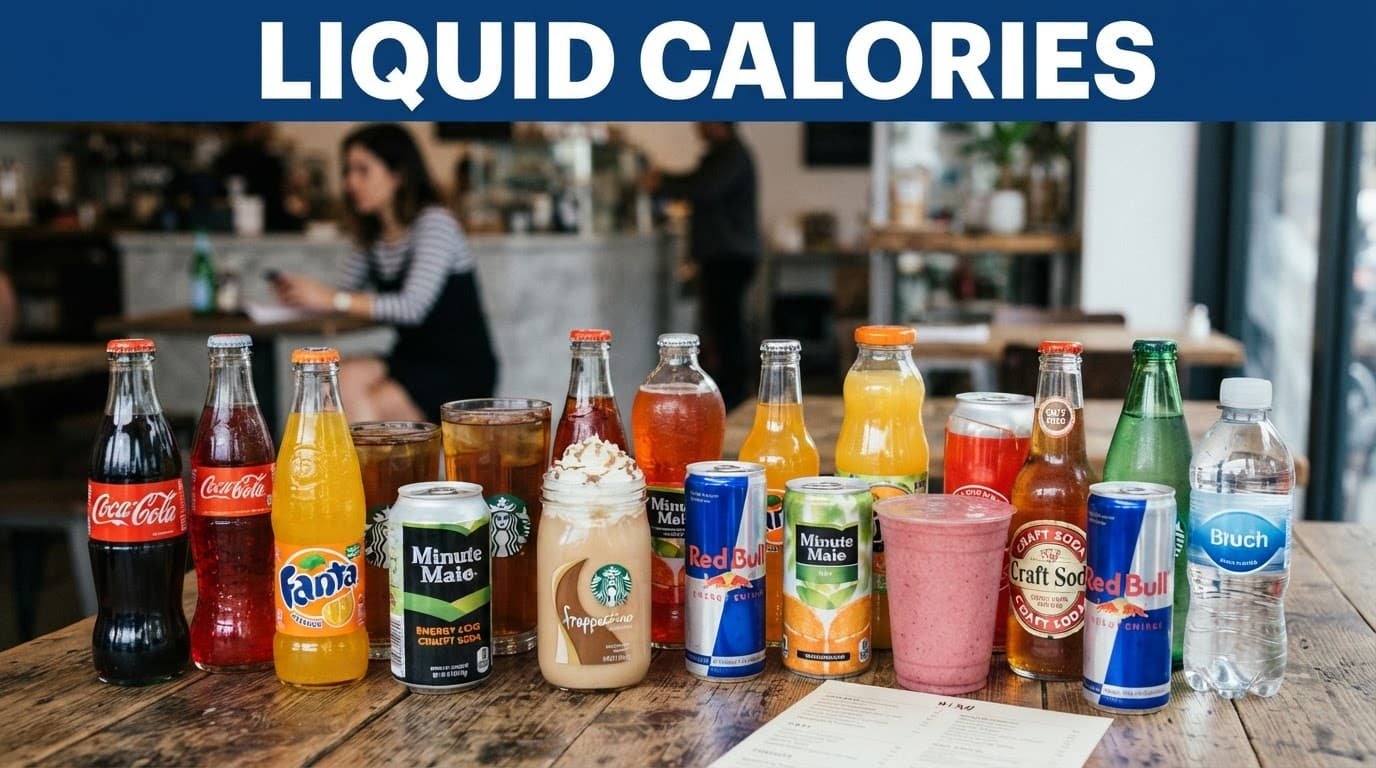
The label on a drink tells a more useful story than its category. That matters with calorie-dense drinks, including oversized smoothies, specialty coffee beverages, and cocktails.
Smoothies and other sweetened beverages can be filling or dessert-like. A coffee can be a modest milk drink or a large serving of syrup, cream, and toppings.
These common estimates show why serving size matters:
| Drink | Typical serving | What can add calories |
|---|---|---|
| Regular soda | 12 ounces, about 140 to 150 calories | Added sugar, with little satiety |
| Fruit juices | 8 ounces, often about 100 to 120 calories | Natural sugar in a concentrated portion |
| Coffee-shop flavored latte | 16 ounces, often 250 calories or more | Syrups, whole milk, cream, toppings |
| Large smoothie | 16 to 24 ounces, often 250 to 700 calories | Juice, sweetened yogurt, nut butter, large portions |
| Caffeinated beverage | 16 ounces, often 150 to 250 calories | Added sugar, sometimes more than one serving |
| Alcoholic drink | Varies widely | Alcohol itself, mixers, juice, syrups, and oversized pours |
A 16-ounce soda may contain around 200 calories. That same size also holds more than the standard 12-ounce can, yet it can feel like a single serving. Use Harvard’s drink sugar and calorie guide to compare common sodas, sports drinks, juices, and sweet teas.
Specialty coffee drinks deserve a close look, especially flavored lattes. Milk provides protein and calcium, while espresso itself contains few calories. Flavored syrups, sweet cream, caramel drizzle, and whipped cream can stack calories in a 20-ounce or 24-ounce cup.
Creamers can work the same way at home. A tablespoon may seem small, but several pours into a large mug can add sugar and calories without much notice. Measure your usual amount once or twice. The result may surprise you.
Alcoholic beverages also count toward daily calorie intake. A 5-ounce glass of wine often has about 120 calories, while a regular beer is commonly around 150. Spirits contain calories before mixers enter the picture. Tonic water, cola, sweet-and-sour mix, juice, and flavored syrups can turn one cocktail into a much larger drink.
Flavored waters need a label check, too. Some are unsweetened sparkling water with no calories. Others contain juice concentrates, sugar, coconut water, or sweeteners. A higher-calorie drink is not inherently bad, but it should be a choice you can see clearly.
Read the Label, Then Track Your Real Pour
The Nutrition Facts panel gives you the fastest way to spot calories that are easy to miss at the store. Start with serving size, then check calories, added sugar, and servings per container. A bottle that looks individual may contain two servings.
Total sugars include sugar that occurs naturally in ingredients such as milk or fruit. Added sugars tell you how much sugar was put in during processing. This information can help people monitoring blood sugar compare a sweetened tea with plain milk or 100 percent juice.
A drink listed as 70 calories per serving becomes 175 calories when the bottle holds two and a half servings.
Marketing language cannot replace the label. Terms such as “natural,” “organic,” “lightly sweetened,” and “made with real fruit” do not tell you the calorie count. At a cafe, check the online nutrition information, then consider your customizations. Fewer syrup pumps, no whipped cream, or a smaller size can change the total.
Public health guidance around sugar-sweetened beverages often focuses on their links with excess added sugar and frequent intake. Tracking your beverage intake for a week can reveal where a small change may reduce your calorie intake.
Try a seven-day beverage log before changing everything at once:
- Write down the time, drink, and amount you actually consumed. Include refills and the size of the cup or bottle.
- Add the details that labels may miss, such as creamer, syrup, juice base, alcohol mixers, or toppings.
- Note whether you had the drink with food, between meals, or when you felt tired, rushed, thirsty, or stressed.
At the end of the week, look for repeat purchases and large portion sizes. A daily 16-ounce sweet tea may be a more useful place to start than the occasional birthday milkshake.
Lower-Calorie Swaps That Still Feel Satisfying
Small changes tend to feel more manageable than a total beverage overhaul. Keep the drinks you enjoy, then make small swaps in frequency, size, sweetness, or add-ons. These healthy alternatives may feel familiar after several orders.

For coffee, order a smaller latte, choose one flavor pump instead of several, or ask for half-sweet syrup. Cinnamon, unsweetened cocoa powder, or vanilla extract at home can add aroma without relying on sugar. If you like creamer, measure the amount you enjoy rather than pouring by habit.
If you enjoy carbonated drinks, sparkling water with lime, orange slices, or a small splash of juice keeps the fizzy feeling. Unsweetened tea, including iced tea, can provide stronger flavor without added sweetness. If sweet teas are a regular choice, gradually mix them with plain tea.
For juice, pour a small glass and have it with a meal. Whole fruit usually offers more fiber and takes longer to eat. A homemade smoothie can include fruit, plain yogurt or milk, ice, and spinach, while skipping sweetened juice bases and extra syrups.
Energy drinks often combine caffeine and sugar. If caffeine is the goal, plain coffee or unsweetened tea can offer a lower-calorie option. Water, a snack with protein and fiber, and adequate sleep can also help when mid-afternoon fatigue becomes a daily pattern.
Alcohol can remain part of social occasions while you change the mixer or pour. Try a citrus-infused mixer, soda water in a spirit-and-soda drink, or alternate an alcoholic beverage with water. Alcohol has calories of its own, so the serving still matters.
Fruit- and herb-infused water is another practical option. Cucumber and mint, berries and basil, or lemon and ginger add scent and flavor without making hydration overly sweet. Keep a pitcher in the refrigerator if plain water feels repetitive.
Frequently Asked Questions
What are hidden calories in drinks?
Hidden calories are calories from ingredients or portions that are easy to overlook, such as syrup, cream, sugar, juice, mixers, or toppings. They can also come from drinking more than one labeled serving at a time.
Which everyday drinks can be high in calories?
Specialty coffee drinks, large smoothies, regular soda, sweetened teas, energy drinks, and cocktails can add calories quickly. The total depends on the serving size, added sugar, milk or cream, and other ingredients.
How can I find hidden calories in a bottled drink?
Start with the serving size and check how many servings are in the container. Then review calories, total sugars, and added sugars, remembering to account for the amount you actually drink.
What are lower-calorie alternatives to sugary drinks?
Unsweetened tea, sparkling water with citrus, plain coffee, and water infused with fruit or herbs can provide flavor with fewer calories. You can also order a smaller drink, reduce syrup, skip whipped cream, or use less sweetened mixer.
Do I have to avoid high-calorie drinks completely?
No. A higher-calorie drink can fit into an enjoyable, balanced eating pattern when you understand its portion and choose it intentionally. Looking at frequency and serving size may be more useful than labeling a drink as good or bad.
A Clearer View of What You Sip
The most useful habit is to notice the full drink, not only its name. Check serving amounts, count the extras, and pay attention to how often the drink appears in your day.
You do not need to label soda, smoothies, coffee, or alcohol as good or bad; notice hidden calories in drinks and choose serving amounts with intention. If weight loss is your goal, keeping enjoyable, lower-calorie healthy alternatives available can help a realistic change fit your routine.
Healthy Weight Loss in 2026: A Beginner’s Guide to Getting Started