
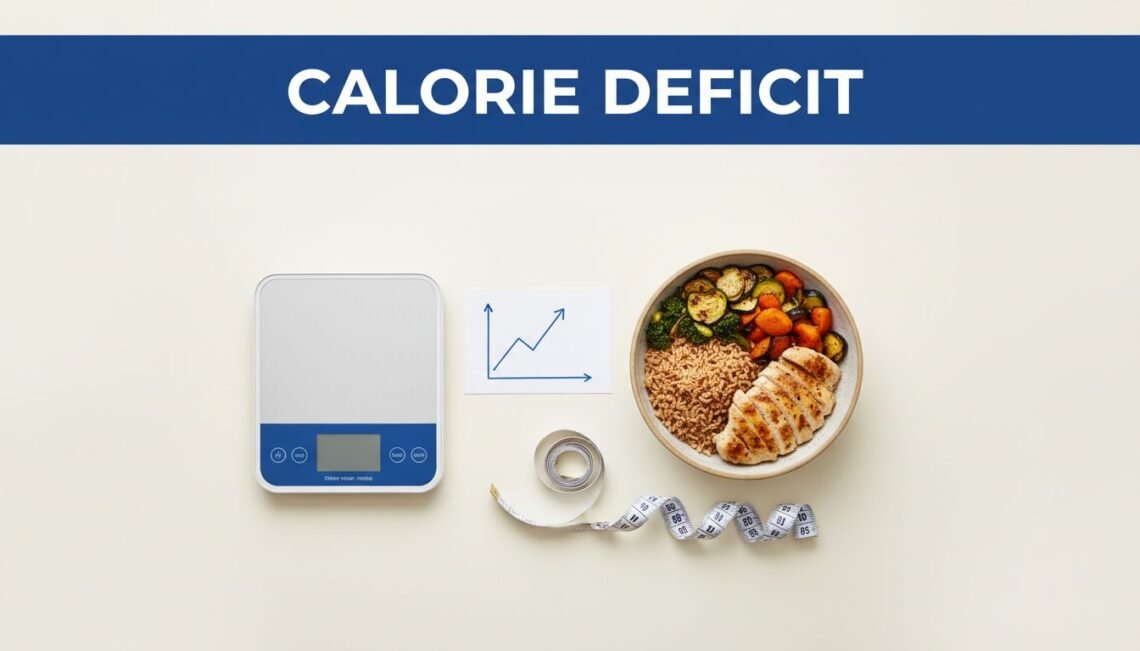
A calorie target can look precise on paper, yet weight loss rarely moves in a straight line. For calorie deficit weight loss, the goal is to eat slightly less energy than you use while still having enough food, strength, and flexibility to stay consistent.
You don’t need punishing workouts or a very low daily target. Healthy weight loss comes from a repeatable approach, not rapid loss. Choose a reasonable starting estimate for your weight loss goals, then observe progress and make small adjustments as your body weight or routine changes.
Key Takeaways
- Start with a moderate target you can maintain.
- Focus on consistency before making adjustments.
- Judge progress by trends rather than single weigh-ins.
This post may contain affiliate links. If you make a purchase through these links, I may earn a small commission at no extra cost to you.
Key Takeaways
- Estimate your BMR and TDEE, then begin with a moderate calorie deficit of roughly 10% to 20%.
- Choose a calorie target that supports satisfying meals, training, sleep, and long-term consistency.
- Prioritize protein, fiber, resistance training, and mostly whole foods to help preserve muscle and manage hunger.
- Track weight trends over several weeks instead of reacting to individual weigh-ins.
- If progress stalls, check adherence first and make small adjustments rather than using an extreme calorie cut.
What a calorie deficit does in your body
A calorie deficit happens when your calorie intake is lower than your total daily energy expenditure, or TDEE. Your body then uses stored energy to cover part of the gap. Over time, that can reduce body fat.
However, body weight includes more than fat. Water, glycogen, food still digesting, and lean tissue can all affect the number on the scale. A salty restaurant meal can cause temporary weight gain overnight without adding meaningful fat tissue.
The familiar 3,500-calorie rule suggests that a 500-calorie daily deficit leads to about one pound lost per week. It can be a useful rough estimate at first. Still, it isn’t a promise. As you lose weight, your body needs fewer calories to move and function, while appetite regulation often becomes more challenging.
Kevin Hall, Ph.D., of the National Institutes of Health has shown why weight loss is not a fixed math equation. Energy expenditure changes as body mass falls, and your metabolic rate may adapt. The same food plan then creates a smaller deficit over time.
A useful calorie deficit feels manageable on ordinary days, not only during a short burst of motivation.
How to calculate calorie deficit weight loss with your own numbers
Start by estimating your BMR, then account for normal movement and exercise. This produces a reasonable TDEE estimate, which you can test against real progress.
Estimate your BMR
Basal metabolic rate, or BMR, is the energy your body uses at rest for functions such as breathing and circulation. The Mifflin-St Jeor equation is a common starting point for adults.
- Men:
BMR = (10 x weight in kg) + (6.25 x height in cm) - (5 x age) + 5 - Women:
BMR = (10 x weight in kg) + (6.25 x height in cm) - (5 x age) - 161
This equation estimates resting metabolic rate, but an individual’s metabolic rate can differ. It doesn’t know your sleep quality, job demands, medications, or daily step count. Still, a comparison of common RMR equations found Mifflin-St Jeor performed well across both non-obese and obese adults.
Turn BMR into a TDEE estimate
Multiply your BMR by an activity factor to estimate TDEE. Choose the factor that best matches your physical activity level:
| Typical routine | Activity factor |
|---|---|
| Mostly seated, little planned exercise | 1.2 |
| Light activity or exercise 1 to 3 days weekly | 1.375 |
| Regular exercise 3 to 5 days weekly | 1.55 |
| Physically demanding work or hard training most days | 1.725 |
For example, a BMR of 1,500 calories multiplied by 1.375 gives an estimated TDEE of about 2,063 calories. A Mifflin-St Jeor calculator can handle the arithmetic, while a calorie deficit calculator can help set a starting target.
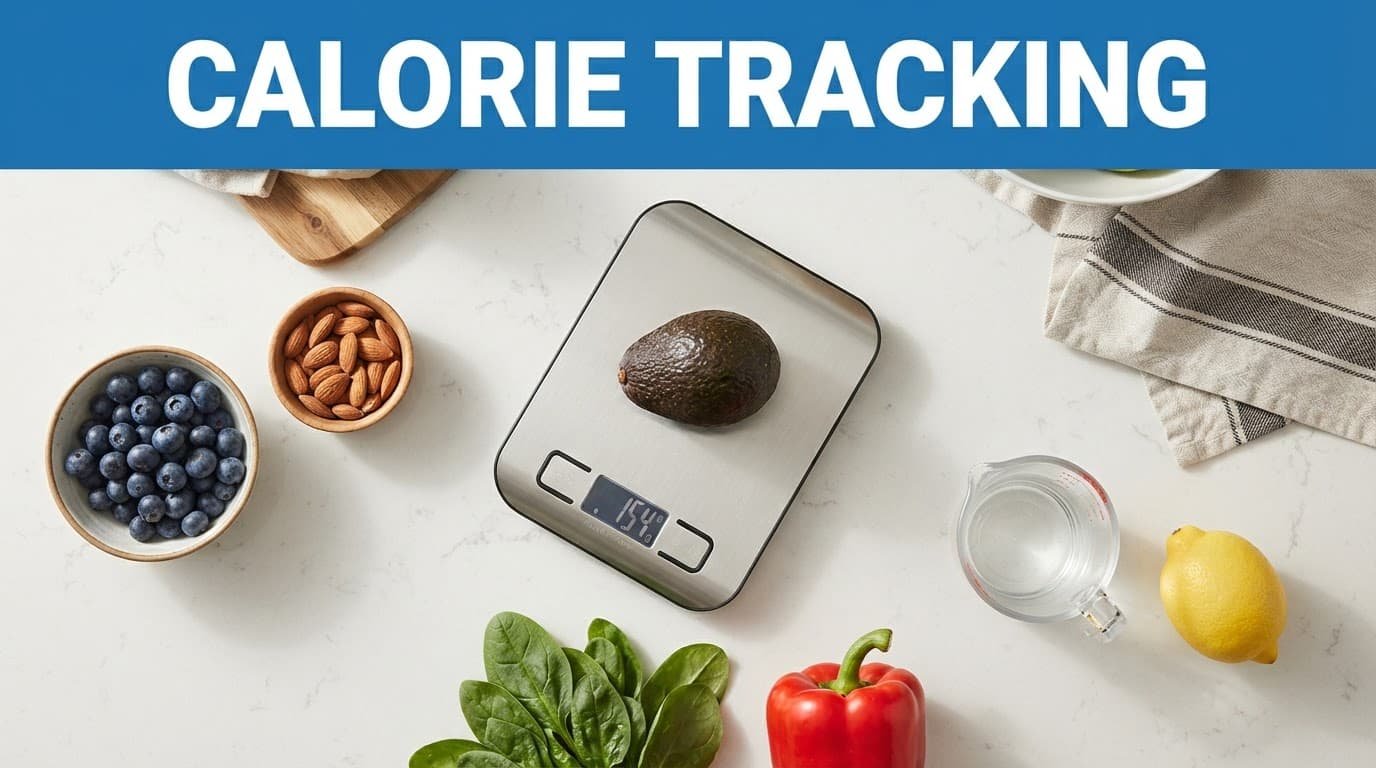
Track your normal intake and morning scale weight for 10 to 14 days before making a large change. If weight stays stable across that period, your average calorie intake is likely close to maintenance.
Choose a calorie deficit you can maintain
Your deficit should match your weight loss goals while remaining small enough to support training, sleep, and normal meals. For many adults, a 10% to 20% reduction from TDEE is a practical starting range for healthy weight loss.
| Starting approach | Daily deficit | When it may fit |
|---|---|---|
| Gentle | 200 to 300 calories | You are close to your target weight or have a demanding training schedule |
| Moderate | 300 to 500 calories | You want steady progress with room for satisfying meals |
| Larger | More than 500 calories | Use caution and seek clinical guidance when needed |
If your estimated TDEE is 2,200 calories, a 15% reduction gives a starting intake near 1,870 calories. A moderate target is more likely to support sustainable weight loss, so hold it long enough to see the trend.
Many plans cite 1,200 daily calories for women and 1,500 for men as minimums. Those figures aren’t personal calorie intake prescriptions. They may be too low for taller people, active people, or anyone with a physically demanding job.
Talk with a registered dietitian or clinician before using a low-calorie plan, especially if you are pregnant, breastfeeding, under 18, managing diabetes, taking glucose-lowering or weight loss medication, or have an eating disorder history. Aggressive calorie restriction can increase the risk of nutrient deficiencies, so very low-calorie plans need individualized guidance.
Build filling meals instead of chasing tiny portions
Tracking works best as an audit, not a life sentence. A food scale can reveal calorie-dense extras that are easy to miss, including cooking oil, cheese, nut butter, dressings, and large pours of cereal.
If you need one, add the OXO 11-lb Stainless Steel Food Scale with Pull-Out Display to your Amazon cart and keep it where you prepare meals. Weigh calorie-dense foods for a few weeks, then use those portions to build better visual awareness.
Prioritize mostly whole foods that give you volume, protein, and fiber for their calories:
- Greek yogurt, eggs, chicken, fish, tofu, beans, and lentils can support your protein needs.
- Berries, apples, leafy greens, broccoli, potatoes, oats, and beans add fiber and bulk.
- Soup, fruit, air-popped popcorn, and large salads can make a deficit feel less restrictive.
- Olive oil, nuts, cheese, and avocado fit in a healthy diet, but measured portions help.
A simple day might include eggs and fruit at breakfast, a chicken or bean grain bowl at lunch, yogurt with berries as a snack, and salmon or tofu with potatoes and vegetables at dinner. Each meal includes protein and produce, while carbs and fats make it satisfying.
For easier weekday lunches, the Rubbermaid Brilliance food storage containers are a useful Amazon pick. Portion cooked protein, vegetables, and a carbohydrate source into separate containers, then mix and match meals without eating the same dinner all week.
Preserve muscle mass while you lose body fat
Resistance training helps protect muscle mass during calorie restriction. Strength training also gives you a useful progress marker: if your main lifts are holding steady, your plan may be more sustainable than one that leaves you weak and exhausted.
Train major movement patterns two or more times per week. Squats or leg presses, rows, presses, hip hinges, and loaded carries are enough for a simple full-body routine. Keep the weights challenging, but don’t expect personal records every week while dieting.
Protein matters here too. Many active adults do well with a daily protein intake of roughly 1.2 to 1.6 grams per kilogram of body weight, spread across meals. If you have kidney disease or a condition that affects how much protein you should eat, get individualized advice first.
More movement can increase the calories you use, but don’t rely on a wearable’s calorie burn estimate to decide how much extra food you “earned.” A Fitbit Charge 6 can be a helpful Amazon option if step reminders encourage you to walk more. Use it to support routines, not to create a food reward system.
Severe food noise, frequent binge eating, or anxiety around meals are signs to pause aggressive restriction. Regular meals and less rigid food rules can support appetite regulation. Support from an eating-disorder-informed therapist or dietitian can make progress safer.
Track trends and adjust slowly
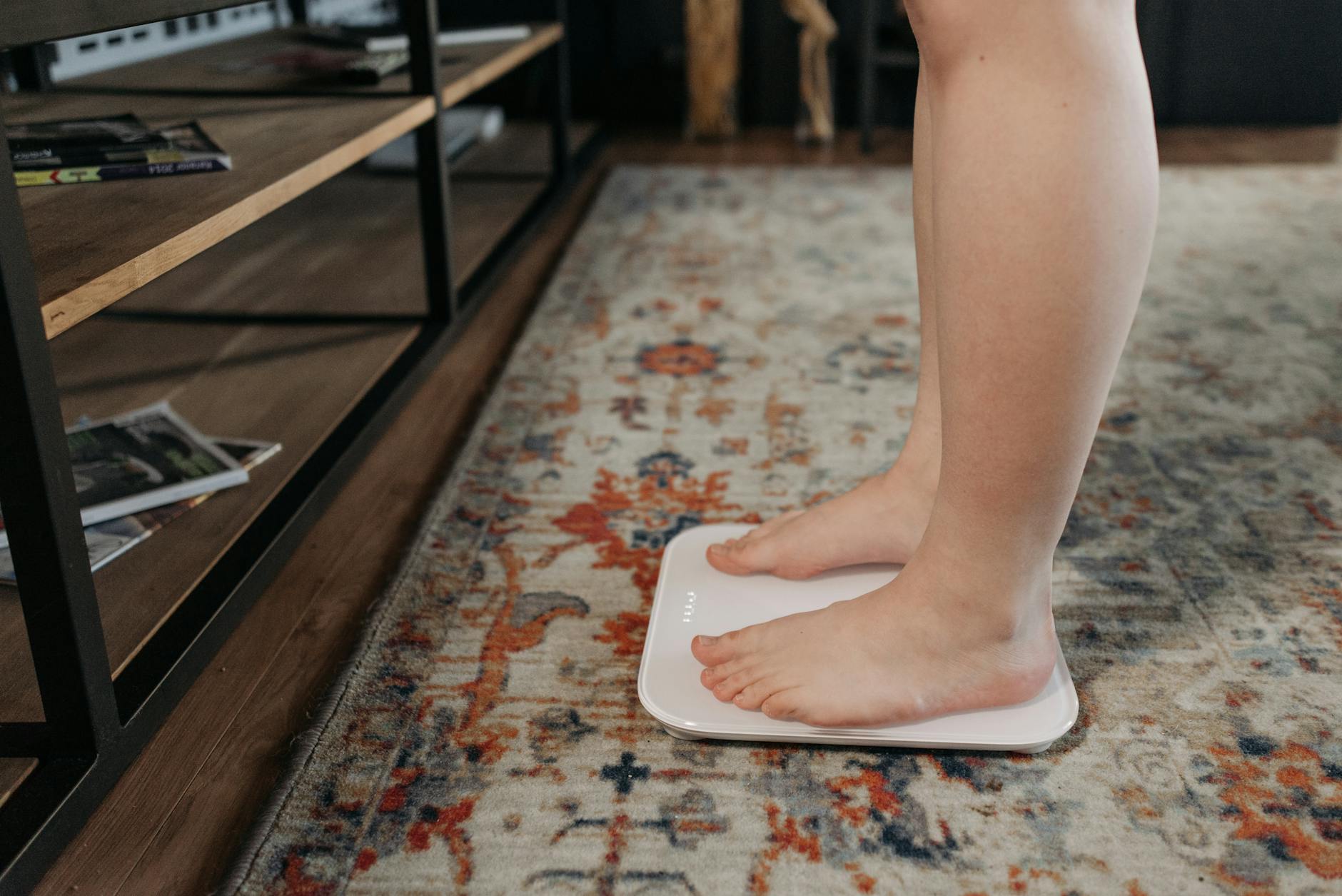
Photo by Pavel Danilyuk
Weigh yourself under similar conditions, such as after using the bathroom and before breakfast. A three- to seven-day average is more useful than reacting to a single weigh-in.
The Etekcity Smart Scale C1 can make trend tracking easier, although its body-composition estimate can shift with hydration. Focus on average body weight, waist measurements, clothing fit, energy levels, and strength performance.
If your average trend hasn’t moved for two to three weeks, first check adherence. Portions may have crept up, weekend meals may be untracked, or your physical activity level may have changed. A review of changing calorie needs during weight loss also shows why predictive equations need regular recalibration.
After an honest review, reduce daily calories by 100 to 200, add a modest amount of walking, or do both. Avoid responding to a plateau with an extreme cut.
Frequently Asked Questions
How large should my calorie deficit be for weight loss?
A reduction of about 10% to 20% of your estimated TDEE is a practical starting range for many adults. A moderate deficit of 300 to 500 calories per day can support steady progress while leaving room for satisfying meals.
How do I calculate my calorie deficit?
Estimate your BMR with the Mifflin-St Jeor equation, multiply it by an activity factor to estimate TDEE, and subtract a modest amount from that total. Use your average calorie intake and body-weight trend over 10 to 14 days to refine the estimate.
Why is my weight changing if I am in a calorie deficit?
Daily weight can shift because of water, glycogen, sodium, digestion, and hormonal changes. Compare three- to seven-day averages and look for a trend over several weeks rather than judging your plan by one weigh-in.
Can I lose weight without exercising?
A calorie deficit can lead to weight loss without planned exercise, but resistance training helps preserve muscle and movement supports health and energy expenditure. Strength training, walking, and other enjoyable activities can make the process more sustainable.
What should I do if my weight loss plateaus?
First, review portions, weekend meals, tracking accuracy, and changes in activity. If your average weight has not moved for two to three weeks after an honest review, reduce intake by 100 to 200 calories, add a modest amount of walking, or seek guidance from a qualified professional.
A deficit that works is one you can repeat
A plan supports sustainable weight loss when it creates steady change without making food, training, or social life feel impossible. Choose an approach you can repeat through busy weeks, changing routines, and imperfect days.
The scale will fluctuate throughout your weight loss journey, but consistent habits reveal the real direction. Rising food noise or exhaustion is a reason to make a small adjustment, not restart dramatically.
Healthy Weight Loss in 2026: A Beginner’s Guide to Getting Started