Figuring out how many calories to eat can feel frustrating. Eat too little and workouts suffer. Eat too much and the scale moves in the wrong direction. This tool gives you a practical starting estimate for weight loss, maintenance, or muscle gain.
That estimate helps you set a target for your daily caloric intake. Your appetite, body composition, sleep, routine, and daily movement can all change your real-world needs. Use the estimate as a starting point, then let your results guide the next adjustment.
Key Takeaways
- A calorie calculator estimates maintenance calories from your body details and physical activity.
- Weight loss often starts with a modest calorie deficit of 250 to 500 calories daily.
- Weight maintenance is a range that changes with body weight, training, and daily movement.
- Muscle gain benefits from resistance training, adequate protein intake, balanced macronutrients, and recovery.
- Review weight trends for two to four weeks, and limit empty calories to help sustain your target.
Calorie Calculator Guide for Weight Loss, Maintenance, and Muscle Gain
A calculator estimates how much energy your body uses each day. It uses your age, sex, height, weight, and activity level to estimate daily caloric intake.
The process starts with Basal Metabolic Rate, or BMR. This is the energy your body uses at rest for breathing, circulation, and temperature control. It does not include walking, workouts, or standing at your desk.
Total Daily Energy Expenditure, often called TDEE, adds physical activity, exercise, and food digestion to your resting energy needs. Your calorie balance then influences changes in body weight. Eating near TDEE tends to maintain weight, while eating below or above it creates a deficit or surplus.
Different formulas estimate these needs in different ways. Common options include the Mifflin-St Jeor Equation, Katch-McArdle Formula, and Harris-Benedict Equation. Some approaches use body composition data, such as body fat percentage, to estimate muscle mass or lean mass. However, no formula is perfectly individualized.

### What BMR and TDEE Tell You About Daily Calorie Needs
The calculator applies an activity multiplier or exercise estimate to BMR and produces a maintenance target. For example, two people may weigh the same, yet an active worker who trains regularly may need more food than someone who sits most of the day.
Formulas cannot measure every difference between people. The accuracy of common TDEE equations varies because daily movement and metabolic rate vary, too. Use the result as an informed estimate rather than a fixed rule.
Why Your Calculator Result Is a Starting Point, Not a Rule
Test the estimate against your own feedback. Watch your average weight, hunger, energy, training performance, and recovery for several weeks.
Short-term scale changes can mislead you. Sodium, a hard workout, constipation, menstrual-cycle shifts, and a higher-carb meal can all change water weight. A seven-day average gives you a clearer view than one morning weigh-in.
How to Use a Calorie Calculator for Your Specific Goal
Start with your Total Daily Energy Expenditure estimate, then make a modest change based on your goal. If your estimated maintenance intake is 2,200 calories, these targets offer a sensible first test:
- For steady fat loss, try roughly 1,700 to 1,950 calories.
- For maintenance, begin near 2,200 calories and review your weight trend.
- For muscle gain, try around 2,350 to 2,500 calories while following a resistance-training program.
Different tools may use the Mifflin-St Jeor Equation, Katch-McArdle Formula, or Harris-Benedict Equation. This is one reason estimates of daily caloric intake can differ.
Your ideal intake may fall outside these examples. Body size, current body composition, training volume, medical needs, and food preferences all matter.
Set a Calorie Deficit for Steady Weight Loss
A sustained deficit is required for fat loss. For many adults, reducing intake by about 250 to 500 calories per day is a manageable place to begin. A smaller person, or someone already lean, may need a gentler cut.
Very low targets can leave little room for protein, fiber, vitamins, and satisfying meals. They can also make social meals and exercise harder to sustain. Build meals around protein-rich foods, produce, high-fiber carbohydrates, and foods you enjoy enough to repeat.
Faster scale loss is not always better progress. Aggressive deficits can make training, recovery, and consistent eating harder.
Find Your Maintenance Calories Without Guesswork
Eat near the estimated maintenance number for two to four weeks. Weigh yourself under similar conditions, such as after using the bathroom and before breakfast. Then compare weekly averages rather than daily numbers.
If the trend stays stable, you have found a useful maintenance range. If it rises or falls consistently, adjust by a small amount. Maintenance also shifts after meaningful changes in body weight, step count, work schedule, or training.
Choose a Small Calorie Surplus for Muscle Gain
Muscle gain needs more than extra calories. You also need progressive resistance training, sufficient protein, and recovery between sessions. A conservative surplus of roughly 150 to 300 calories daily works well for many people.
Large surpluses often add body fat faster without speeding muscle growth by the same amount. Assess progress with training performance, measurements, body weight, and body fat percentage. If weight climbs quickly but your training stalls, reduce the surplus.

## Improve Your Calorie Target With Tracking and Smart Adjustments
Calorie tracking makes your target more useful when you use it consistently. You don’t need flawless data. You need enough accuracy to spot a pattern.
Record meals for a few weeks with a food journal or calorie counter, use a scale under the same conditions, and review weekly averages. Keep physical activity reasonably consistent while testing a target. Otherwise, a sudden jump in steps or exercise can hide whether the food target works.
Track the Details That Change Your Results
Missed calories often come from foods that seem too small to matter. Cooking oil, creamy sauces, coffee add-ins, alcohol, handfuls of snacks, restaurant portions, and oversized servings can shift daily intake quickly. Some also provide empty calories without much fullness.
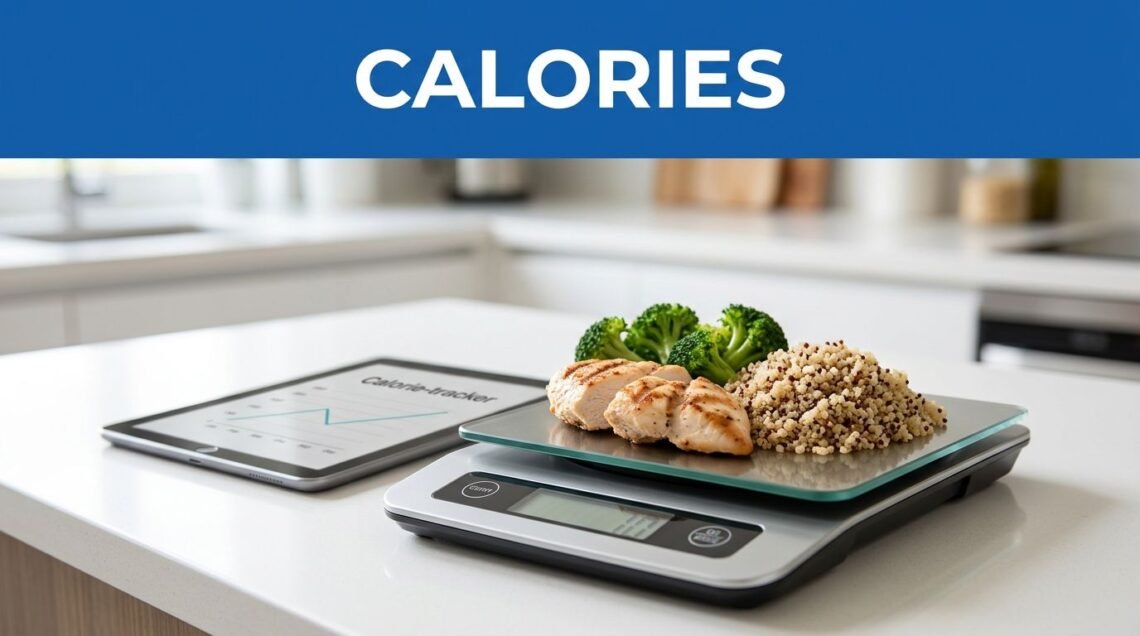
Food labels and a kitchen scale can teach portion awareness in a short period. You may later switch to repeat meals, hand portions, or pre-portioned snacks. Tracking should support awareness, not guilt or anxiety.
When and How to Adjust Your Daily Calories
Don’t change your target after three difficult days. Review at least two weeks of consistent information, and preferably four weeks when water retention is likely to cloud the trend.
If progress has stalled despite consistent tracking, reduce intake by about 100 to 200 calories or add modest activity. If weight falls too fast, increase calories by a similar amount. Constant fatigue, intense hunger, poor concentration, declining workout performance, and poor recovery can mean your target is too low.
Use Calories Alongside Protein, Carbs, and Fats
Calories influence body-weight change, but food quality affects how you feel and train. Protein intake supports muscle repair and helps many people stay full. Carbohydrates fuel demanding exercise, while dietary fats support cell function and hormone production.
There is no perfect macronutrients ratio for everyone. Build most meals around protein, vegetables or fruit, whole foods, and satisfying fat sources. Choose nutrient-dense foods most of the time, while allowing refined carbs in portions that fit your needs. This structure supports a balanced diet and makes your calorie target easier to live with.
Calorie Calculator Limits, Safety, and Common Mistakes
A calculator cannot account for every health factor. It cannot fully capture medication effects, hormone changes, injury recovery, unusual work demands, or a changing training plan. The Mifflin-St Jeor Equation, Katch-McArdle Formula, and Harris-Benedict Equation are population-based approaches, so results may vary with body composition and activity assumptions.
Common mistakes include choosing an activity setting that is too high, overestimating exercise calories, forgetting drinks, and reacting to a single scale reading. Unrealistic deadlines can encourage overly aggressive calorie restriction and targets you cannot sustain. Overly strict food rules can also make it harder to include a balanced range of foods, including refined carbs.
Avoid Overestimating Exercise and Underestimating Portions
Fitness watches, cardio machines, and phone apps estimate calorie burn. Their numbers can support consistency, but they are not precise enough to treat as extra food you must automatically eat back. Restaurant portions, liquid calories, and sugar-sweetened beverages can also be easy to overlook, while some foods and drinks add empty calories without much satiety.
Keep your activity setting consistent and assess the outcome over time. Pay attention after hard workouts because increased hunger can lead to larger portions without notice.
Know When Personalized Advice Is More Appropriate
People who are pregnant, breastfeeding, under 18, managing a medical condition, or taking medications that affect appetite or weight should talk with a qualified health professional before setting a target. The same applies to anyone with a history of disordered eating.
A registered dietitian, doctor, or qualified coach can help when food tracking causes distress, competition preparation changes training demands, or weight changes without a clear reason.
Frequently Asked Questions
How accurate are calorie calculators?
They provide population-based estimates, so individual calorie needs can differ. Compare the result with your weight trend, hunger, recovery, and training performance over several weeks to make it personal.
Which formula does a calculator use?
Common options include the Mifflin-St Jeor Equation, Katch-McArdle Formula, and Harris-Benedict Equation. The selected formula and activity assumptions can affect the estimate.
Should I eat back the calories burned during exercise?
Usually, don’t replace every calorie reported by a watch or machine. Keep your activity level consistent in the calculator, then adjust total intake based on progress, hunger, and recovery.
How often should I recalculate my calorie needs?
Recalculate after a meaningful change in body weight, activity, training schedule, or goal. Small daily scale changes do not require a new calculation.
Can I lose weight without counting calories?
Yes. Focus on consistent portions, protein and produce at most meals, fewer refined carbs and empty calories, and regular weight-trend checks. You don’t have to log every bite, and some people find this approach easier to maintain.
What if my calorie target leaves me hungry all the time?
Constant hunger can mean the deficit is too large, meals lack protein or fiber, or sleep is poor. Review your food choices and consider a smaller deficit. Seek professional support if food thoughts or hunger feel difficult to manage.
Final Thoughts
A calorie estimate gives you a useful starting point, not a verdict on what your body needs. For weight loss, choose a modest target and use several weeks of real feedback instead of chasing a perfect number.
A balanced diet built around whole foods and fewer empty calories can make consistency easier. Repeatable habits matter more than perfect tracking. Consistency beats chasing one exact calorie number every day.
Healthy Weight Loss in 2026: A Beginner’s Guide to Getting Started