Fine hair can look healthy in the mirror, yet I’ve seen hair breakage during washing, brushing, or heat styling with little warning. When strands feel weak and break at the ends, a protein treatment for hair can help support the fiber and improve its ability to handle everyday stress.
The balance matters, though. A protein treatment hair routine can leave fine hair stiff, rough, and more brittle if used too often. I prefer a measured routine instead of strengthening products every wash. You’ll learn how to spot signs that your hair needs protein, choose the right treatment, schedule applications, add enough moisture, and recognize protein overload before breakage gets worse.
First, I’ll show you how to tell whether your fine hair needs protein or a moisture-focused routine.
Key Takeaways
These bullets offer practical guidance for choosing protein treatments for hair based on your strands’ needs.
- I use a treatment when strands feel weak, overly stretchy, or prone to snapping, then assess their hair elasticity.
- A light formula applied every few weeks can support hair strength without leaving it stiff.
- I balance protein with regular moisturizing conditioner, since fine hair can become dry or rough with excess strengthening.
- I watch for protein overload, including a straw-like texture, tangling, and reduced softness.
- Products with hydrolyzed proteins may help reinforce damaged areas, as explained in this guide to protein and fine hair.
How Protein Treatments Help Fine Hair Resist Breakage
Fine hair has less diameter, so hair strands can weaken quickly from heat exposure, heat styling, chemical damage, sun exposure, friction, and rough handling. Its outer hair cuticle protects an inner hair cortex, and repeated stress can affect both. Because hair contains keratin protein, a protein treatment for hair may temporarily reinforce weakened areas, reduce excessive stretching, and help strands feel smoother. It cannot permanently repair frayed ends or reverse severe damage, but it can make fragile hair easier to handle.
### Signs Fine Hair May Need More Protein
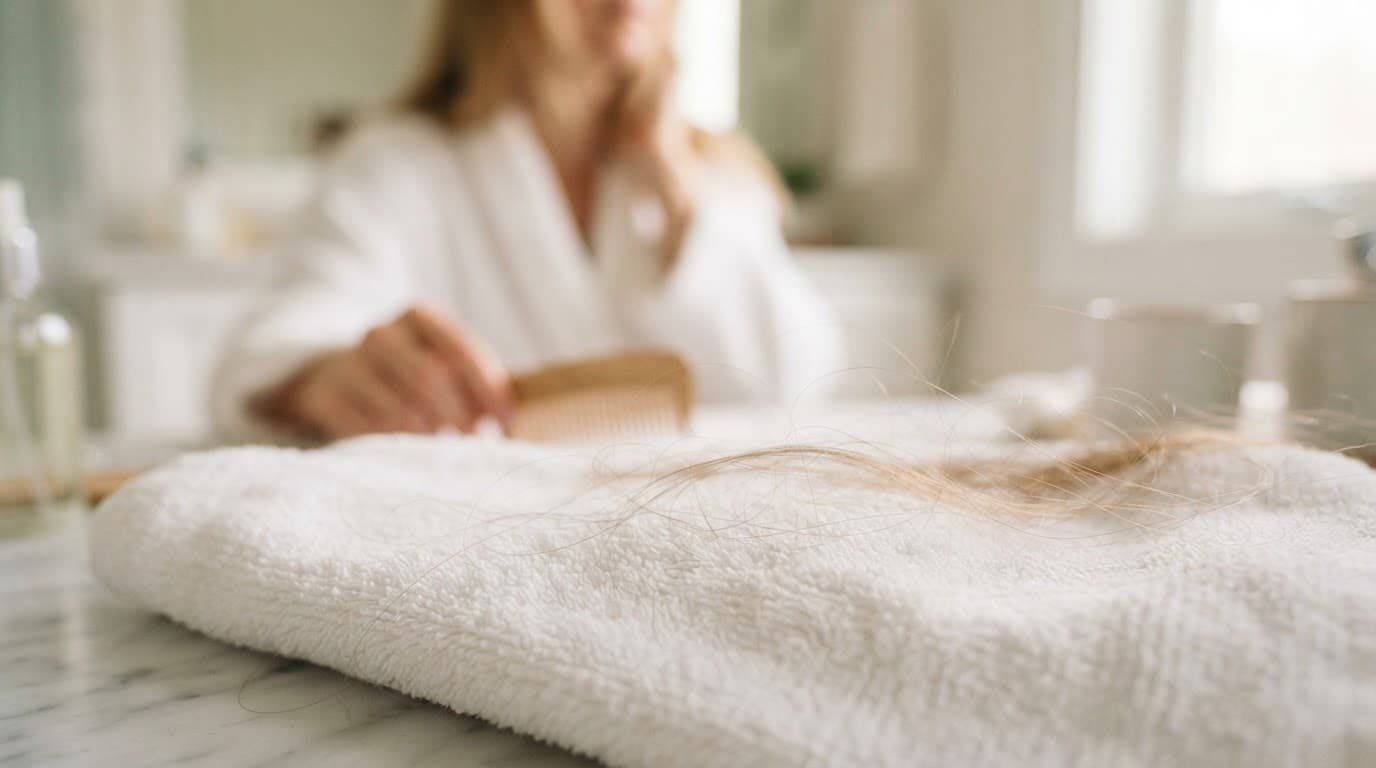
I look for a pattern rather than relying on one symptom. Fine hair may benefit from protein when it feels weak, stretches too far while wet, or breaks during gentle detangling. Other signs include:
- Wet strands stretch excessively and seem slow to return to their original shape.
- Hair feels mushy, limp, or unusually soft after conditioning.
- Curly hair, waves, or other textures lose definition soon after washing.
- Short broken pieces collect on the brush or sink during detangling.
- Hair refuses to hold a blowout, curl, braid, or other style.
You can make a simple strand-stretch observation after washing. With wet hair, gently hold one strand between your fingers and pull slightly. If it stretches a long way, feels gummy, or snaps with little resistance, I take that as a reason to review my routine, not as a scientific test or a diagnosis.
If you have high porosity hair, your strands may absorb or lose conditioning support differently. This makes one observation less conclusive.
These signs can also come from overconditioning, product buildup, or severe damage. I first clarify whether heavy products have coated the hair, then compare how my strands feel after a gentle wash and a lighter conditioner. If the problem continues, a mild protein treatment may help support the fiber. Hair made from keratin can lose protein after damaging processes, and keratin protein guidance explains why treatments may improve the feel of weakened strands without creating permanent repair.
Signs of Protein Overload in Fine Hair
Excess protein means the hair has received more strengthening than it can comfortably handle. Fine hair may show these changes quickly because it has less mass and can become coated more easily.
Watch for a rough, straw-like feel, increased tangling, dryness, snapping, or strands that feel hard instead of flexible. If my hair loses softness after treatment, I pause protein and return to gentle cleansing, a moisturizing conditioner, and careful detangling. I resume strengthening only after the hair feels flexible again.
The Best Hair Protein Treatment Routine for Fine Hair That Breaks Easily
Fine hair usually benefits from a controlled protein routine, not strengthening at every wash. I focus treatment on fragile lengths, follow it with lightweight moisture, and adjust the schedule based on softness, stretch, tangling, and breakage.
A Wash-Day Routine That Limits Snapping
I use this order to reduce friction and avoid leaving fine hair overloaded:
- If the ends feel dry, I apply a small amount of lightweight conditioner or oil before shampooing. I skip this step when my roots and lengths already feel coated.
- I shampoo the scalp gently, then let the suds rinse through the lengths instead of scrubbing them.
- After rinsing, I squeeze out excess water with my hands. On clean, damp hair, I apply the protein treatment mainly from the mid-lengths to the ends.
- I follow the product’s processing time, then rinse thoroughly with lukewarm water.
- A lightweight conditioner goes over the lengths to restore slip and flexibility.
- I detangle with my fingers or a wide-tooth comb, starting at the ends and moving upward in small sections.
- Finally, I apply a small amount of leave-in conditioner to the ends before air-drying or heat styling with low heat.

Don’t rub wet hair with a bath towel. I press and squeeze it with a microfiber towel or soft T-shirt, then detangle only when the conditioner provides enough slip. I also avoid stacking a protein hair mask, reconstructor, strengthening leave-in, and bond-focused treatment on one wash day. That combination can leave fine hair stiff and rough before you know it.
How Often to Use Protein on Fine or Chemically Treated Hair
For healthy, minimally processed fine hair, I would start with protein every 4 to 6 weeks. A conservative starting point is one mild treatment every 3 to 4 weeks, followed by an adjustment based on the result.
Chemically treated, bleached, permed, relaxed, or noticeably damaged hair may tolerate a light treatment every 2 to 4 weeks. Strong reconstructors need more time between applications than light protein conditioners. Use more frequent light protein only when the label supports it and your hair remains soft and flexible.
After each use, I track whether my hair has improved softness, stretch, shine, slip, and breakage. If it feels straw-like or tangles more, I pause protein and focus on gentle moisture.
How to Balance Strength With Lightweight Moisture
Protein supports hair strength, while moisture helps strands bend without feeling brittle. Formulas with keratin protein can temporarily reinforce weakened areas. I alternate protein wash days with moisturizing washes instead of using both heavily every time.
For fine hair, I prefer a moisturizing conditioner with humectants, fatty alcohols, aloe, panthenol, or a small amount of suitable oil. Curly hair may need flexibility and slip as much as strengthening. A moisture-focused wash can use a deep conditioning mask instead of another protein treatment.
Heavy butters and multiple silicone layers can weigh down the hair or hide buildup. Good moisture improves flexibility and detangling slip, but it shouldn’t leave your hair limp, greasy, or coated.
How to Choose a Protein Treatment for Fine Hair
Fine hair usually needs targeted support, not the strongest product available. When comparing protein treatments for hair, I consider the formula’s strength, ingredients, and my hair’s current condition. A small test section helps because one formula may leave one head of hair soft and another stiff.
Light Protein, Reconstructors, and Bond-Building Products
Light protein conditioners are my starting point for healthy or mildly fragile fine hair. Look for a hydrolyzed protein such as keratin, wheat, silk, or rice protein, along with amino acids. These ingredients are broken into smaller pieces, helping them interact with damaged areas without requiring a heavy formula.
A hair mask or reconstructor suits hair that feels weak after bleaching, relaxing, perming, or frequent hot-tool use. I use these less often and keep them on the mid-lengths and ends. If my hair is only slightly stretchy or dull, a light conditioner is a better fit than an intense reconstructor.
Bond-building products differ from traditional protein treatments. They target certain damaged bonds within the hair structure rather than adding protein-based conditioning ingredients. They can help after chemical services, but I don’t treat them as interchangeable with a protein mask.
I avoid combining a reconstructor, protein mask, strengthening leave-in, and bond builder on the same wash day. Fine hair can become rigid before the damage is obvious.
Ingredient Clues for a Fine-Hair-Friendly Formula
I scan the first part of the ingredient list for a protein or amino acid that appears high enough to matter. Still, the complete formula matters more than one impressive ingredient. Lightweight conditioning agents, humectants such as glycerin or panthenol, and a manageable amount of silicone can improve softness, slip, and heat protection without flattening fine strands.
I also consider whether the formula provides enough moisture for my texture. Curly hair may need more conditioning, while very fine straight hair can become weighed down quickly. A keratin protein may support fragile strands, but the overall formula still determines how hair feels.
I avoid formulas dominated by heavy butters, dense oils, or multiple rich conditioning agents. A modest amount of silicone can help reduce friction, so I don’t automatically reject it because my hair is fine. Product performance varies, so I test a small section before using a new treatment across my whole head.
Fragrance and preservatives may irritate some scalps. If I notice itching, burning, redness, or flaking, I choose a simpler formula and keep treatment away from the scalp.
### When a Protein Treatment Is Not the Right Fix
A treatment works on the hair fiber, not every cause of hair loss or breakage. Split ends need trimming, while tight ponytails, extensions, rough pillowcases, hard-water buildup, scalp conditions, poor nutrition, and repeated chemical services require different solutions.
Protein is only one part of a damaged hair repair plan. I trim visibly frayed ends instead of trying to seal them permanently. I also loosen tight styles, use gentler pillowcases, clarify buildup when appropriate, and ask a qualified stylist to assess repeated chemical damage. Sudden shedding, bald patches, scalp pain, or persistent breakage calls for a dermatologist’s evaluation.
Common Mistakes That Make Fine Hair Break More
A protein treatment for hair can support fragile strands, but poor timing and rough habits can cancel out its benefits. I watch for stiffness, buildup, and handling damage before adding another strengthening product.
### Using Protein at Every Wash
Fine strands can become rigid when they receive repeated protein exposure. Even gentle formulas may overlap. A hair mask, leave-in conditioner, heat spray, and styling cream can all contain hydrolyzed keratin, keratin protein, rice protein, wheat protein, silk protein, collagen, or amino acids.
When hair loses flexibility, it may feel rough, tangle easily, and snap instead of bending. I check every product in my routine before assuming I need a stronger treatment. For one month, keep a simple log with the wash date, products used, how your hair felt wet and dry, and whether you noticed extra breakage. If snapping follows protein-heavy days, you may be dealing with protein overload. Pause strengthening and use a lightweight moisturizing conditioner.
Mistaking Dryness, Buildup, or Split Ends for Protein Deficiency
Dry hair usually needs more softness and slip, not another reconstructor. I switch to a moisturizing conditioner when my strands feel rough, stiff, or parched after treatment. Coated hair may feel limp, greasy, dull, or difficult to wet, so a careful clarifying wash can help remove excess product.
Visible splits and frayed ends need trimming. No protein treatment can permanently fuse split ends back together. Weather, hard-water residue, product buildup, bleach, relaxers, and frequent chemical services can also change how fine hair feels.
Change one factor at a time. If you add protein, a clarifier, a new leave-in, and a rich mask together, you won’t know what helped or caused the problem.
Rough Handling After the Treatment
Daily friction can overpower the benefits of a good protein treatment. I use loose styles, gentle elastics, and a smooth pillowcase or bonnet at night. I also press wet hair with a soft T-shirt instead of rubbing it with a rough towel.
Before heat styling, apply heat protection and choose the lowest temperature that works. Fewer tight ponytails, buns, extensions, and styles that pull at the roots give fine hair less mechanical stress. As post-treatment care guidance also emphasizes, handling matters after treatment. Detangle from the ends upward with conditioner or leave-in slip, because forceful brushing on wet hair can create breakage even when the treatment itself was suitable.
A Simple Maintenance Plan for Stronger, Softer Fine Hair
A protein treatment for fine hair works best as part of a repeatable hair care routine. I adjust the schedule based on how my strands feel to support overall hair health. A calendar cannot account for bleach, heat styling, texture, or buildup.

### A Four-Week Starting Schedule
I use this sample plan as a starting point:
- Week one: Apply one light protein treatment after gentle cleansing, then follow with a moisturizing conditioner. Detangle slowly while the hair has plenty of slip.
- Week two: Focus on moisture. Wash the scalp as needed, condition the lengths, and use a deep conditioning mask occasionally instead of adding more strengthening products.
- Week three: Continue with moisture-focused care. If the hair feels coated, limp, or difficult to wet, replace one moisturizing wash with a gentle clarifying wash.
- Week four: Use another light protein treatment only if the hair still feels overly stretchy, weak, or prone to snapping. Otherwise, keep the week moisture-focused.
Chemically treated, bleached, relaxed, or permed hair may need light protein more often, but that doesn’t mean adding keratin protein every week. Healthy, minimally processed fine hair may need protein only every four to six weeks. I change the frequency rather than forcing a routine that makes my hair feel worse. Regular trims also remove frayed ends that no treatment can permanently repair.
Daily Habits That Protect New Length
Satin or silk pillowcases can reduce nighttime friction. For curly hair, a soft bonnet can help preserve definition while reducing tangling. A loose braid or low ponytail may also help, but avoid wrapping tightly or using the same high ponytail every day.
I detangle from the ends upward with my fingers or a flexible brush. Scalp-focused washing keeps shampoo friction away from fragile lengths, while conditioner protects the mid-lengths and ends. Before blow-drying, curling, or straightening, I apply heat protectant and use the lowest effective temperature.
These small habits help the benefits of a protein treatment for hair last longer because they prevent fresh damage between wash days.
How to Tell Whether the Routine Is Working
After several wash days, check for changes that suit your hair texture:
- Less snapping during washing and detangling.
- Better wet-hair flexibility without a gummy feel.
- Smoother, less frayed ends.
- Easier detangling with less force.
- Styles that hold without stiffness or roughness.
If hair becomes brittle, unusually tangled, or straw-like, stop protein and return to gentle moisture. A fine-hair care routine also benefits from adjusting strengthening treatments to the hair’s response, not applying them automatically.
Frequently Asked Questions
These questions often come up after someone adds a protein treatment for hair to a fine-hair routine. I use the answers below to decide when a treatment fits and when another approach makes more sense.
### Can protein treatments make fine hair grow faster?
No. A protein treatment works on the existing hair shaft, so it cannot speed up follicle activity or create new growth. I use it to reduce handling damage and help fragile lengths stay intact. This may make it easier to retain the length you already grow.
If you notice sudden shedding, thinning patches, or scalp irritation, a cosmetic treatment is not enough. A dermatologist can check for causes that hair products cannot address.
Should protein go on the scalp or the ends?
I apply most protein treatments from the mid-lengths to the ends, where fine hair usually has the most wear. The scalp produces natural oil and rarely needs a concentrated strengthening treatment.
Keeping the product away from the roots also helps prevent limpness and buildup. If the label specifically permits scalp application, follow its directions. Stop if you notice itching, burning, or redness.
Can protein be used on natural hair or curly hair?
Yes, although both textures may need it less often than bleached or chemically processed hair. I start with a mild conditioner containing protein and use it when strands feel weak, overly stretchy, or difficult to style.
Healthy hair that feels soft and flexible may gain little from extra protein. In that case, a lightweight moisturizing conditioner is usually the better choice.
How long should a protein treatment stay on fine hair?
I follow the product’s stated processing time rather than leaving it on longer for a stronger result. Many formulas need only a few minutes, while intensive reconstructors may require more time.
Longer application does not automatically improve the outcome. For additional guidance on safe treatment frequency and use, see this hair protein treatment guide.
Can protein treatments repair frayed ends permanently?
No. Protein can temporarily improve the feel and appearance of damaged strands, but it cannot permanently fuse split ends. I trim visibly damaged ends and use conditioner, gentle detangling, and heat protection to limit further fraying.
What should you do if hair breaks more after treatment?
I stop protein products first and wash gently with a mild shampoo. Then I use a lightweight moisturizing conditioner and avoid heat, tight styles, and forceful brushing until my hair feels flexible again.
If breakage continues after several gentle wash days, I schedule a professional assessment rather than adding another treatment.