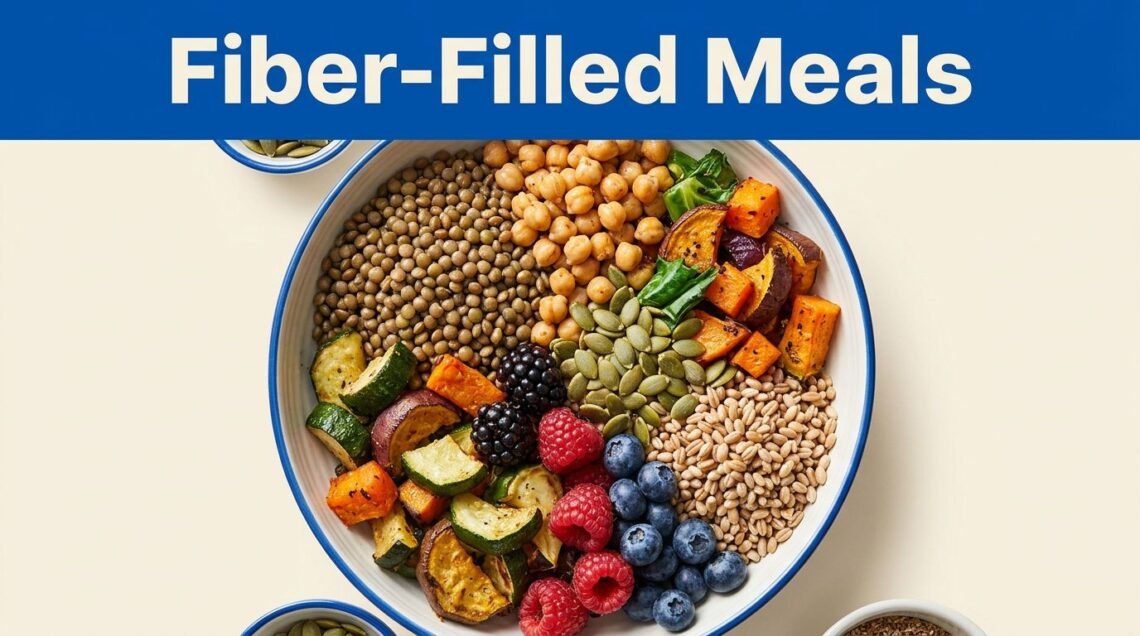
Hunger can make even the most sensible plan hard to follow. Meals built around beans, fruit, vegetables, and seeds take up more space on the plate and can make it easier to feel satisfied between meals.
If you’re working toward weight loss goals, focus on food patterns instead of chasing a single miracle ingredient. Fiber supports fullness as part of a balanced diet, alongside a caloric intake suited to your needs, enough protein, and sufficient fluids.
This post may contain affiliate links. If you make a purchase through these links, I may earn a small commission at no extra cost to you.
Key Takeaways
- Fiber-rich foods such as beans, lentils, fruits, vegetables, seeds, and whole grains add volume and can help meals feel more satisfying.
- A useful daily target is 14 grams of fiber for every 1,000 calories, but increase your intake gradually and drink water regularly.
- Build balanced meals with high-fiber foods, protein, and healthy fats instead of relying on isolated fiber supplements or a single miracle ingredient.
- Simple choices like oatmeal with berries, lentil bowls, bean chili, and apples with peanut butter can support fullness and sustainable weight loss.
- People with certain digestive conditions or a prescribed low-fiber diet should follow their clinician’s guidance before making major changes.
Why Fiber Helps You Stay Full
Dietary fiber is the part of plant foods your digestive system does not fully break down. Because it adds bulk and slows digestion, a fiber-rich meal often feels more substantial than a refined meal with the same calories.
These efforts work best when fiber replaces less filling choices. Swapping sweet cereal for oats and berries, or chips for black beans, changes a meal’s volume and texture without extreme restriction.
Fiber may support appetite control in several ways:
- Whole plant foods take longer to chew, which can slow eating and give fullness signals time to catch up.
- Fiber holds water and adds volume to food in the stomach and digestive tract.
- Many fiber-rich foods have a lower calorie density than pastries, candy, or fried snack foods.
- Some soluble fibers are fermented by the gut microbiome, producing compounds that support gut health.
Still, fiber is not a hunger off-switch. A systematic review of fiber, satiety, and food intake found mixed results, with many short-term fiber treatments failing to increase fullness. Food form matters. A bowl of lentils, roasted vegetables, and chicken is usually more satisfying than a low-calorie snack bar with isolated added fiber.
Soluble Fiber and Insoluble Fiber Both Matter
Soluble fiber mixes with water and can form a gel-like texture in the gut. Oats, barley, beans, lentils, chia seeds, citrus fruit, and apples provide soluble fiber. It can slow digestion and help blunt sharp blood sugar rises after a meal.
Insoluble fiber does not dissolve in water. It adds bulk to stool and supports regular bowel movements. Wheat bran, whole-wheat foods, leafy greens, and many vegetable skins contain it.
Most plant based foods contain a mixture of both. You don’t need to sort every food into one category. Eat a variety of plants across the week instead.
Set a Daily Fiber Intake Goal That Fits Your Diet
The Dietary Guidelines for Americans use a useful target for daily fiber intake: 14 grams of fiber for every 1,000 calories eaten. That works out to about 28 grams on a 2,000-calorie diet and roughly 22 grams on a 1,600-calorie plan.
General recommendations for adults are:
| Adult group | Suggested daily fiber intake |
|---|---|
| Women age 50 and younger | 25 grams |
| Women over age 50 | 21 grams |
| Men age 50 and younger | 38 grams |
| Men over age 50 | 30 grams |
Calorie needs vary. Set a daily fiber goal with the 14-grams-per-1,000-calories formula instead of copying somebody else’s target. If you currently eat little fiber, don’t jump from 12 grams to 35 grams overnight.
Add one higher-fiber food daily for several days, then build from there. Drink water regularly, because fiber needs fluid to move comfortably through the digestive system. A rapid increase can cause gas, bloating, cramping, or constipation.
A higher fiber target should feel sustainable. Regular discomfort is a sign to slow the increase, not to push harder.
People with a bowel stricture, active inflammatory bowel disease flare, gastroparesis, or a medically prescribed low-fiber diet should follow their clinician’s guidance. If you take insulin or other glucose-lowering medicine, monitor blood sugar when you make large changes to carbohydrate-rich foods such as beans, fruit, and whole grains.
Beyond weight management, fiber has broader health value. Harvard Health’s guide to fiber describes links between high-fiber eating patterns, lower LDL cholesterol, and a lower risk of heart disease. Fiber does not prevent colon cancer on its own. Higher-fiber diets are associated with a lower risk of colorectal cancer, while colon cancer screening and other preventive care remain important.
The High-Fiber Foods Worth Putting on Your Plate
Beans and lentils are some of the most practical fiber rich foods for raising fiber intake. They also provide plant protein, iron, and slow-digesting carbohydrates, making them useful for satisfying lunches and dinners.
These amounts are approximate, since variety and preparation can change the numbers.
| Food | Typical serving | Fiber |
|---|---|---|
| Cooked lentils | 1 cup | 16 grams |
| Cooked black beans | 1 cup | 15 grams |
| Chia seeds | 2 tablespoons | 10 grams |
| Raspberries | 1 cup | 8 grams |
| Cooked artichoke | 1 medium | 7 grams |
| Avocado | 1/2 medium | 7 grams |
| Cooked quinoa | 1 cup | 5 grams |
| Cooked oatmeal | 1 cup | 4 grams |
Lentils work well in soup, tacos, pasta sauce, and grain bowls. Chickpeas can become a crunchy roasted snack, a salad topping, or the base of hummus. Keep canned beans on hand, compare food labels for sodium, and rinse them under water before eating.
Fresh fruits such as raspberries, pears with skin, apples, and oranges are satisfying choices. Avocado is another useful source of fiber. For vegetables, artichokes, peas, Brussels sprouts, sweet potatoes with skin, broccoli, and winter squash add useful amounts of fiber.

Photo by Gustavo Fring
Whole grains are another practical foundation. Choose rolled oats, barley, bulgur, brown rice, whole-wheat pasta, or quinoa more often than refined grains. The University of Minnesota’s review of dietary fiber and satiety also points to the importance of the whole meal, rather than treating fiber as a stand-alone solution.
Build Meals That Keep Hunger in Check
Using high-fiber foods for weight loss does not require specialty recipes. Start with a familiar meal and add a plant food that fits it.
At breakfast, combine rolled oats with chia seeds and raspberries. Half a cup of dry oats, one tablespoon of chia, and half a cup of raspberries can provide about 13 grams of fiber before lunch. You can also make quinoa porridge with milk or a fortified plant drink, cinnamon, pear, and walnuts.
For lunch, try a lentil salad with cucumber, tomatoes, herbs, feta, and olive oil. Add chicken, tuna, tofu, or eggs if you want more protein. A whole-grain wrap with hummus, roasted vegetables, and turkey is another filling option.
Dinner can be simple and fit a balanced diet: make half the plate vegetables, add a protein source, then choose whole grains like brown rice or quinoa. Chili with beans, brown rice, and vegetables fits that formula. So does salmon with roasted broccoli and a baked sweet potato.
A sample day might include oatmeal and berries at breakfast, a lentil bowl at lunch, and black beans with vegetables at dinner. That pattern can add roughly 30 grams of fiber without relying on supplements.
When you need a snack, choose options that combine fiber with protein or healthy fats. An apple with peanut butter, plain Greek yogurt with berries, or carrots with hummus usually holds you longer than crackers alone.
A Few Kitchen Tools That Make Fiber Easier
A few useful Amazon purchases can make meal planning less stressful during busy weeks.
- An OXO Good Grips 11-Pound Stainless Steel Food Scale helps you measure portions of oats, grains, nuts, and seeds without turning every meal into a math exercise.
- Pyrex Simply Store glass containers make batch-cooking lentils, roasted vegetables, or chili easier. They also keep individual portions ready in the refrigerator.
- A NutriBullet Pro 900 blender is handy for portable smoothies with berries, oats, chia, yogurt, and spinach.
Use a blender for convenience, not to replace solid meals entirely. Chewing whole foods can make meals feel more satisfying.
Frequently Asked Questions
How much fiber should I eat each day?
A useful target is 14 grams of fiber for every 1,000 calories you eat. General adult recommendations range from 21 to 38 grams daily, depending on age and sex, but your calorie needs and current diet also matter.
Can high-fiber foods help with weight loss?
Fiber-rich foods can support fullness because they add volume, take longer to chew, and may slow digestion. They work best when they replace less filling foods as part of a balanced diet with an appropriate calorie intake.
What are the best high-fiber foods to eat?
Beans, lentils, chia seeds, raspberries, artichokes, avocados, oats, quinoa, vegetables, and whole grains are practical choices. Combining them with protein, such as chicken, yogurt, tofu, eggs, or fish, can make meals more satisfying.
How should I increase my fiber intake?
Add one higher-fiber food each day for several days, then build gradually. Drink water regularly, since increasing fiber too quickly or without enough fluid can cause gas, bloating, cramping, or constipation.
Should everyone eat a high-fiber diet?
Most people can benefit from eating a variety of plant foods, but people with a bowel stricture, an active inflammatory bowel disease flare, gastroparesis, or a medically prescribed low-fiber diet should follow their clinician’s advice. If you take glucose-lowering medicine, monitor your blood sugar when making large changes to carbohydrate-rich foods.
Make Fiber a Habit, Not a Challenge
The most useful choices are the ones you will eat consistently. Start with one swap, such as oatmeal instead of a pastry or beans instead of a refined side dish, then build meals around foods you already enjoy.
A gradual increase in dietary fiber, adequate water, and balanced meals can support gut health and reduce the constant pull of hunger. Sustainable weight loss often gets easier on a high-fiber diet when meals keep you satisfied throughout the day.
Healthy Weight Loss in 2026: A Beginner’s Guide to Getting Started