Flakes don’t always mean you need a stronger shampoo. If your scalp is itchy or greasy, the right dandruff shampoo care routine may help, but dryness and product irritation need different adjustments.
The active ingredient matters more than the brand name, and using it correctly matters as much as choosing it. A manageable routine also protects your hair without adding unnecessary scalp treatments.
Start by checking your symptoms, then match the product and washing schedule to your needs.
Key Takeaways
- Choose an anti-dandruff shampoo care routine by its active ingredient, and check the current Drug Facts label.
- Apply medicated shampoo to your scalp and follow its directions for frequency, contact time, and rinsing.
- Persistent symptoms despite correctly used dandruff shampoo, worsening irritation, or hair loss warrant medical evaluation rather than trying more products.
This is general health information, not a personal diagnosis. BuzziHealth’s health disclaimer explains the limits of general wellness guidance.
What Are Your Scalp Flakes Telling You?
Dandruff and dry scalp can look similar
Dandruff is a mild form of seborrheic dermatitis. It involves the scalp’s response to factors including oil and malassezia yeast, a type of yeast that normally lives on skin. It doesn’t mean your hair is dirty.
Dandruff can produce greasy or dry-looking flakes, often with itching, and may occur with an oily scalp. More noticeable inflammation can involve the scalp, eyebrows, ears, and other oil-rich areas. The American Academy of Dermatology’s guidance on treating dandruff explains seborrheic dermatitis and common treatments.
Dry scalp can also shed small flakes. Flake color or size alone can’t confirm the cause. A dandruff shampoo care routine may suit dandruff-related flakes, but having a flaky scalp or itchy scalp alone doesn’t establish the cause.
Look at timing and other symptoms
Check when the problem started. Burning after a new hair dye, fragranced treatment, or styling product raises concern for irritation or contact dermatitis.
Thick, persistent patches may need evaluation for psoriasis or another skin condition. Broken hairs, patchy hair loss, or tender areas also deserve attention.
If your scalp mainly feels tight after washing, consider whether frequent cleansing or harsh products contribute. A gentler routine may help dryness, but ongoing symptoms shouldn’t be assumed to be simple dry skin.
Keep track of itching, redness, and where flakes appear, along with other changes to your hair and scalp. These details help a clinician assess the problem.
How Dandruff Shampoo Ingredients Compare
Different active ingredients address different parts of the problem. An anti-dandruff shampoo with a higher concentration isn’t automatically better.
Antifungal ingredients address scalp yeast
Ketoconazole is an antifungal that targets Malassezia. Nizoral A-D contains 1% ketoconazole and is one recognizable over-the-counter option.
Zinc pyrithione, also called pyrithione zinc, has antifungal activity. Head & Shoulders Classic Clean contains 1% pyrithione zinc. Other products in the same brand may use different ingredients or strengths, so check the bottle.
Selenium sulfide has antifungal activity and can also help reduce excessive skin-cell turnover. It’s another established dandruff ingredient.
Ketoconazole and selenium sulfide are both antifungal options, but their formulas and directions can differ. These ingredients can help control dandruff-related flaking and itching, including symptoms associated with seborrheic dermatitis. Your response also depends on the complete formula, washing schedule, and whether dandruff is the correct diagnosis. Selenium sulfide may be worth considering if one option doesn’t suit your routine. Check labels for zinc pyrithione, since products within a brand can vary.
Scale-loosening ingredients work differently
Salicylic acid loosens attached scale. It may help when scalp buildup makes cleansing difficult, but it works differently from an antifungal therapeutic shampoo.
Coal tar slows excessive skin-cell turnover and may help reduce itching. Products with coal tar can have practical drawbacks, including odor, possible discoloration, and increased sun sensitivity. Follow the product’s warnings, especially those for coal tar.
The FDA’s OTC dandruff treatment requirements distinguish approved ingredients and concentrations.
For stubborn, attached flakes, salicylic acid may help loosen scale. Choose an anti-dandruff shampoo based on your main concern: ketoconazole or selenium sulfide for antifungal action, or salicylic acid when attached scale is the priority. Avoid adding multiple treatments immediately, especially when your scalp is already sore.
Recognizable Products You Can Search For
Use the complete product name when searching Amazon or another retailer. These are identifiable options, but availability, formulations, sellers, and prices can change.
Compare the current package with these product examples.
| Product | Active ingredient | Practical role |
|---|---|---|
| Nizoral A-D Anti-Dandruff Shampoo | Ketoconazole 1% | An antifungal option for dandruff-related flaking and itching |
| Head & Shoulders Classic Clean | Pyrithione zinc 1% | Another antifungal option for regular dandruff control |
| Head & Shoulders 2-in-1 Classic Clean | Pyrithione zinc 1% | Combines dandruff treatment with a conditioning formula |
| Vanicream Shampoo | Non-medicated shampoo | An option to consider for cleansing between medicated washes |
The first three products treat dandruff. Vanicream Shampoo is a supporting cleansing option, not a replacement for an antifungal active.
Check the exact variant before purchasing. A brand name doesn’t confirm the ingredient, concentration, fragrance content, or suitability for your scalp. The table lists pyrithione zinc, also called zinc pyrithione, so check the current label for the specific variant.
For Nizoral A-D, confirm that the current package lists ketoconazole 1%.
A 2-in-1 formula can simplify washing, but it may not provide enough conditioning for dry lengths. You can still use a separate conditioner where needed.
For a sensitive scalp, compare the complete ingredient list for your hair and scalp. Don’t rely on words such as “gentle” or “clean.” A non-medicated formula can still cause irritation. Start with one treatment so you can assess both improvement and tolerance.
Use Medicated Shampoo According to Its Label
Apply it to the scalp, not only the hair
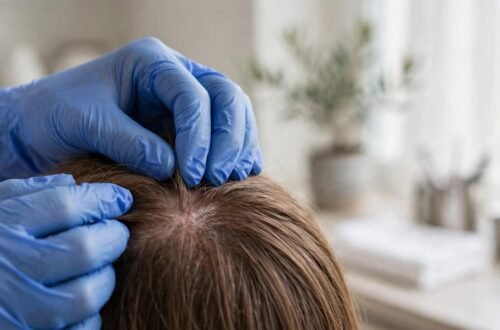
Wet your hair and scalp thoroughly, then apply dandruff shampoo to the scalp. Part dense hair so the product reaches the skin, and massage gently with your fingertips.
Avoid scraping with your fingernails or scrubbing attached flakes loose. This can worsen soreness and irritation.
The AAD’s shampoo application advice explains that some dandruff shampoos need five to ten minutes on the scalp. That isn’t universal: ketoconazole and selenium sulfide formulas may have different contact times, so check the current Drug Facts label.
If the label says to rinse and repeat, follow that sequence rather than extending treatment time. For salicylic acid formulas, don’t extend contact time or add applications beyond label directions. Rinse thoroughly and avoid eye contact.
Frequency depends on the formula
Nizoral A-D’s label directs use every three to four days for up to eight weeks. Check its age restrictions and warnings before starting, and consult the current Drug Facts label because ketoconazole schedules are product-specific.
Head & Shoulders Classic Clean and 2-in-1 Classic Clean labels recommend use at least twice weekly for best results. These directions don’t apply to every anti-dandruff shampoo; selenium sulfide schedules also vary, so check the current Drug Facts label.
More frequent use isn’t automatically more effective. A therapeutic shampoo is for treatment, not extra cleansing, and frequent washing may bother a sensitive scalp.
If scalp irritation develops, stop the suspected product and review the label, including any coal tar warnings. Persistent symptoms need reassessment rather than a longer contact time or extra applications.
Protect Your Hair While Treating Your Scalp
Adjust washing for textured hair and protective styles
Hair texture affects how easily a washing schedule fits your routine. Frequent shampooing can leave curly and tightly coiled hair feeling dry, especially if you have a dry scalp.
The AAD’s seborrheic dermatitis treatment guidance gives general examples of two to three medicated washes weekly for straight or wavy hair, and about once weekly for curly or tightly coiled hair. An anti-dandruff shampoo’s directions depend on its formula, so ketoconazole and selenium sulfide products may have different schedules. Product labels and individualized advice still matter.
With braids or other protective styles, apply shampoo along accessible scalp parts and rinse thoroughly. If your style prevents adequate washing or rinsing, consider an adjustment.
Condition the lengths and ends, keeping product off the scalp when possible to support healthy hair and scalp.
Keep scalp treatments separate from hair treatments
A moisturizing mask or protein treatment may help damaged strands, but it doesn’t treat scalp yeast. If breakage is another concern, BuzziHealth’s guidance on protein treatments for fine hair explains how to keep strengthening products focused on the hair.
Pre-shampoo exfoliants and scalp scrubs aren’t necessary starting treatments. An acidic exfoliant combined with salicylic acid shampoo can increase irritation.
Leave-in scalp products also need their own directions. Choose products intended for scalp use, and stop if they cause burning or worsening redness.
A rinse-out dandruff shampoo shouldn’t be used as a leave-in scalp treatment.
When Should You Alternate Active Ingredients?
Rotation can be useful when one dandruff shampoo doesn’t provide enough control despite appropriate use. It isn’t required for everyone, and an anti-dandruff shampoo rotation isn’t a proven way to prevent resistance.
Start with one active ingredient and follow its label. Track whether itching, flaking, and redness improve without new irritation.
If improvement is incomplete, a clinician or pharmacist can help you compare active ingredients and consider a different option or alternating schedule. Ketoconazole and selenium sulfide target yeast, while salicylic acid helps loosen scale. Coal tar has a different role and product-specific cautions.
Avoid starting several shampoos, an exfoliant, and a leave-in treatment together. If symptoms worsen, you’ll have difficulty identifying the cause.
Dandruff can recur after it improves. Follow label directions for continued or as-needed use, and seek advice if you repeatedly need more intensive treatment. A complicated rotation schedule isn’t a substitute for checking whether the diagnosis is correct.
When Scalp Symptoms Need Medical Evaluation
Seek care if symptoms remain troublesome despite correct over-the-counter treatment. Shampoos with ketoconazole or selenium sulfide may not control symptoms, even when used correctly, and neither suits every diagnosis. Don’t wait through an extended trial if symptoms worsen.
Arrange prompt assessment for painful swelling, pus, open sores, bleeding, patchy hair loss, or broken hairs. Fever with a painful scalp warrants urgent medical advice.
Marked inflammation or recurring scale on the face and ears may need treatment beyond shampoo. A board-certified dermatologist can assess your hair and scalp. They can distinguish seborrheic dermatitis from psoriasis, contact dermatitis, or infection. A clinician may consider condition-appropriate anti-inflammatory treatment.
If a product causes burning or a spreading rash, stop using it. Swelling of the face or difficulty breathing requires emergency care.
Frequently Asked Questions
Which dandruff shampoo is best?
There isn’t one best choice for every scalp. Nizoral A-D offers 1% ketoconazole, while Head & Shoulders Classic Clean offers 1% pyrithione zinc. Selenium sulfide is another option; ketoconazole targets yeast, while coal tar may increase sun sensitivity. Follow the label and assess whether an appropriate active improves symptoms without irritation.
Can salicylic acid remove greasy scalp buildup?
Salicylic acid loosens scale and can help remove attached buildup. It doesn’t provide the same yeast-targeting action as selenium sulfide or zinc pyrithione. Thick, persistent patches need evaluation if they don’t improve or become painful, so consult a board-certified dermatologist.
Should I wash every day?
Daily washing may suit some oily scalps, but daily medicated shampoo use isn’t a universal recommendation. Follow your treatment’s directions. If you need additional washes, consider a tolerated non-medicated shampoo, while adjusting for hair texture and dryness.
Build a Routine You Can Maintain
A useful routine starts with the correct active ingredient and using dandruff shampoo consistently as its label directs. Stronger products and additional treatments don’t automatically provide better control.
Protect your hair lengths while treating your scalp, and monitor scalp health for improvement or irritation.
If flakes persist or symptoms become painful, seek medical evaluation rather than continuing to add products. A clear diagnosis makes the next treatment choice more useful.Protein Treatment for Fine Hair: A Simple Breakage Routine