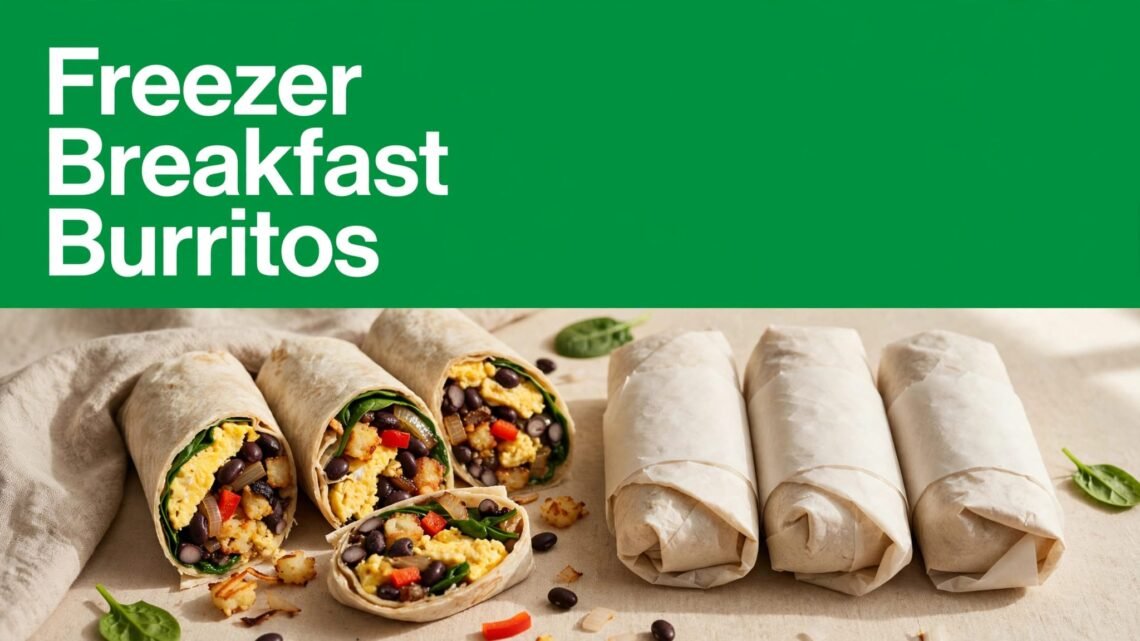
Mornings run better when breakfast is already waiting in the freezer. These make-ahead breakfasts pack eggs, vegetables, beans, and crisp hash browns into a filling meal you can take out the door.
A weekend batch of make ahead breakfast burritos gives busy families, students, and commuters an affordable option beyond drive-through food. The trick is controlling moisture before you roll each burrito.
A well-built breakfast burrito has protein, fiber, vegetables, and enough carbohydrates to keep you full through a busy morning. Eggs and black beans bring protein, while peppers, spinach, and onions add color and nutrients without much cost. That balance makes breakfast meal prep easier.
Making eight at once also cuts down on dishes. Roast the potatoes, cook one skillet of vegetables, scramble the eggs, then set up an assembly line for meal prep breakfast burritos.
A balanced burrito that travels well
This recipe makes 8 large burritos. Using the ingredients below, each burrito has roughly 400 calories and about 18 grams of protein, though tortilla, cheese, and bean brands can change the total.
Keep hot sauce and salsa, sour cream, avocado, and other fresh toppings on the side. Add them after reheating, since they taste better then and won’t soak the tortilla during storage.
Dry fillings and fully cooled ingredients matter more than an extra layer of wrapping when you want a crisp burrito.
Ingredients for Eight Egg and Vegetable Burritos
Choose 10-inch burrito-size flour tortillas for these freezer breakfast burritos. Whole wheat tortillas add fiber, but regular flour tortillas tend to roll more easily. Corn tortillas usually crack when folded around a large filling.
- 2 cups frozen shredded hash browns
- 1 tablespoon olive oil, divided
- 1 red bell pepper, finely diced
- 1 green bell pepper, finely diced
- 1 small yellow onion, finely diced
- 2 packed cups baby spinach, roughly chopped
- 10 large eggs
- 1 teaspoon chili powder
- 1/2 teaspoon ground cumin
- 1/2 teaspoon kosher salt, plus more to taste
- 1/4 teaspoon black pepper
- 1 1/2 cups canned black beans, rinsed and drained well
- 1 cup shredded cheddar cheese
- 8 large flour tortillas
Pick fillings that stay dry
The roasted potato layer creates a useful barrier between the tortilla and softer fillings, but it must be cooked until crisp. Frozen tater tots work too. Bake them, cool them, then chop them into small pieces.
Drain canned beans in a colander and pat them dry with a clean towel. Cook the bell pepper and onion mixture until its liquid evaporates, just as you would with mushrooms, zucchini, or tomatoes. Watery vegetables are the main reason make ahead breakfast burritos become limp.
Easy, freezer friendly swaps for different eating styles
Use pinto beans or white beans in place of black beans. For a meatier burrito, swap the beans for 1 1/2 cups cooked breakfast sausage, turkey sausage, cooked ham, or cooked chorizo. Drain sausage and chorizo well before adding them.
For a dairy free option, skip the cheese or use a shredded plant-based alternative that melts well. The bean-and-egg filling needs no changes for vegetarian breakfast burritos. You can also add roasted sweet potato cubes instead of the potato layer for more fiber and potassium.
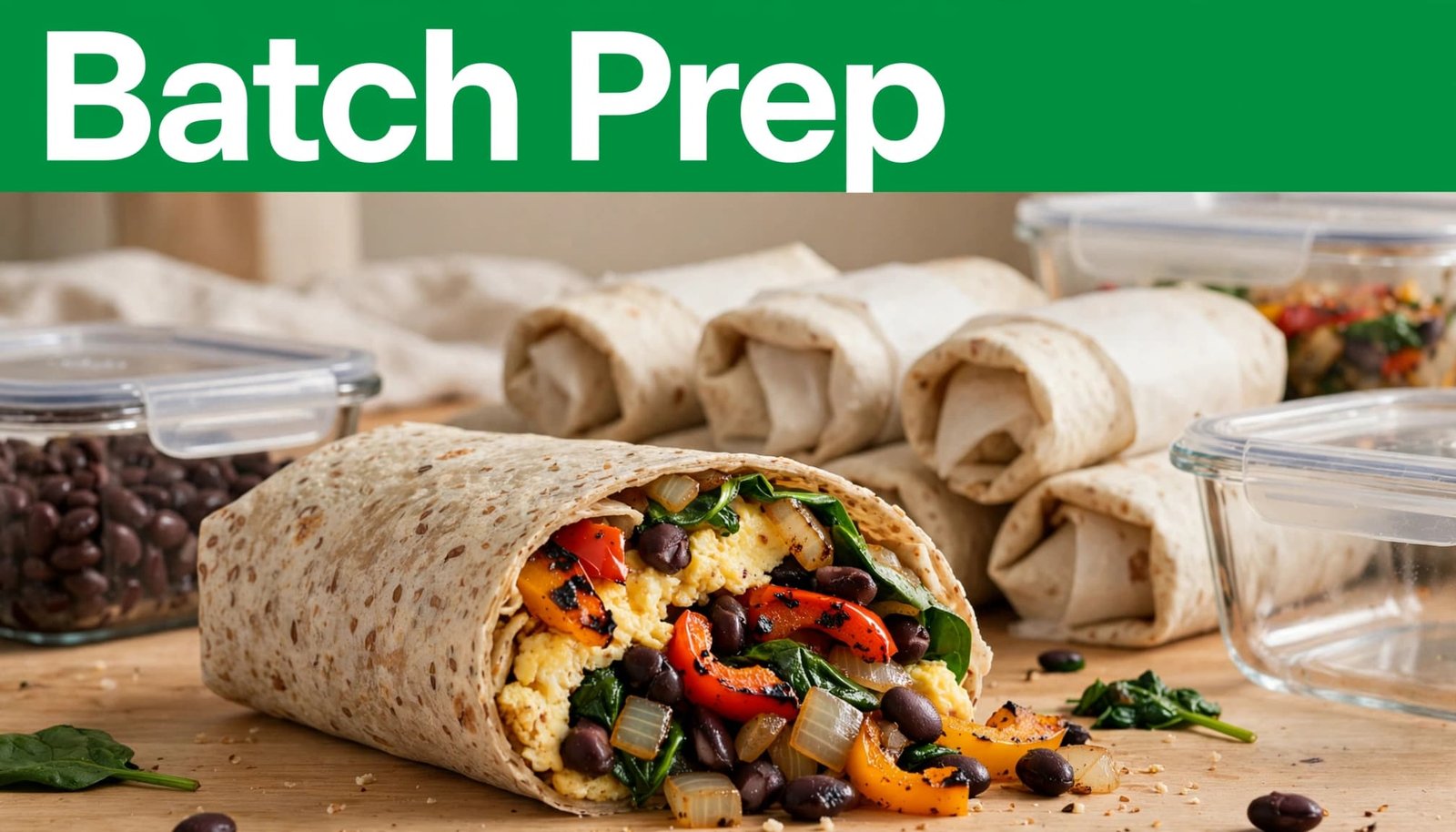
Cook, Cool, and Roll the Burritos
To prepare meal prep breakfast burritos efficiently in one batch, heat the oven to 425 F. Spread the hash browns on a parchment-lined sheet pan, toss with 1 teaspoon of olive oil, and bake for 20 to 25 minutes. Stir once halfway through. They should be golden and crisp, with a dry surface rather than a pale, steamy one.
Meanwhile, heat the remaining oil in a large skillet over medium heat. Cook the bell pepper and onion for 6 to 8 minutes, until their moisture has evaporated. Stir in the spinach for about 1 minute, then transfer the vegetables to a wide plate so they cool faster.
Scrambled Eggs: Cook Them Gently
Whisk the eggs with chili powder, cumin, salt, and pepper. Lower the skillet heat to medium-low, add the egg mixture, and slowly fold it with a spatula. Take the eggs off the heat when they’re softly set and fully cooked, with no liquid remaining.
Spread the eggs, vegetables, and roasted potato pieces in shallow layers on separate plates or small trays. Let everything cool until it no longer gives off steam, about 20 minutes. Hot fillings trap condensation inside the wrap.
Assemble with space to spare
Warm one tortilla for 10 to 15 seconds in the microwave so it bends without tearing. Place about 1/4 cup of the potato filling slightly below the center. Add 1/3 cup vegetables, 3 tablespoons beans, one-eighth of the eggs, and 2 tablespoons cheese.
Fold the left and right sides inward, then pull the bottom edge over the filling. Roll forward firmly, but don’t compress the burrito until it bursts. Repeat with the remaining tortillas.
How to Prevent Soggy Breakfast Burritos
For freezer breakfast burritos, moisture control is the key to successful freezing. Sogginess usually starts before they enter the freezer. Vegetables release water as they cook, while warm eggs and potatoes release steam as they cool. A tortilla catches both if you rush the process.
First, roast or skillet-cook potatoes until browned. Next, cook the bell pepper and onion until the skillet looks dry. Finally, cool every filling in a shallow layer before assembly. Skip wet mix-ins such as salsa, pico de gallo, cottage cheese, or fresh tomato.
Build a moisture barrier
Place hash browns against the tortilla first. Their crisp surface slows moisture from the egg and vegetable filling. Add cheese over the fillings only after they’ve cooled, since melted cheese can also create a damp spot as it firms up.
Avoid overfilling. A tight, compact burrito reheats more evenly, while a stuffed burrito splits and lets steam settle into the tortilla.
How to Freeze Breakfast Burritos for Better Texture
For better-textured freezer breakfast burritos, wrap each cooled burrito in parchment paper, twisting the ends like a candy wrapper if you prefer. Then place the wrapped burritos in a large freezer safe bag. Press out as much air as possible before sealing.
This parchment paper and bag method protects make ahead breakfast burritos during everyday storage. You can freeze breakfast burritos without foil, and This freezer-wrapping approach also uses parchment paper with an airtight outer layer. Aluminum foil is useful for oven reheating, but it isn’t required for freezing or safe for microwave use.
Storage and food-safety basics
Label the bag with the date, then store in the freezer and use the burritos within two months for the best texture. The USDA says frozen leftovers remain safe indefinitely at 0°F when continuously frozen, though quality declines. Its leftover storage guidance lists three to four months as a typical freezer-quality window, so two months is a quality target, not a strict safety deadline.
Refrigerate cooked fillings within two hours. If you plan to eat a burrito within three to four days, refrigerate it instead of freezing it. The FDA’s egg safety guidance also advises keeping cooked egg dishes refrigerated rather than leaving them out.
How to Reheat Breakfast Burritos Without Drying Them Out
For the quickest breakfast, microwave one of these freezer breakfast burritos in its parchment wrapper, but only if it contains no foil or metal. Because the egg-based filling contains scrambled eggs, heat the center thoroughly.
Microwave directions
To reheat in the microwave, remove all foil or metal and place the frozen burrito on a microwave-safe plate. Heat at 50 percent power for 2 minutes, turn it over, then heat for another 2 minutes. Let it rest for 1 minute.
Finish at full power in 30-second bursts until hot throughout. Microwave wattage varies, so a thick burrito may need another minute or two; verify that the center reaches 165°F. The USDA recommends reheating leftovers to 165 F, as explained in its safe food-handling basics.
Oven and air fryer instructions
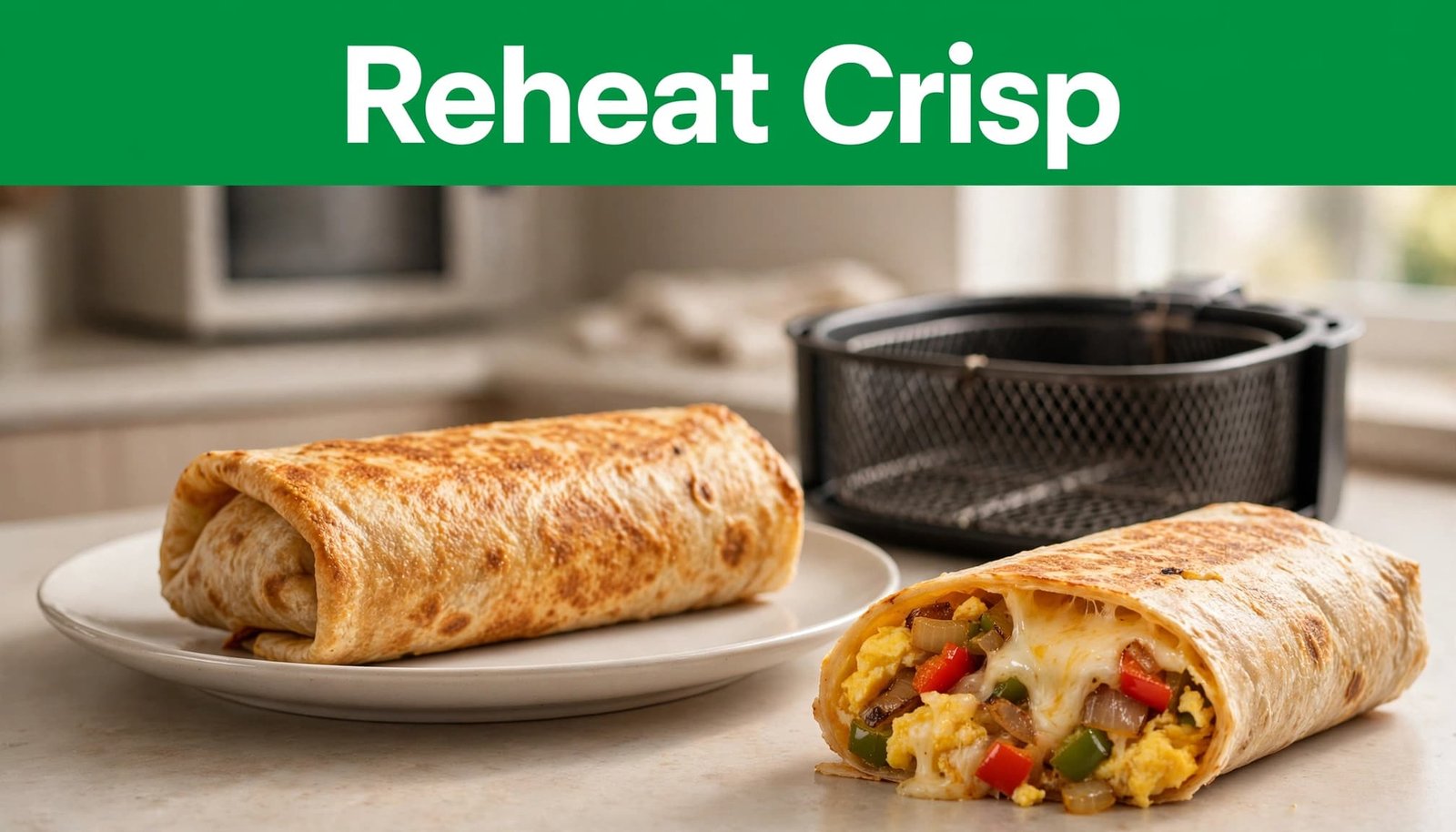
For a firmer tortilla, use an overnight thaw in the refrigerator. Unlike the microwave method, bake the thawed burrito at 375 F for 20 to 25 minutes, wrapped in aluminum foil. Unwrap it for the final 5 minutes if you want more browning.
A toaster oven can heat a thawed burrito at the same temperature; check that the center reaches 165°F.
An air fryer gives the crispiest result. For these air fryer instructions, remove all wrapping, then cook a thawed burrito at 350 F for 8 to 10 minutes, turning halfway through. Cook a frozen burrito at 325 F for 12 to 16 minutes, then check that the center is fully hot.
Key Takeaways for a Better Morning Batch
The best freezer breakfast burritos start with dry, cooled fillings and tortillas that fold without cracking. Crisp potatoes, well-cooked vegetables, and scrambled eggs keep each burrito satisfying after reheating.
Make a batch of meal prep breakfast burritos that fits your real schedule, then vary the vegetables, beans, or protein. This approach simplifies breakfast meal prep and makes busy mornings easier.
Freezer Breakfast Burritos FAQ
How long do homemade breakfast burritos last in the freezer?
These breakfast burritos have the best texture within two months, especially when they include eggs and potatoes. Wrap each one individually, then place them in a sealed freezer bag at 0 F or below. Thaw only what you plan to eat.
Can I thaw a breakfast burrito before reheating it?
Yes, move one burrito to the refrigerator the night before. Microwave, bake, or air fry it the next morning for even heating. Don’t leave cooked egg burritos at room temperature for extended periods, and reheat the center thoroughly.
Why did my tortilla tear when I rolled it?
Cold tortillas crack. Warm each tortilla briefly before filling it, and don’t overfill it. Large burrito-size tortillas are more flexible than small tortillas or most corn tortillas.
Can I add fresh avocado or salsa before freezing?
Keep avocado and salsa, along with sour cream, for serving. Avocado can brown and turn soft after freezing, while salsa adds water that can soak into the tortilla. Add all three after reheating for better flavor and texture.
Healthy Recipes Guide for Balanced, Flavorful MealsHealthy Recipes Guide for Balanced, Flavorful Meals