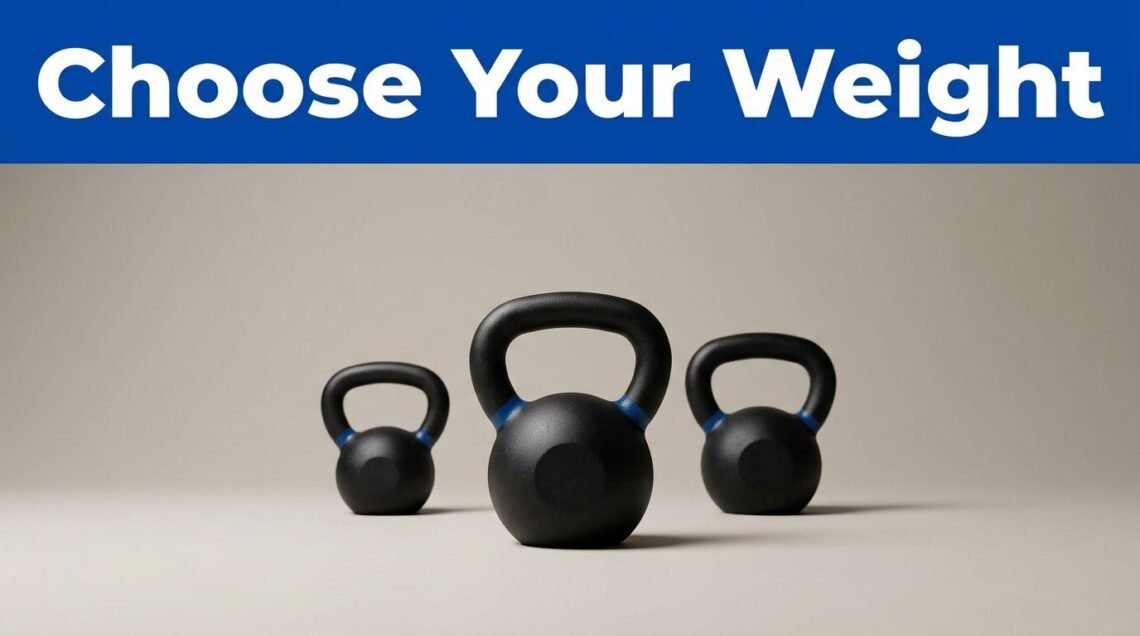
The best first kettlebell is rarely the heaviest one you can lift once. Choose a manageable kettlebell weight that supports repeatable movement, not a one-repetition maximum.
Your fitness level, planned compound exercises, and workout routine should shape your choice. Beginner strength training prioritizes control and proper technique, unlike powerlifting, where lifting heavy weights is often the focus.
A beginner kettlebell may work well for squats but feel wrong for presses. That is normal because kettlebell exercises place the load differently and demand different skills. Start with clean repetitions, then build strength around them.
A smart purchase for kettlebell training begins with the movements you plan to learn most often.
This post may contain affiliate links. If you make a purchase through these links, I may earn a small commission at no extra cost to you.
Why the number on a kettlebell is only part of the decision
Body size matters, but it doesn’t tell the whole story. Your training history, grip comfort, mobility, and the exercise itself all affect the right kettlebell weight. A powerlifting background may help with bracing, but it doesn’t automatically determine a suitable bell.
A kettlebell’s center of mass hangs below your hand instead of sitting in your palm like a dumbbell. Kettlebell size and handle position also influence how that offset load feels.
The center of mass changes how each rep feels
A dumbbell stays fairly balanced around your hand. A kettlebell moves around the wrist, then pulls away from you during swings and cleans.
During these dynamic movements, it challenges grip strength and increases demand on your wrist, shoulders, and trunk. The bell asks you to control momentum instead of merely lifting it up and down.
As a result, a 12 kg (26 lb) kettlebell can feel more demanding than a 12 kg dumbbell during dynamic exercises.
Keep the bell close during deadlifts, cleans, and presses. When it swings away, your hips and core should direct the movement instead of your lower back or shoulders.
A starting weight is not an all-purpose weight
Your first bell should let you practice unfamiliar movements with good form. A weight for multiple exercises is one you can use confidently across several movements after learning the basics.
For example, someone may deadlift and squat comfortably with 16 kg (35 lb), yet need 8 kg (18 lb) for strict presses or get-ups. That starting weight should suit the most demanding movement, even if stronger exercises can handle more.
Buying one heavier bell can make sense later, but don’t let it replace that first bell before you’ve built control.
The traditional Russian unit, a pood, equals about 16 kg or 35 lb in kettlebell terminology. You will often see a 16 kg bell described as a one-pood kettlebell.
Choose a kettlebell weight by your first movements
Before you shop, make a short list of the movements you’ll actually practice. Most beginners benefit from mastering deadlifts, goblet squats, carries, and two-handed kettlebell swings first. These compound exercises are practical functional exercises that suit early kettlebell training. Choose movements you can control at your current fitness level before trying snatches or long overhead sets.
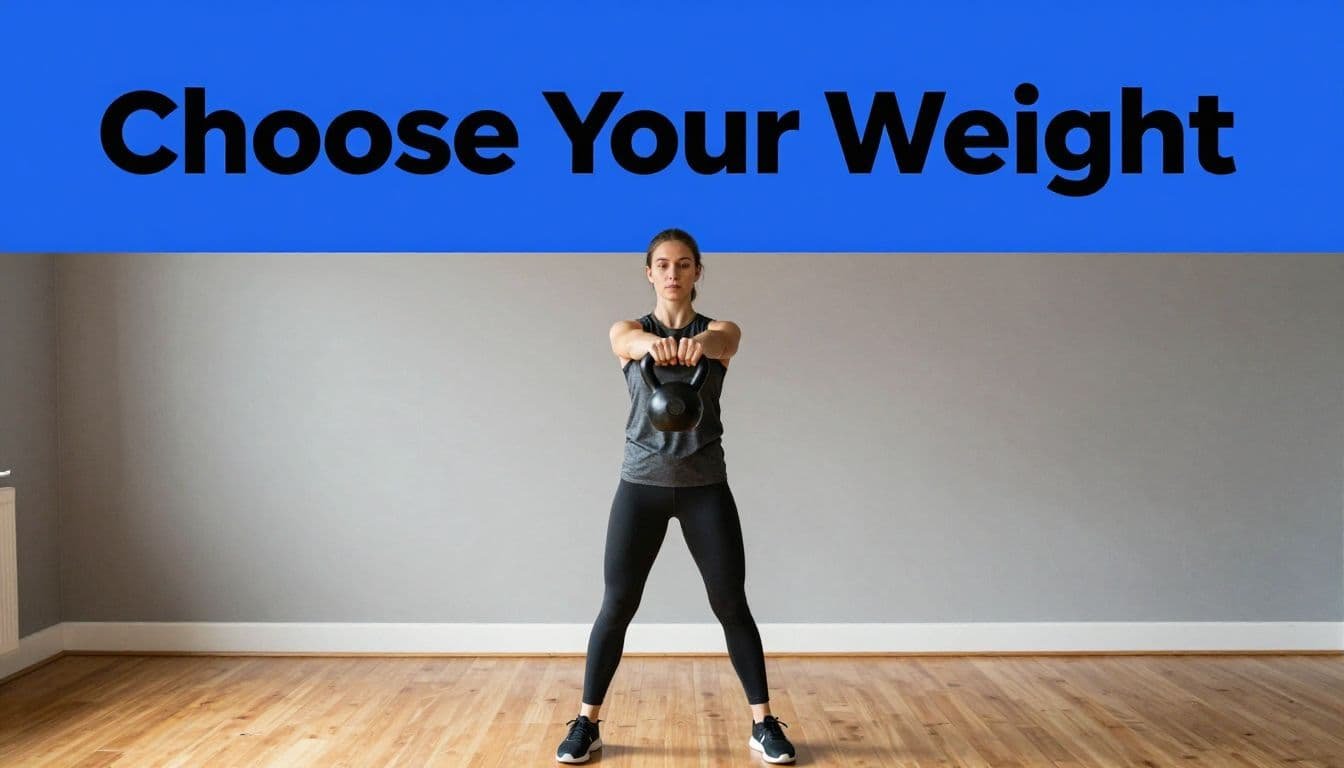
Ballistic exercises can use more load, after you learn the pattern
Ballistic exercises include swings, cleans, and snatches. They use a fast hip drive, while the arms guide the bell’s path.
A two-handed swing often tolerates more load than a strict press because your hips and legs do much of the work. Still, start with a load that allows a crisp hip hinge and a stable spine. The bell should float from your hip drive, not rise because you pull it with your shoulders. Consistent swings may support cardiovascular endurance, but they don’t replace every type of conditioning.
Start with deadlifts before swings if the hinge feels unfamiliar. Once you can repeat the same hip position under control, add short sets of kettlebell swings. Cleveland Clinic also stresses form and gradual loading in its beginner kettlebell guidance.
Grinding movements usually need a lighter bell
Grinding movements move slowly under steady tension. Goblet squats, strict presses, Turkish get-ups, windmills, and carries belong in this group.
These exercises expose weak positions quickly. A bell that works for 15 swings may pull you sideways during a get-up or make a press turn into a backbend. Choose the lighter option for overhead work and get-ups, even if it seems modest, so you can practice proper technique.
Controlled repetitions build the positions that make heavier training safer later.
Practical starting weights for common beginner profiles
These ranges are starting points for choosing a beginner kettlebell weight, not tests of strength or fitness level. Use the lower end when you are inactive, returning after time away, learning at home alone, or practicing overhead movements.
| Starting point | Practical first bell | Good early uses |
|---|---|---|
| Adult with little recent exercise | 6-8 kg (13-18 lb) | Deadlifts, carries, goblet squat practice |
| Inactive adult beginning a routine | 8-12 kg (18-26 lb) | Deadlifts, squats, short two-handed swing sets |
| Adult with regular gym experience | 8-12 kg (18-26 lb), or 12-16 kg (26-35 lb) with strong movement control | Squats, rows, carries, swings after hinge practice |
| Athletic adult training lower-body movements | 12-16 kg (26-35 lb), if technique is consistent | Goblet squats, deadlifts, carries, swings |
These ranges match the broad entry recommendations in this beginner kettlebell-training guide. Use them to narrow down a beginner kettlebell, but let your technique make the final call.
How to use the chart without boxing yourself in
An inactive adult can choose a starting weight of 8 kg (18 lb) if they are learning the hinge, have limited shoulder mobility, or plan to press. That starting weight may be 12 kg (26 lb) when squats and deadlifts already show good control.
Regular strength training may support the upper end of the range, while cardiovascular endurance can improve tolerance for repeated sets. Prior powerlifting experience can inform bracing and lower-body strength, but it does not make a heavier bell appropriate for presses or get-ups.
An athletic adult may use 12 kg (26 lb) for a first goblet squat bell and progress to 16 kg (35 lb). That same 16 kg bell may still be too heavy for a first strict press.
Visible muscle mass alone is not enough to choose a load. You do not need to earn a certain weight to train well. The right load supports repeatable technique, not a comparison with someone else’s routine.
Test your kettlebell before committing to high-rep workouts
A short movement test tells you more than a single lift or the stated kettlebell weight. If you can visit a gym or store, test the same bell in several positions before committing to high-rep work with heavy weights, rather than judging it by a curl.
First, perform five controlled deadlifts. Then do five goblet squats, carry the bell on one side for 20 to 30 seconds, and hold it in the rack position. If you already know the swing pattern, use only a few relaxed two-handed swings, and try turkish get-ups only if you’re familiar with them.
Peloton’s beginner exercise guidance also recommends short work intervals, which are useful when you are learning how a new weight affects form.
Signs the kettlebell is too heavy right now
The bell is too heavy for the movement if your form changes before the set is finished. Watch for these common signs:
- Your lower back rounds during a deadlift or swing, or you feel the work mostly in your back.
- Your shoulder hikes toward your ear when you rack or press the bell.
- You cannot pause under control at the bottom of a squat or at the top of an overhead press.
- Your grip strength fails so quickly that you rush the repetitions or lose control of the handle.
If a bell changes your spine position or makes an overhead lockout unstable, the load is asking for compensation rather than building strength.
These compensations can increase injury risk. Stop the set, reduce the weight, or return to an easier variation. Pain, pinching, numbness, or sharp discomfort are reasons to stop rather than push through.
Signs the kettlebell is too light
A light kettlebell is still useful, especially for presses, get-ups, warm-ups, and technique practice. It may be too light for a given movement when you can complete 12 to 15 controlled repetitions without feeling your muscles work or needing to brace.
Don’t fix that by swinging faster or letting the bell pull you out of position. Instead, increase the weight, add a pause, slow the lowering phase, or choose a more demanding movement once your form remains solid.
Pick a shape and handle that you will want to use
Weight gets most of the attention, yet the handle and finish affect every repetition. An appropriate kettlebell weight can still feel wrong if the shape or handle limits safe training.
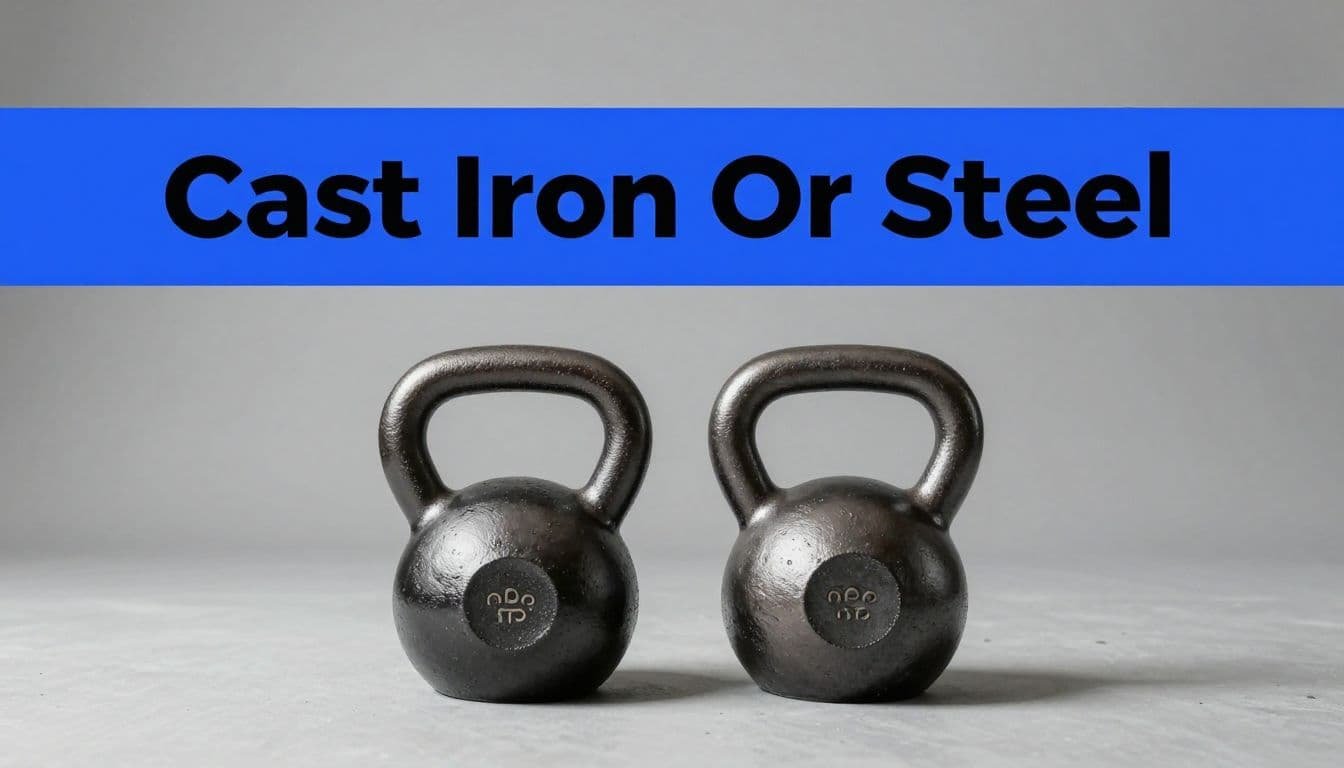
Cast iron and competition models feel different
Traditional cast iron kettlebells get larger as their weight increases. They work well for home training and often cost less than competition-style bells.
Gray cast iron contains flake graphite, while ductile iron uses rounded graphite nodules. Ductile iron generally handles impact better than standard cast iron, which is why some durable premium models use it. For example, Rogue’s kettlebell specifications list handle diameters that vary by bell weight.
A competition kettlebell is usually made from steel and keeps a consistent kettlebell size across different weights. That consistency in a competition kettlebell supports cleans, snatches, and rack work; the bell meets your forearm similarly each time.
Handle diameter and coating affect your grip
Many competition-style handles use a handle diameter of about 33 or 35 mm. A thicker handle can challenge smaller hands during high-repetition training.
Match the handle diameter to your hand size and repetition volume. The inside window should also leave enough room for your forearm in the rack position.
A powder coat finish often feels dry and grippy, while E-coated handles feel smoother and resist corrosion well. E-coated handles may become slick with sweat, so avoid glossy, overly thick paint that rubs your skin or forces a hard squeeze.
Build a useful progression for your home gym
A single kettlebell can start a strong kettlebell training routine. Pick a modest cast iron bell if your first focus is deadlifts, squats, carries, and two-handed swings.
After you have practiced consistently, a second bell often gives more value than an early jump to a much heavier bell. In strength training, many people add a lighter option for overhead work, then a heavier option for deadlifts, squats, and swings.
Progress through control before load
Increase the kettlebell weight only after you can complete planned sets with consistent posture and range of motion. Use small, deliberate weight increments to reduce injury risk instead of rushing toward a heavier bell.
Keep early sessions short as you build a workout routine, and leave repetitions in reserve. Once your hinge is reliable, add brief swing intervals to build cardiovascular endurance.
If you have a recent injury, persistent joint pain, or a history of back or shoulder problems, get individual guidance. Physical limitations or a medical condition affecting exercise tolerance also call for advice from a qualified clinician or coach. A 2024 review of kettlebell training describes the value of tailored exercise, which matters even more when rehabilitation or pain is part of the picture.
Frequently Asked Questions
What is a good kettlebell weight for a beginner?
Many beginners start with 6-12 kg (13-26 lb), depending on fitness level, movement experience, and planned exercises. Choose the lighter end if you are inactive, learning overhead movements, or training without coaching.
Should I use the same kettlebell weight for every exercise?
Not necessarily, because exercises place the load differently and require different levels of control. You may use a heavier bell for deadlifts and two-handed swings, but need a lighter one for presses, windmills, or Turkish get-ups.
How do I know if my kettlebell is too heavy?
The bell is too heavy if your spine position changes, your shoulder hikes, your grip fails quickly, or you lose control before the set ends. Stop the set and reduce the weight until you can repeat the movement with steady technique.
When should I move up to a heavier kettlebell?
Increase the weight after you can complete your planned sets with consistent posture, range of motion, and control. Use small, deliberate increases rather than rushing toward a heavier bell.
Is a lighter kettlebell still useful?
Yes, a lighter kettlebell works well for presses, Turkish get-ups, warm-ups, and technique practice. You can also make it more challenging with pauses or slower lowering phases once your form remains solid.
A Better First Kettlebell Starts With Control
The right kettlebell weight lets you move with balance, breathe normally, and repeat the same solid technique. It may be lighter than expected for presses and get-ups, while feeling heavier for deadlifts and swings.
Start with the movements you can control today, then let proper technique guide every increase. A bell you use consistently is more useful than one that spends months on the floor.
Anytime Fitness Workouts for Beginners: A Simple 20-Minute Start