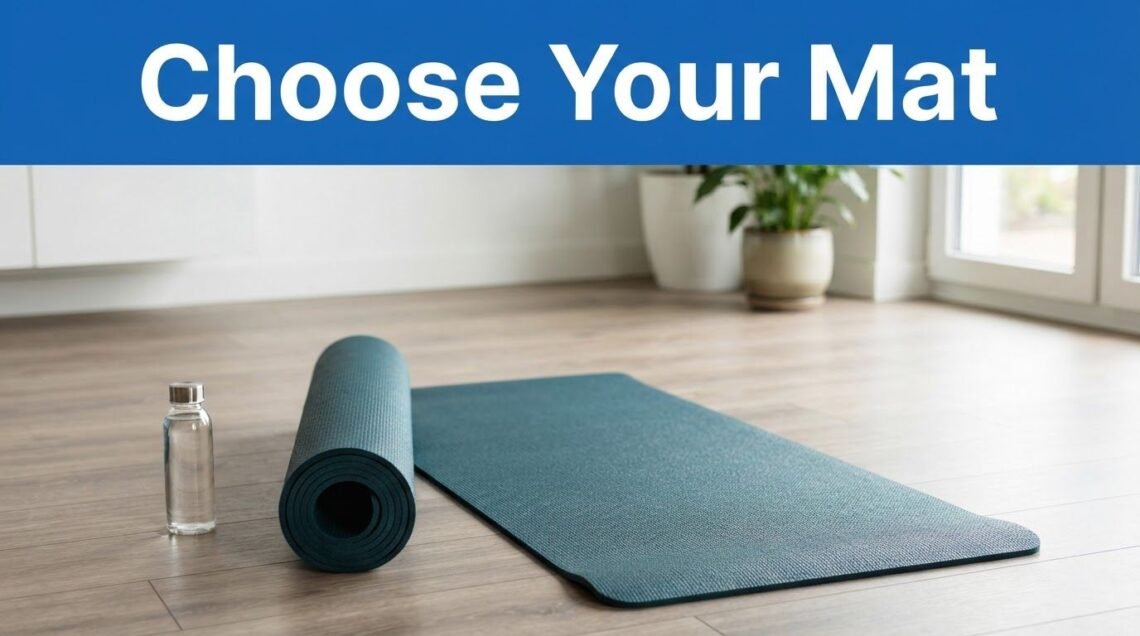
A yoga mat can make a home workout feel steady and comfortable, with joint support and dry grip, or turn every pose into a battle with the floor. The right choice offers support without making balancing poses feel wobbly.
Use this guide to choose yoga mat features that match your practice style, home flooring, available space, and sweat level. A mat that suits restorative stretching may feel wrong for fast vinyasa or bodyweight circuits.
This post may contain affiliate links. If you make a purchase through these links, I may earn a small commission at no extra cost to you.
Key Takeaways
- Choose a mat based on your practice style, home flooring, available space, and sweat level rather than thickness alone.
- Thicker mats offer more joint cushioning, while denser, firmer mats usually provide better stability for balances and quick transitions.
- Compare materials by dry grip, wet grip, durability, cleaning needs, weight, odor, and potential latex sensitivity.
- Test grip in familiar poses such as plank, downward-facing dog, and lunges, and use a yoga towel for especially sweaty sessions.
- Consider long-term value, including care requirements, storage, warranty, and how well the mat maintains its surface over time.
Start With Your Practice and Home Floor
Your routine should guide the purchase. Gentle yoga, Pilates, mobility work, and floor-based strength sessions need more cushioning than standing balances and quick transitions, where dry grip matters more.
A mat also needs to work with your floor, not against it. Wood, tile, and laminate are unforgiving, while thick carpet can make a soft mat unstable and alter how dry grip feels. A guide to mat stability and support explains why traction and joint cushioning both matter for safer practice.
Match the mat to the movement
For slow hatha, yin, or long cooldowns, comfort may lead the decision. If your knees, wrists, or tailbone feel pressure on hard flooring, extra padding helps you stay in the pose longer.
However, a vigorous vinyasa practice needs dependable grip and a firm base for balancing poses, rather than extra cushioning. The same applies to lunges, planks, and single-leg balance work. A yoga mat for beginners should feel predictable underfoot, because uncertainty can cause people to rush or avoid unfamiliar movements.
Measure the spot where you practice
Check your available floor space before buying. A standard mat is usually around 68 inches long and 24 inches wide, but taller people may prefer extra length. Leave enough room around the mat to extend your arms and step back safely.
If you store your mat under a bed or behind a door, check its rolled diameter too. A thick, heavy mat may be comfortable, yet inconvenient enough that it stays in a closet.
Yoga Mat Thickness for Home Workouts
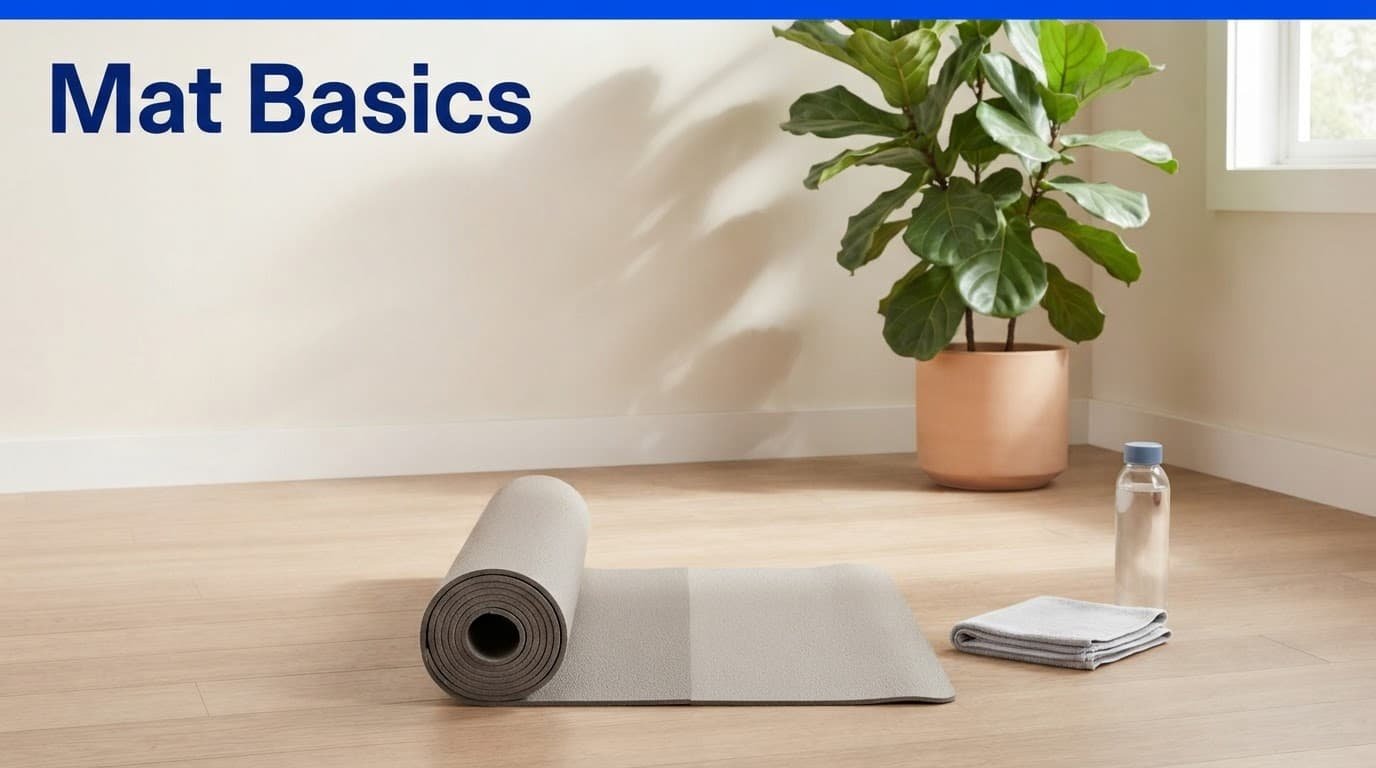
Yoga mat thickness affects how the mat feels, but thickness alone doesn’t equal support. In practice, mat thickness affects cushioning, while density determines how firmly the mat supports you. A dense 4 mm mat can feel more stable and protective than a soft 6 mm mat that compresses quickly.
To decide on the right thickness, consider your joints, your floor, and how often you balance on one foot.
Comfort and stability are different needs
Thicker mats reduce pressure on your knees, wrists, and tailbone during kneeling, seated poses, and supine exercises. This added joint support can make floor work more comfortable. Yet more foam under your feet can reduce feedback from the floor, even when the mat offers good dry grip. In balancing poses such as tree pose or warrior III, that softer surface may make your ankle work harder.
This quick comparison puts the trade-offs in perspective:
| Thickness | Best fit | Main trade-off |
|---|---|---|
| 1 to 2 mm | Travel and packing light | Minimal cushioning |
| 3 to 5 mm | Most home yoga routines | Moderate weight and bulk |
| 6 mm or more | An extra thick option for sensitive joints and floor work | Less stable for balances |
A travel yoga mat is easy to fold or carry, but it rarely offers enough padding for daily practice on tile. It can still work well as a compact option for occasional use or as a layer over a studio mat.
More cushioning won’t fix sliding hands or feet. Dry grip and traction help solve that problem, while density and thickness address pressure on joints.
Yoga Mat Materials for Grip and Durability
There is no single best yoga mat material for every person. Materials change the mat’s feel, weight, odor, cleaning needs, and lifespan, so the right option comes down to your habits.
When comparing yoga mat materials, look beyond marketing terms such as “eco-friendly.” Consider the mat’s expected lifespan, cleaning needs, and any latex sensitivity.
Closed-cell and open-cell surfaces behave differently
A closed-cell yoga mat has a sealed surface that repels moisture and offers predictable dry grip. PVC and many TPE mats fall into this category. They are usually easy to wipe down and often hold up well to regular home workouts.
An open-cell mat has tiny spaces that absorb moisture. They can provide stronger wet grip as sweat builds, but they need more attentive cleaning and drying. The practical difference between open-cell and closed-cell mats is simple: one repels sweat, while the other manages it through absorption.
Compare the common material choices
Natural rubber offers a grippy, grounded feel and reliable dry grip, as illustrated by products such as Jade Harmony. It can be heavy, may have a noticeable rubber smell at first, and isn’t appropriate for people with latex allergies.
PVC mats are durable, widely available, and easy to clean. Their dry grip can be good, although smooth surfaces may become slippery with sweat. Manduka PRO illustrates dense PVC construction. Lululemon The Mat shows a different surface and construction, so these brand examples are illustrations, not universal recommendations. A TPE yoga mat is often lighter than dense PVC, with moderate cushioning and a softer feel.
Plant-based options such as jute and a cork mat appeal to many users, but their dry grip differs from TPE. Cork can feel grippier with light moisture, while jute has a textured, firmer surface. Both can work for daily use when well made, but inspect the backing and edges. A loose or crumbling surface is unsafe for planks and lunges. This yoga mat materials guide offers a helpful breakdown of rubber, TPE, PVC, cork, and jute options.
Prioritize Dry Grip and Wet Grip
Grip describes how well a mat keeps your hands and feet in place, while grip and traction help you move with control. Dry grip matters at the start of a practice. Wet grip becomes more important after a warm room, a demanding flow, or a long workout.
Some new high-density mats need a break-in period. Their surface may feel slick until regular, clean, dry use wears away a factory finish and improves dry grip. Follow the maker’s care directions rather than scrubbing or sanding the surface.
Test grip in the poses you repeat
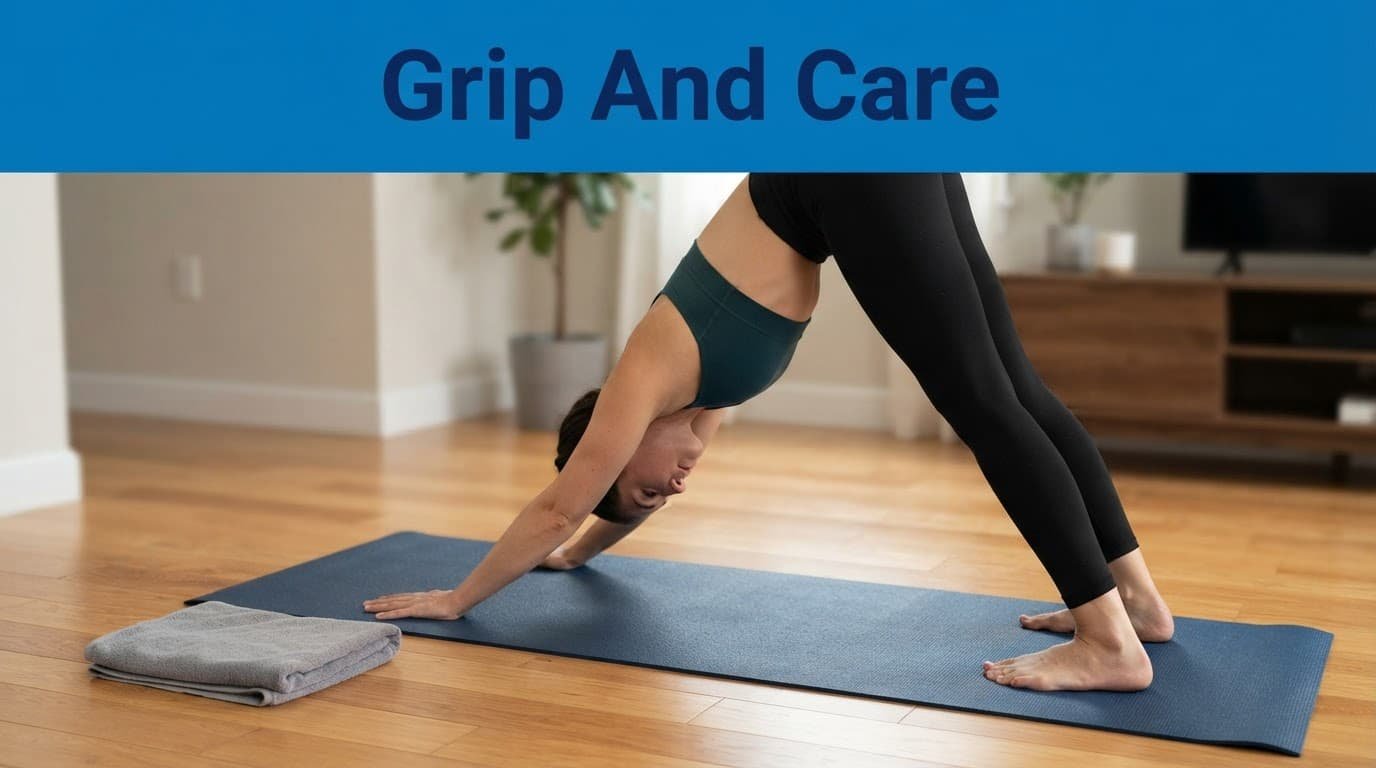
Press your palm into the mat, then shift forward in plank to test dry grip during downward facing dog. Next, step into a lunge and check whether your front foot has enough dry grip to stay secure. A soft top layer may feel pleasant in a store but still slide as pressure increases.
Test any model, including lululemon the mat, for dry grip instead of relying on its reputation.
For hot yoga or sweaty home sessions, an absorbent yoga towel can help preserve dry grip as moisture builds. It is usually more useful than buying an overly thick mat in hopes that the texture will solve sweat.
Reduce slipping before it causes a fall
Small habits protect the mat and your body:
- Practice on a flat, dry surface, and unroll the mat fully so curled corners cannot catch your toes.
- Wipe sweat from your hands, feet, and mat during a high-heat session.
- Keep lotion, body oil, and pet hair off the practice surface because each can reduce grip.
- Stop and reset if your hands begin sliding in plank or a lunge instead of forcing the pose.
A non-slip surface helps, but it cannot compensate for a wet floor or a bunched-up towel. Stability comes from the full setup.
Make Care and Long-Term Value Part of the Decision
A mat that matches your routine should be easy enough to maintain that you will clean it. Simple cleaning and care help preserve surface feel and performance. Dirt, skin oils, and sweat can change surface feel and dry grip over time, especially on open-cell materials.
Clean each material gently
For most closed-cell mats, wipe the surface with a damp cloth and mild soap when needed. Let it dry flat before rolling. Avoid harsh cleaners unless the manufacturer approves them, because residue or damage can reduce dry grip.
Natural rubber needs a lighter touch. Use water or a cleaner approved for rubber, avoid soaking it, and keep it out of prolonged direct sunlight. Oil-heavy sprays can weaken some materials. This complete yoga mat care guide covers care differences for rubber, cork, and microfiber surfaces.
Compare cost per use, not the price tag alone
A low-cost mat that flakes, curls, or loses dry grip within months can cost more in the long run. A sturdier option may provide better durability and longevity. Before buying, check the warranty, material thickness, weight, and reports of edge wear.
For a regular routine, durability matters more than a trendy print. A mat you can clean, store, and trust for repeated sessions supports consistency. Treat cushioning, traction, and material as a package rather than treating any one feature as the answer.
Frequently Asked Questions
What thickness is best for a yoga mat at home?
A 3 to 5 mm mat suits most home yoga routines because it balances joint cushioning and stability. Choose 6 mm or more if you need extra padding for sensitive joints or hard floors, but expect less stability in balancing poses.
Is a thicker yoga mat better for beginners?
Not necessarily. A beginner yoga mat should feel predictable and stable, while excessive softness can make balancing poses harder and reduce feedback from the floor.
Which yoga mat material has the best grip?
There is no single best material for everyone. Natural rubber often provides a grippy feel, while closed-cell PVC and TPE are easy to clean; open-cell surfaces may offer stronger wet grip but require more careful drying and maintenance.
How can I stop my yoga mat from getting slippery?
Keep your hands, feet, and mat free from sweat, lotion, oil, and pet hair, and practice on a flat, dry surface. For hot or sweaty sessions, an absorbent yoga towel can help preserve grip as moisture builds.
How do I clean and care for a yoga mat?
For most closed-cell mats, wipe the surface with a damp cloth and mild soap, then let it dry flat before rolling. Follow the manufacturer’s instructions, especially for natural rubber, which should not be soaked or left in prolonged direct sunlight.
A Mat Should Make Practice Easier
The best yoga mat for home workouts fits the movements you do most and the floor beneath you. It offers joint support, stays steady during balance work, and provides dry grip so you can focus on form.
Start with your practice style, then narrow your options by comfort, stability, and dry grip. A comfortable, stable mat removes one more barrier between you and a regular home routine.
Anytime Fitness Workouts for Beginners: A Simple 20-Minute Start