
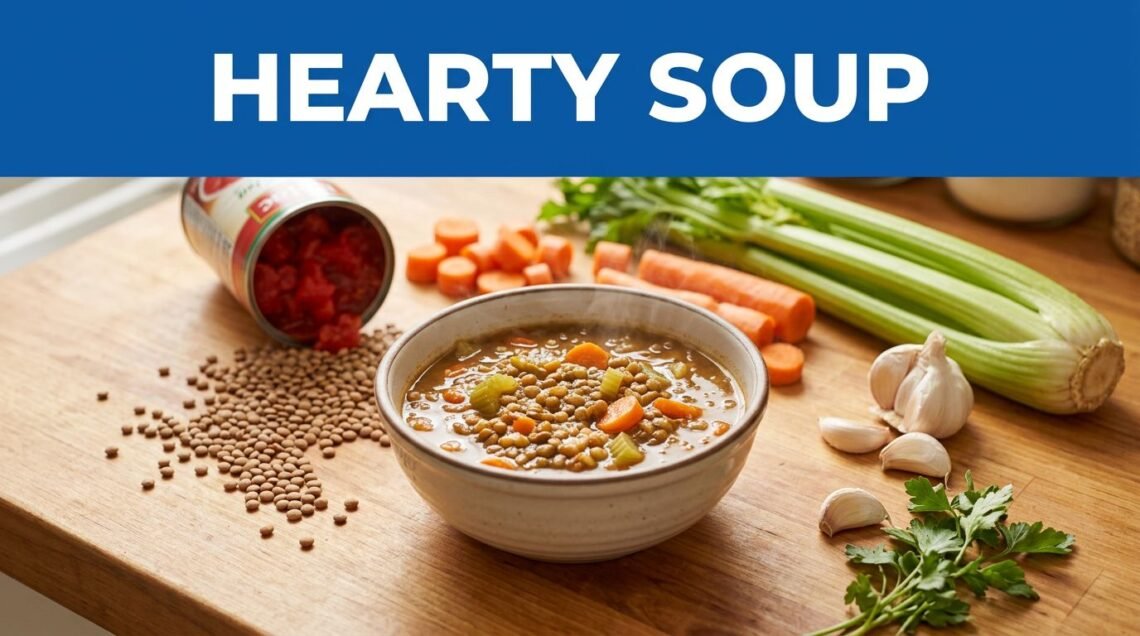
A warm bowl of soup can be one of the most affordable healthy meals you make, especially when your pantry already holds the essentials. Lentils, canned tomatoes, broth, garlic cloves, and everyday vegetables create a filling, nutritious meal with plant protein and fiber, without expensive specialty foods or complicated cooking.
A healthy recipe comes together in about 20 to 30 minutes, making it a quick dinner and a practical weeknight dinner that’s easy to portion for meal prep. Use brown or red lentils, swap in frozen vegetables when needed, and adjust the flavor with cumin, smoked paprika, oregano, black pepper, or lemon juice. The soup also thickens naturally as the lentils cook, and you can blend part of it for a creamier texture without adding cream.
Gather the ingredients you have on hand, then follow the simple steps for a flexible, budget-friendly lentil and vegetable soup.
This post may contain affiliate links. If you make a purchase through these links, I may earn a small commission at no extra cost to you.
Key Takeaways
- Lentils, vegetables, tomatoes, and broth create an affordable, fiber-rich meal.
- Brown or red lentils add plant protein and help make each bowl satisfying.
- Frozen vegetables work well, so you can cook with what you already have.
- Cumin, smoked paprika, oregano, and lemon add flavor without costly ingredients.
- Store leftovers in the refrigerator, because lentil soup often tastes even better the next day.
Budget-Friendly Lentil and Vegetable Soup With Fiber-Rich Pantry Staples
A flexible lentil and vegetable soup starts with inexpensive ingredients that store well and adapt to what you already have. Dried lentils, canned tomatoes, broth, and a few vegetables create a satisfying base, while seasonal produce and leftovers help keep costs low. For another simple approach, see this chunky lentil vegetable soup for ideas on using affordable ingredients.
### Choose Lentils and Vegetables That Give the Best Value
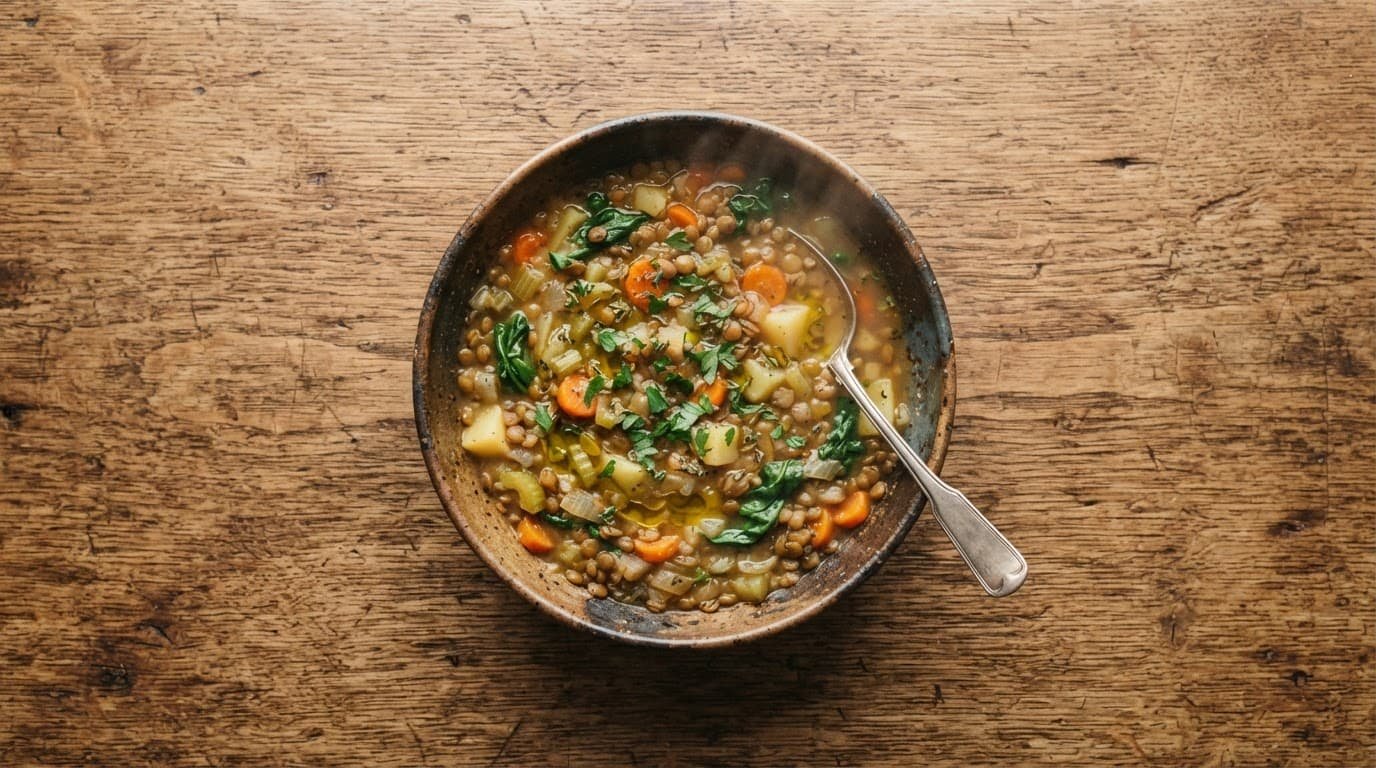
The type of lentil affects both texture and cooking time. Red lentils soften quickly and begin to break down as they simmer, so they naturally thicken the broth. Choose them when you want a smoother soup in less time.
Brown lentils are a dependable all-purpose option. They soften while keeping some shape, which gives the soup a hearty texture. Green lentils stay firmer and have a slightly earthy flavor, but they may need more cooking time than red or brown varieties. Check the package and taste a few lentils before serving.
Vegetables don’t need to be expensive or purchased specifically for this recipe. Frozen veggies are convenient, nutritious, and often less costly than fresh produce that may spoil. Cabbage, potatoes, sweet potato, celery, zucchini, diced red pepper, leafy greens, sprouting broccoli, and leftover cooked vegetables also work well.
Add firm vegetables, such as potatoes, sweet potato, and carrots, earlier in the simmer. Stir in quick-cooking zucchini, frozen vegetables, or leafy greens later so they retain better texture. Canned lentils can shorten the cooking process, too. Rinse them first, then add them near the end because extended simmering can make them mushy.
Build Flavor With Everyday Pantry Seasonings
A few low-cost seasonings can give lentil soup a fuller flavor without a specialty grocery trip. Cumin, smoked paprika, thyme, and bay leaf create a distinct flavor profile, while black pepper keeps the broth lively. Red pepper flakes add heat if you enjoy it. A little lemon juice can also brighten the soup and balance its earthy ingredients.
When you have a few extra minutes, sauté diced onion, carrot, and garlic cloves in a little olive oil before adding the broth. This first step softens the vegetables and develops more flavor. On a busy night, skip it and simmer everything together. The soup will still be satisfying.
Taste the broth before adding salt. Bouillon and canned tomatoes can contain enough sodium on their own, so adding salt too early may leave the finished soup overly salty. Finally, brighten each bowl with lemon juice or a small splash of vinegar. Acid balances the earthy lentils and makes simple pantry ingredients taste fresher.
How to Make This Fiber-Rich Lentil Soup in One Pot
Start with a heavy-bottomed pot so the vegetables cook evenly and the lentils don’t stick. Sort and rinse the dried lentils, removing any small stones or shriveled pieces. Plan on a cooking time of about 20 to 30 minutes.
- Warm a little oil over medium heat. Add diced onion, carrot, celery, and garlic, then cook for about 5 minutes until the aromatics soften.
- Stir in cumin, smoked paprika, oregano, black pepper, and red pepper flakes. Cook for 30 seconds so the spices release their flavor.
- Add the lentils, canned tomatoes, and broth. Scrape the bottom of the pot to loosen any browned bits.
- Bring the soup to a gentle simmer, then partially cover the pot. Cook, stirring occasionally, until the lentils and vegetables are tender. Keep the heat low enough to prevent a hard boil.
- Taste the soup before serving. Adjust the consistency with water or broth, then finish with lemon juice or vinegar, if needed.
Make the Soup Creamy Without Cream
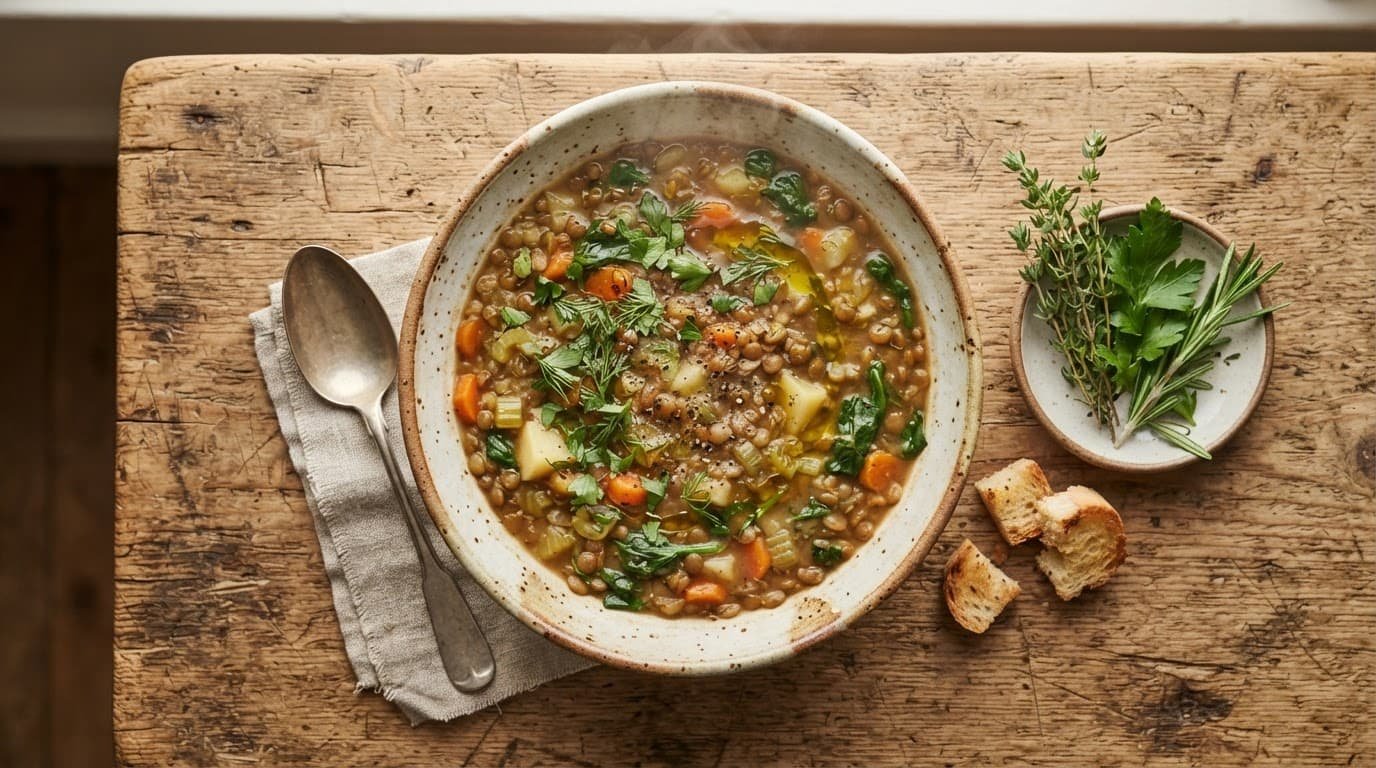
Lentil soup can become thick and satisfying without dairy. For a partly smooth texture, use an immersion blender directly in the pot for a few short pulses. Blend only one section of the soup, then leave the remaining lentils and vegetables chunky.
You can also use a potato masher or the back of a wooden spoon. Press some of the cooked lentils and vegetables against the side of the pot, then stir them into the broth. This method takes a little longer but gives you more control over the final texture. For another example of partial pureeing, see this one-pot lentil soup technique.
Potatoes, sweet potato, white beans, or chickpeas can add extra body. Dice potatoes or sweet potato small enough to soften during the simmer, or stir in rinsed canned beans near the end. If the soup becomes thicker than you prefer, loosen it with a splash of broth.
Fix Common Texture and Flavor Problems
If the soup is too thick, add water or broth in small amounts and stir well after each addition. When it seems too thin, simmer it uncovered for several minutes so excess liquid can evaporate.
A flat-tasting soup often needs acidity rather than more salt. Add lemon or vinegar one teaspoon at a time, tasting after each addition. If the broth needs more warmth, add extra spices gradually instead of adding a large amount at once.
Red lentils naturally break down and create a softer, thicker soup. Whole brown or green lentils usually keep their shape, but acidic tomatoes added too early can slow their softening. Old lentils may also remain firm longer. Taste a few before serving to confirm they are tender.
Simple Ways to Make This Healthy Recipe Fit Your Goals
Your meal should fit your appetite, budget, schedule, and dietary needs. This lentil and vegetable soup provides a fiber-rich base, while sides and portions shape the meal’s balance. Lentils provide protein and fiber, which can help make a simple bowl more satisfying, as explained by the Cleveland Clinic’s lentil nutrition guide.

Serve It With Affordable Sides and Toppings
Choose a side based on how filling you want the meal to be. Whole grains, such as brown rice or barley, add chewy texture and lasting energy. A baked sweet potato can also make a light bowl more substantial without adding much cost.
For a fresher contrast, serve the soup with a fresh salad dressed with lemon juice, olive oil, and a little vinegar. Try a peanut dressing when you want a richer flavor. Cabbage keeps well in the refrigerator, helping reduce food waste and grocery costs. Add spinach or kale when you have extra greens available.
Toppings can change the flavor of the same soup throughout the week. Try fresh herbs, such as parsley or cilantro, for a bright finish. Plain yogurt or cottage cheese adds cool creaminess, while lemon juice brightens earthy lentils. Sesame seeds add crunch, and red pepper or hot sauce brings heat without much cost.
For omnivorous diners, sliced chicken breast can add protein, but it isn’t required for the soup’s plant-based base.
Dairy-free yogurt can keep the meal plant based while adding creaminess.
Keep Portions Balanced Without Measuring Everything
You don’t need to weigh every ingredient to practice calorie awareness. Start by filling most of your bowl with soup, then add bread, rice, barley, or other whole grains based on your hunger and activity.
If you’ve been active or need a more filling meal, include a larger starch portion or add a small sweet potato. For a high protein accompaniment, serve cottage cheese on the side or stir extra beans into the soup.
On a lighter day, let the vegetables and broth take up more of the bowl. Add spinach, kale, cabbage, frozen vegetables, or sprouting broccoli for more volume and variety. These additions can support a balanced diet without requiring expensive ingredients.
Your needs may differ because of appetite, health conditions, medications, dietary restrictions, or personal goals. Use the soup as a flexible foundation rather than a rigid meal plan. Toppings and sides affect the final nutrition, especially added oil, full-fat dairy, large bread portions, and generous amounts of seeds. Include healthy fats in portions that fit your overall needs.
Save Money With Smart Swaps, Storage, and Meal Prep
A large pot of lentil soup can cover several meals when you vary the flavor and store it thoughtfully. Choose dried lentils when you have time, since they cost less per serving than canned lentils. Store-brand tomatoes and broth, frozen vegetables, and seasonal produce can lower the total cost without sacrificing flavor. Sprouting broccoli and other seasonal vegetables can also add variety across several meals.
Turn One Pot Into Several Different Meals
Divide the soup into portions before adding extras. That way, each serving can take on a different flavor while the main pot stays flexible.
- For a smoky tomato version, stir in smoked paprika, extra canned tomatoes, and corn. A small pinch of cumin adds more warmth.
- For a curry-style bowl, add curry powder and a splash of coconut milk after reheating. Keep the coconut milk out of the main batch if you plan to freeze portions.
- A Mediterranean variation needs only oregano, lemon juice, and perhaps chopped parsley. Add leftover zucchini, spinach, sweet potato, or roasted vegetables if you have them.
- For a chili-inspired meal, mix in rinsed black beans, chili powder, and a little extra cumin. Top it with plain yogurt, avocado, or shredded cheese if those fit your budget.
For an omnivore variation, add sliced cooked chicken breast to individual portions after reheating. Keep the main batch plant-based so everyone can customize their bowl.
Canned lentils can turn this into a meal in about 10 minutes because they only need heating. Dried lentils usually need closer to 20 to 30 minutes, but their longer cooking time offers better value when you have time to cook.
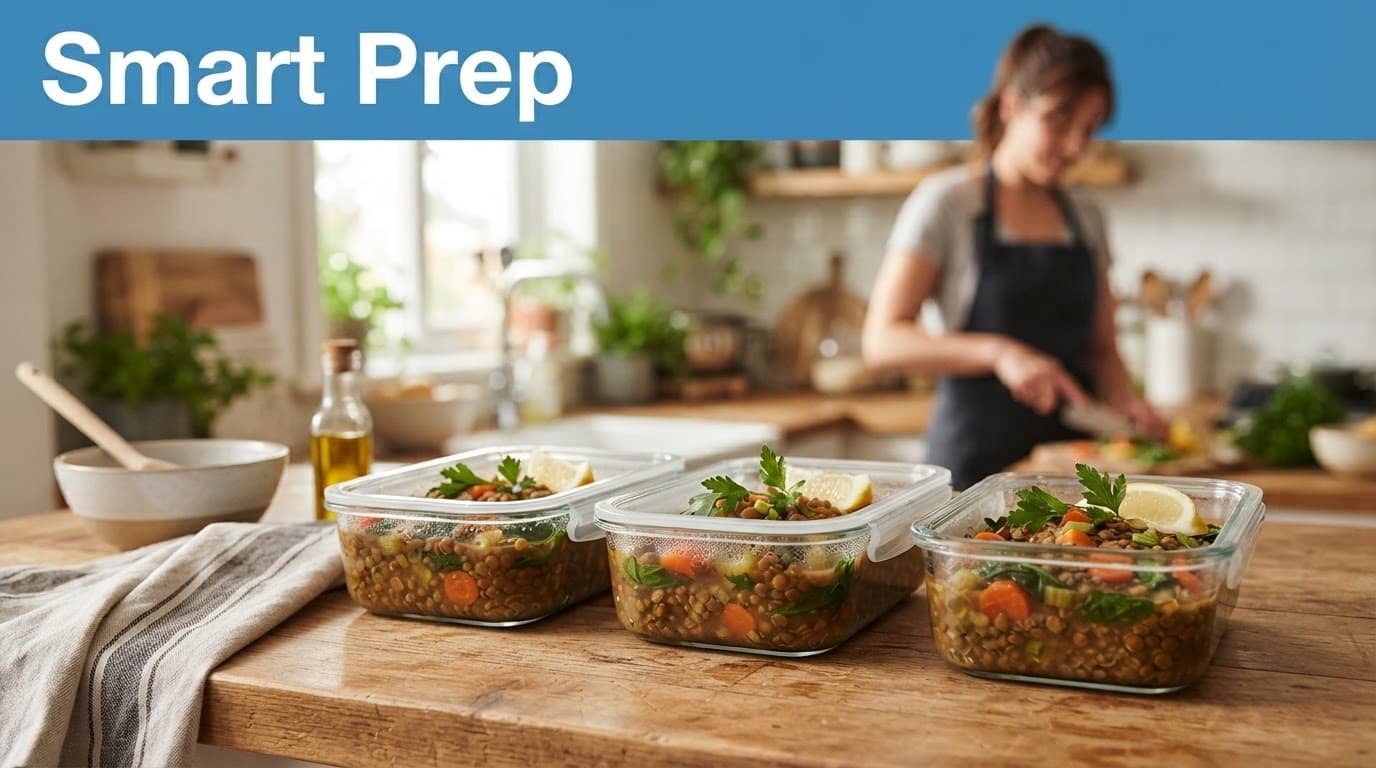
Use airtight containers to refrigerate portions for several days. Lentil soup often thickens as it chills, so loosen it with water or broth when reheating. For longer storage, freeze single portions in freezer-safe containers, leaving room for the soup to expand. Label each container with the date, and thaw frozen soup in the refrigerator or reheat it gently from frozen.
Cooked pasta, brown rice, barley, or another grain can stretch the meal, but store it separately. Add a spoonful to each bowl after reheating instead of stirring it into the soup before storage. Otherwise, the grains absorb the broth and leave you with a dense mixture. You can also serve leftover vegetables as a slaw or salad with a little peanut dressing.
Know When Lentil Soup May Not Suit You
Lentils are high in fiber, which can cause gas or bloating if your body isn’t used to them. Start with a smaller serving, increase fiber gradually, and drink enough fluids throughout the day.
If you use canned lentils, rinse them under cool running water before adding them. This removes excess liquid and may make them easier to incorporate into the soup.
People following a medically prescribed diet or managing a digestive condition should follow their clinician’s guidance. The same applies if you have a lentil or other food allergy. Choose portions and ingredients that align with your individual health needs.
Frequently Asked Questions
These answers cover common questions about adapting this lentil soup for different kitchens, diets, and schedules.

### Can I make lentil vegetable soup in a slow cooker?
Yes, but sauté the onion, carrot, celery, and garlic first for fuller flavor. Add the sautéed vegetables, rinsed lentils, tomatoes, broth, and seasonings to the slow cooker. Cook on low for about 6 to 8 hours or high for 3 to 4 hours. Add quick-cooking vegetables during the final hour.
Is this soup naturally gluten-free?
The main ingredients are naturally gluten-free, including lentils, vegetables, tomatoes, and most herbs and spices. However, check broth, bouillon, spice blends, and packaged toppings for wheat-based ingredients. Serve it with certified gluten-free bread or rice if needed.
How can I add more protein to each bowl?
Stir in rinsed black beans, white beans, or chickpeas after the lentils become tender. You can also serve the soup with cottage cheese, plain Greek yogurt, a boiled egg, or sliced chicken breast. These optional additions change the texture while keeping the base recipe affordable and plant-based.
Why do my lentils stay firm after cooking?
Old lentils can take longer to soften, so check the package date when possible. Hard water may also slow cooking. Acidic ingredients, such as tomatoes, can delay softening when added too early. Simmer the soup longer and add more liquid as needed. Taste the lentils before serving.
How should I reheat leftover lentil soup?
Reheat one portion in a saucepan over medium-low heat, stirring occasionally until steaming hot throughout. Add a splash of water or broth because lentils continue absorbing liquid as the soup sits. For reliable leftover guidance, the USDA food safety basics recommends using refrigerated soups within 3 to 4 days.
Can I freeze this soup with potatoes or pasta?
You can freeze the soup, but potatoes may become slightly grainy and pasta can turn soft after thawing. For the best texture, freeze the lentil soup without pasta, brown rice, or other grains. Add freshly cooked grains when you reheat it. Leave space in each freezer container for expansion.
Conclusion
This lentil and vegetable soup turns affordable pantry staples into a filling, fiber-rich meal. It is easy to prepare and simple to adjust for your schedule.
Choose red lentils for a faster, thicker soup, or use brown or green lentils for more texture. Add available vegetables, including sprouting broccoli, season gradually with lemon juice, and adjust the consistency with broth or water. Store extra portions in the refrigerator or freezer for convenient meals later.
Use this recipe as a starting point instead of waiting for every listed ingredient. Try a smoky, curry-style, or Mediterranean variation, and let your pantry guide the next bowl.