Strength training doesn’t need a spare bedroom or a rack of equipment. Home workouts can begin with a clear patch of floor and adjustable dumbbells. Controlled movement lets you train without stomping, jumping, or rearranging the whole apartment.
A small space dumbbell workout can serve as a practical full body strength workout when it respects your room as much as your body. The routine below trains major muscle groups, keeps you in place, limits noise, and uses simple movements you can repeat as you get stronger.
This post may contain affiliate links. If you make a purchase through these links, I may earn a small commission at no extra cost to you.
Key Takeaways
- A clear area about the size of a yoga mat, plus enough overhead room, is sufficient for this quiet full-body dumbbell workout.
- The 20-minute routine uses goblet squats, Romanian deadlifts, floor presses, and single-arm rows to train major muscle groups without jumping or traveling around the room.
- Choose dumbbell weights that make the final few reps challenging while allowing controlled movement, steady breathing, and proper form.
- Progress gradually by adding controlled repetitions, slowing the lowering phase, pausing, or increasing the load by the smallest available setting.
- Train on two or more days each week with enough recovery, and stop for sharp pain, chest pain, faintness, or sudden shortness of breath.
How to set up a small space dumbbell workout
Start by clearing an area about the size of a yoga mat, plus enough room to raise your arms without hitting a wall, lamp, or ceiling fan. You don’t need space to travel forward, backward, or sideways for this plan.
A pair of dumbbells is useful, while adjustable dumbbells let you change loads without storing multiple pairs. A single adjustable dumbbell can also work. Keep a folded towel or exercise mat nearby for floor presses, and place your water where you won’t step on it. Beginners may prefer light dumbbells for movements that involve one arm overhead.
Make a fixed movement zone
Face an open part of the room rather than a coffee table or sofa. Keep the adjustable dumbbells at the front edge of your mat, then pick them up with a hip hinge instead of reaching down with a rounded back.
If your floor is hard, lower each dumbbell with both hands rather than dropping it. This protects the floor and keeps the workout apartment-friendly. Move slowly enough that you could stop at any point in a repetition.
Choose weights by effort and form
The right weight challenges you without changing your position. Proper form and sound exercise technique matter more than a heavier load. For most exercises, the final few reps should feel demanding, yet you should still control the dumbbell, breathe steadily, and keep your range of motion.
Test a weight for eight controlled reps. If you could easily perform several more, increase the load next time. With adjustable dumbbells, record the selected setting so you can make small load changes consistently. If your back rounds, knees cave inward, shoulders shrug, or you need to swing the weight, reduce it.
The CDC’s adult activity guidelines recommend muscle-strengthening activity on two or more days each week. Two or three well-spaced home sessions give beginners time to recover and practice good technique.
Warm up your joints, then cool down
A warm-up can be brief, but it should raise your temperature and rehearse the movements ahead. Save static stretching for after the workout.
Spend three minutes moving without weights
March softly in place for one minute while circling your arms and rolling your shoulders. Then perform slow bodyweight squats and hip hinges for one minute. Finish with wall push-ups or gentle arm sweeps during the final minute.
Keep the pace easy. You should feel warmer and more mobile, not tired before your first work set.
Bring your breathing down afterward
After the circuit, walk around the room for one minute and let your breathing settle. Then stretch your chest, hips, calves, and hamstrings with easy holds lasting 15 to 30 seconds.
Stop if you feel chest pain, faintness, sudden shortness of breath, numbness, or sharp joint pain. Seek urgent care for severe symptoms. Talk with a qualified clinician before starting if you have an injury, medical condition, recent surgery, or pregnancy-related exercise concerns.
A 20-minute quiet full-body routine
This small space dumbbell workout takes 20 minutes, including the warm-up and cooldown. Use adjustable dumbbells to choose a suitable load without needing multiple pairs. Set a timer with a soft alert, or watch the clock between movements. Complete each rep with control rather than racing the timer.
| Segment | Time | What to do |
|---|---|---|
| Warm-up | 3 minutes | March, squat, hinge, and mobilize your shoulders |
| Main circuit | 14 minutes | Three rounds of four exercises, with two rests |
| Cooldown | 3 minutes | Walk gently, breathe, and stretch lightly |
The squat and hinge patterns emphasize lower body strength, while the floor press and row contribute to upper body strength. Together, they train the body without requiring much movement around the room.
Perform the four-movement circuit
Work for 40 seconds, then take 20 seconds to set the dumbbell down and prepare for the next movement. Keep the workout intensity controlled, and prioritize proper form over speed. Rest for one minute after rounds one and two. That gives you 12 minutes of work and two minutes of recovery.
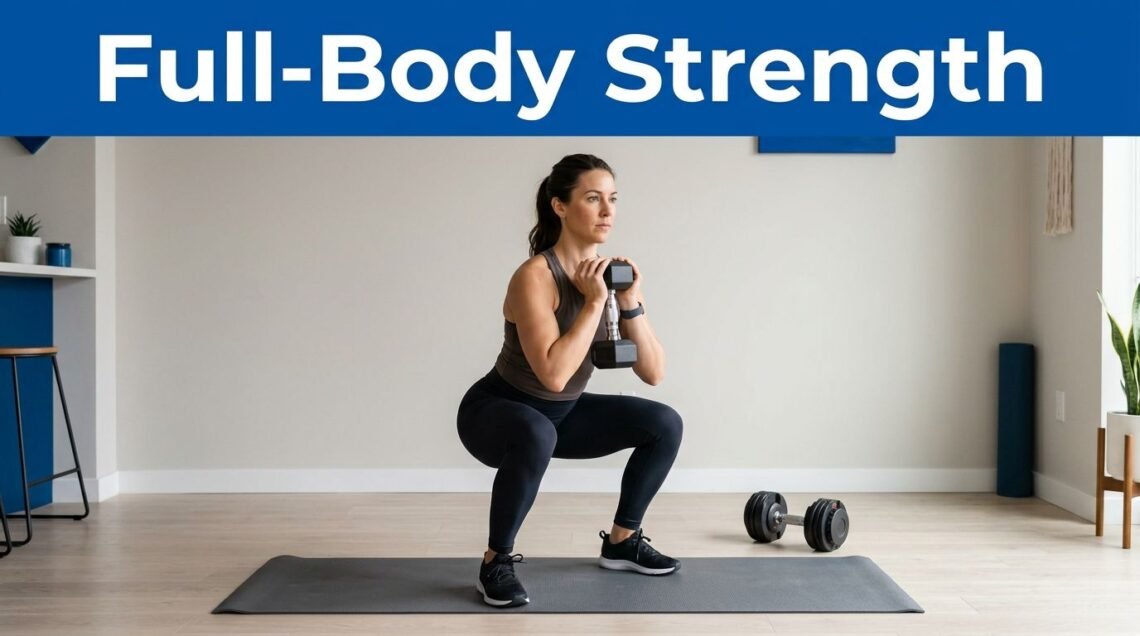
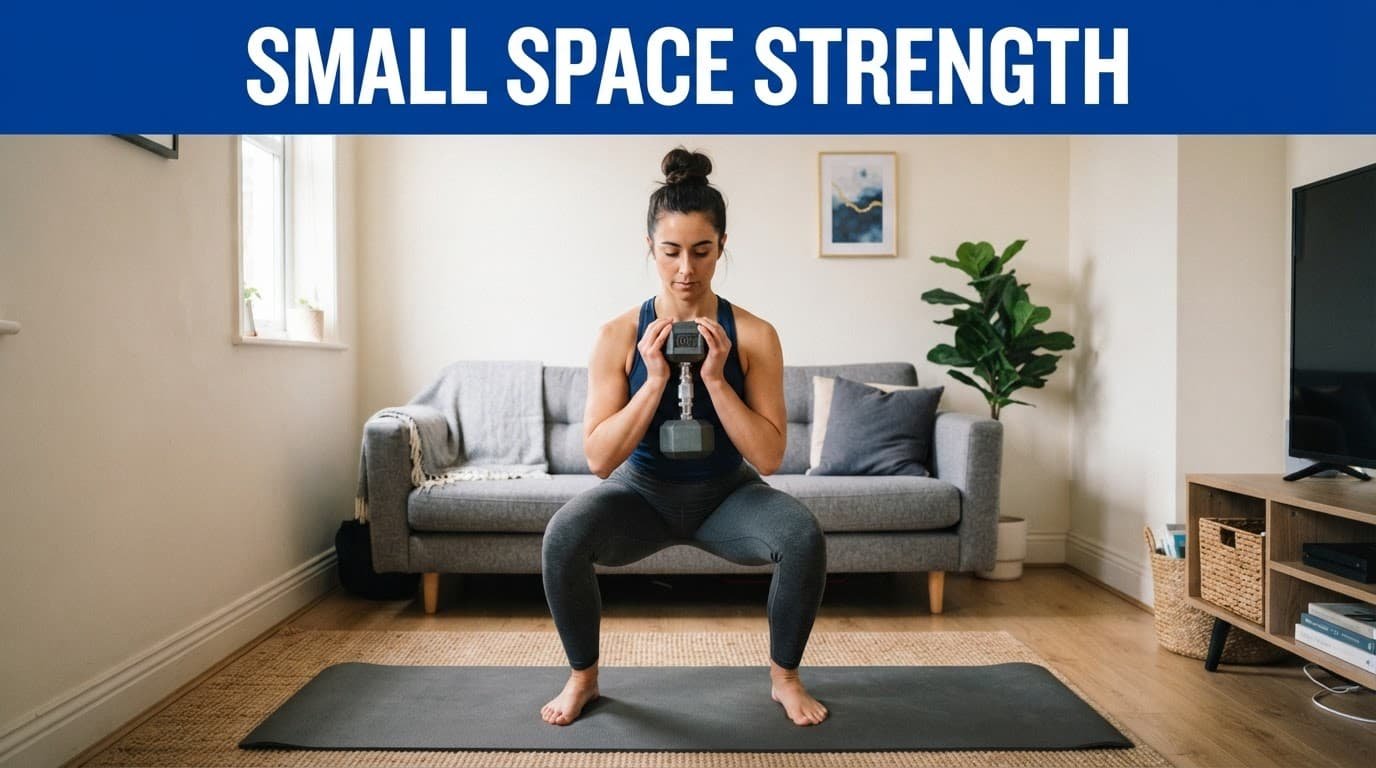
- goblet squats: Hold one dumbbell close to your chest. Sit your hips down between your feet, then stand by pressing through your whole foot.
- romanian deadlifts: Hold one or two dumbbells at your thighs. Use a controlled hip hinge to push your hips back and lower the weights close to your legs, then squeeze your glutes to stand.
- Floor press: Lie on your back with knees bent. Press one dumbbell for 20 seconds per side, or press a pair together for the full interval.
- single arm row: Hinge forward and brace one hand on your thigh. Row the dumbbell toward your lower ribs for 20 seconds per side.
Keep the session low-impact
This fixed circuit has no lunges, jumps, or fast direction changes, making it practical for sensitive knees, downstairs neighbors, and tight rooms. Try sumo squats as a stationary variation, or use reverse lunges only if you have enough stepping room; they aren’t required here. It can modestly increase calorie expenditure as a low-impact fat loss circuit, but it won’t guarantee fat loss on its own.
Optional movements such as renegade rows, push press, and Turkish get-ups require more clearance, overhead space, or stability, so they aren’t part of this quiet base circuit. Move with a smooth tempo, especially on the lowering phase, and place weights down as though the floor belongs to someone sleeping below you.
Form cues that matter in tight spaces
Small rooms don’t leave much room to correct a wobbly rep. Proper form and slow, repeatable movement give you more value than heavier dumbbells moved carelessly.
Keep squats and Romanian deadlifts controlled
Keep your ribs stacked over your pelvis, with knees tracking toward your toes in goblet squats or sumo squats. Choose a comfortable stance and a pain-free full range of motion you can control. Don’t force depth in a tight room if your heels lift or your lower back tucks sharply.
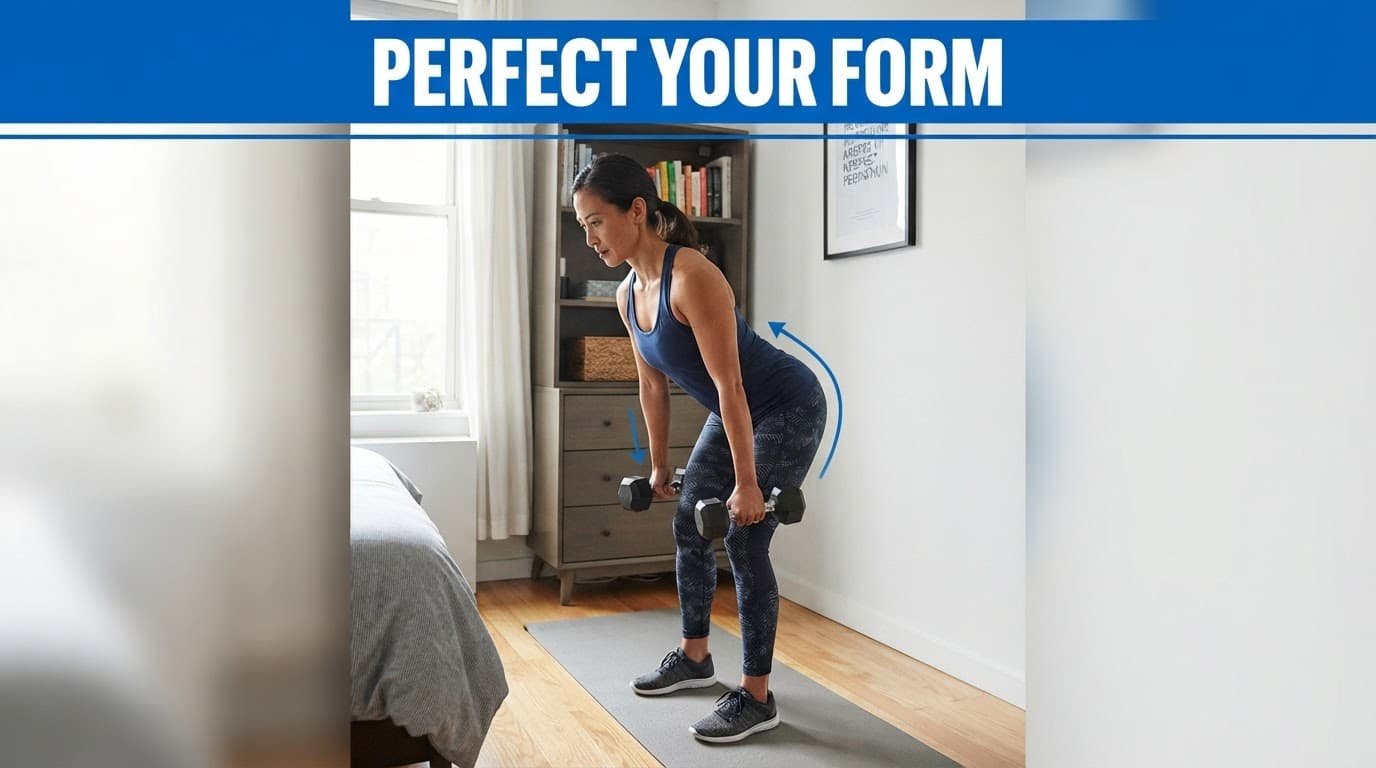
During the hinge, soften your knees and send your hips backward. This hip hinge tips your torso forward naturally, but your spine should remain long and neutral. Stop lowering when your hamstrings feel a strong stretch or your back begins to round. Keep the dumbbells close to your legs, not drifting toward the wall in front of you.
Press and row without crowding your shoulders
On the floor press, keep your upper arms roughly 30 to 45 degrees from your torso. Lower with control until your upper arms touch the floor, then press without slamming the dumbbells together. A push press uses leg drive and needs adequate overhead clearance, so it shouldn’t replace the quiet floor press in a tight room.
Brace your abdominal muscles before pulling; lead with your elbow, pause near your ribs, and lower slowly. Renegade rows demand more balance and bracing, including core stability, than a supported row. Renegade rows are optional because their plank position and dumbbell placement require a stable, unobstructed surface. Turkish get-ups also require more space and coordination, so they aren’t necessary.
In a small room, a shorter range performed with steady control is safer than forcing a full range into furniture or poor alignment.
Progress without needing more floor space
Strength improves when your body faces a gradually harder challenge. The 2026 ACSM resistance training guidelines support regular resistance work for improving fitness, lower body strength, and upper body strength. With adequate recovery and nutrition, consistent loading can support muscle building. This approach is called progressive overload: make the work slightly harder over time.
Change one variable at a time
First, improve your technique and complete every interval with the same weight. Once you can maintain proper form, add a few repetitions within each 40-second block. After that, increase the load by the smallest available setting on your adjustable dumbbells.
When adjustable dumbbells have larger jumps between settings, stay at the lighter load while adding controlled repetitions. Raise workout intensity without immediately using heavier weights by keeping each movement controlled, using a three-second lowering phase for more time under tension, or pausing for one second at the hardest point.
Keep the same exercise order for several weeks so you can notice real progress. The ACSM position stand on progressive resistance training describes progressive loading as part of continued adaptation.
Use one dumbbell with purpose
A single dumbbell can still train your full body. Hold it goblet-style for squats, use it for romanian deadlifts to load the hip hinge effectively, press one arm at a time, and row one side at a time. Start each round with the opposite side for unilateral moves so both sides receive equal attention.
Adjustable dumbbells offer a space-saving option when you need one dumbbell for several movements. After the main squat, hinge, press, and row patterns, optional bicep curls or tricep extensions can add arm work. A one-dumbbell push press can offer another progression, but it needs controlled overhead space.
Treat renegade rows as a later progression, and attempt them only after stable bracing feels consistent. Turkish get-ups and renegade rows can add shoulder and core work, but both demand more clear floor space. A half get-up may fit some rooms, yet the basic squat, hinge, press, and row pattern remains the better foundation when space is limited.
Frequently Asked Questions
How much space do I need for this dumbbell workout?
You need a clear area about the size of a yoga mat, along with enough room to raise your arms safely. The routine stays mostly in place, so you don’t need space to travel across the room.
Can I do this workout with only one dumbbell?
Yes, one dumbbell can be used for goblet squats, Romanian deadlifts, single-arm floor presses, and rows. Alternate the starting side on unilateral exercises so both sides receive equal attention.
How heavy should my dumbbells be?
Choose a weight that makes the final few repetitions demanding while allowing you to maintain proper form and control. Reduce the load if your back rounds, your knees cave inward, your shoulders shrug, or you need to swing the dumbbell.
How often should I do this workout?
Beginners can start with two or three well-spaced home sessions each week. This gives your muscles time to recover while you practice the movement patterns and gradually build strength.
Is this routine suitable for fat loss?
The circuit can modestly increase calorie expenditure because it trains several major muscle groups with limited rest. However, it cannot guarantee fat loss on its own; overall nutrition, activity, and consistency also matter.
A small room can still build real strength
A consistent dumbbell routine works well for home workouts, training several major muscle groups without excessive equipment or noise. Clear the area, select weights that protect your form, and repeat the same basics often enough to improve them. Adjustable dumbbells can keep the setup compact as your needs change.
Your room doesn’t need to look like a gym. This fitness routine only needs enough space for controlled, repeatable movement.
Anytime Fitness Workouts for Beginners: A Simple 20-Minute Start