
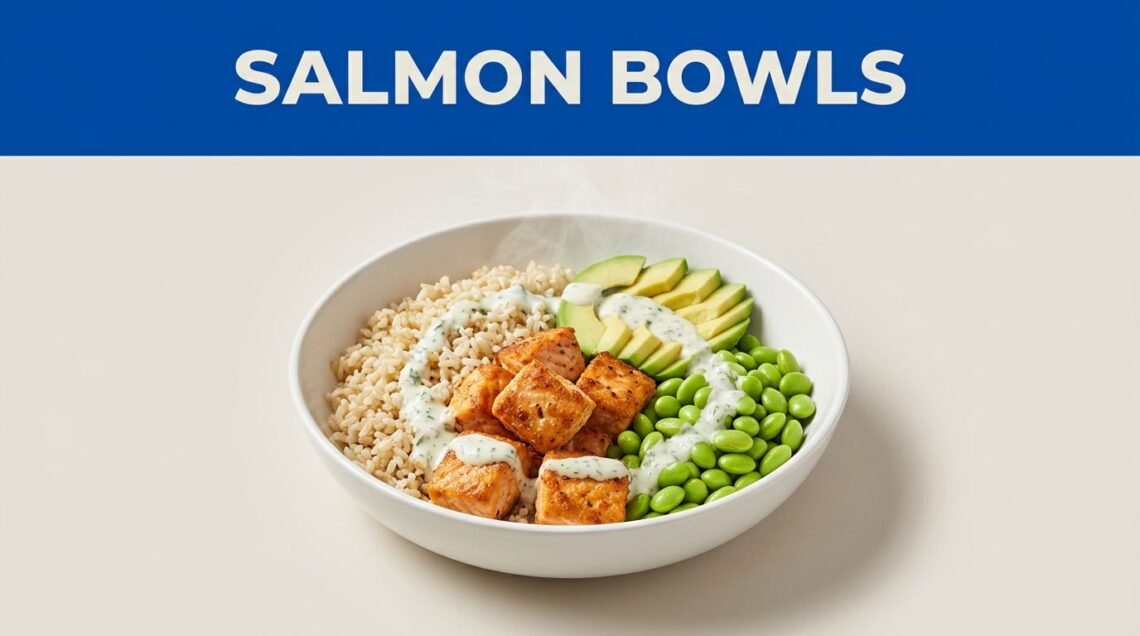
A fast, balanced dinner can be as simple as air-fryer salmon bites served with chewy brown rice, a satisfying source of whole grains, creamy avocado, and a cool yogurt herb sauce. With a short cooking time, the salmon cooks quickly at 400°F, giving bite-sized pieces lightly crisp edges while the center stays moist.
A healthy recipe fits a busy weeknight dinner and meal-prep routine because you can cook the grain ahead and assemble each bowl when you’re ready to eat. A short marinade with olive oil, soy sauce, garlic, and honey adds plenty of flavor, while the yogurt herb sauce is brightened with lemon juice. Cucumber, edamame, shredded carrots, roasted sweet potato, or sliced red pepper make easy additions for a nutritious meal and quick dinner. Cook the salmon until it flakes easily and reaches 145°F in the thickest piece; use coconut aminos instead of soy sauce, or swap the grain for quinoa if you prefer. Next, you’ll find the simple ingredient list and step-by-step method for building these flavorful salmon rice bowls.
This post may contain affiliate links. If you make a purchase through these links, I may earn a small commission at no extra cost to you.
Key Takeaways
- This bowl pairs air-fryer salmon bites with rice, vegetables, avocado, and a cool yogurt herb sauce.
- Cut the salmon into even pieces so they cook quickly and stay moist at 400°F.
- Cook salmon until it flakes easily and reaches 145°F in the thickest piece.
- Prepare rice ahead for easy meal prep, then add cucumber, edamame, or carrots before serving.
- For another balanced bowl idea, explore this salmon rice bowl.
Air-Fryer Salmon Bites With Brown Rice, Avocado, and a Yogurt Herb Sauce
These salmon rice bowls bring together tender fish, a satisfying grain base, creamy avocado, and a bright sauce. The result is a filling, balanced bowl that feels satisfying without requiring a long cooking process. Air-fryer salmon bites also pair well with fresh vegetables, as shown in similar air-fried salmon rice bowls.
What You Need for the Salmon, Rice, and Sauce
Choose center-cut, skinless salmon fillets when possible. The thicker portion has a rich texture and stays tender after being cut into bite-sized pieces. The rice gives each bowl fiber, a nutty flavor, and a pleasantly chewy base that holds up beneath the salmon.
Avocado adds smoothness and balances the savory marinade. Cucumber, shredded carrots, edamame, red pepper, green onion, or sprouting broccoli can add color and crunch. Steam or roast the broccoli before assembling the bowls. For an alternative bowl base or side, add roasted sweet potato. Together, the salmon, yogurt, and edamame create a high protein meal.
Meanwhile, plain Greek yogurt forms the base of the herb sauce. It makes the sauce tangy and adds protein without the heaviness of a cream-based dressing. Stir in lemon juice, chopped fresh herbs, garlic, salt, and pepper. An optional peanut dressing also works well if you prefer a nutty finish.
For the marinade, use low-sodium soy sauce or coconut aminos, sesame oil, olive oil, honey, garlic cloves, and optional fresh ginger. Tamari is a useful gluten-free substitute for regular soy sauce. You can also use maple syrup instead of honey, and dairy-free yogurt works well if you avoid dairy. Cooked chicken breast can replace the salmon if you’d like to use the same marinade with another protein.
If you don’t have the usual grain base, quinoa or white rice will work. Quinoa offers a lighter, slightly crisp texture, while white rice cooks more quickly and has a softer bite. For a thicker, high-protein sauce, blend cottage cheese with some or all of the yogurt. Add more lemon juice to brighten the flavor, then thin the mixture with water as needed. Finish the bowls with sesame seeds, if desired.
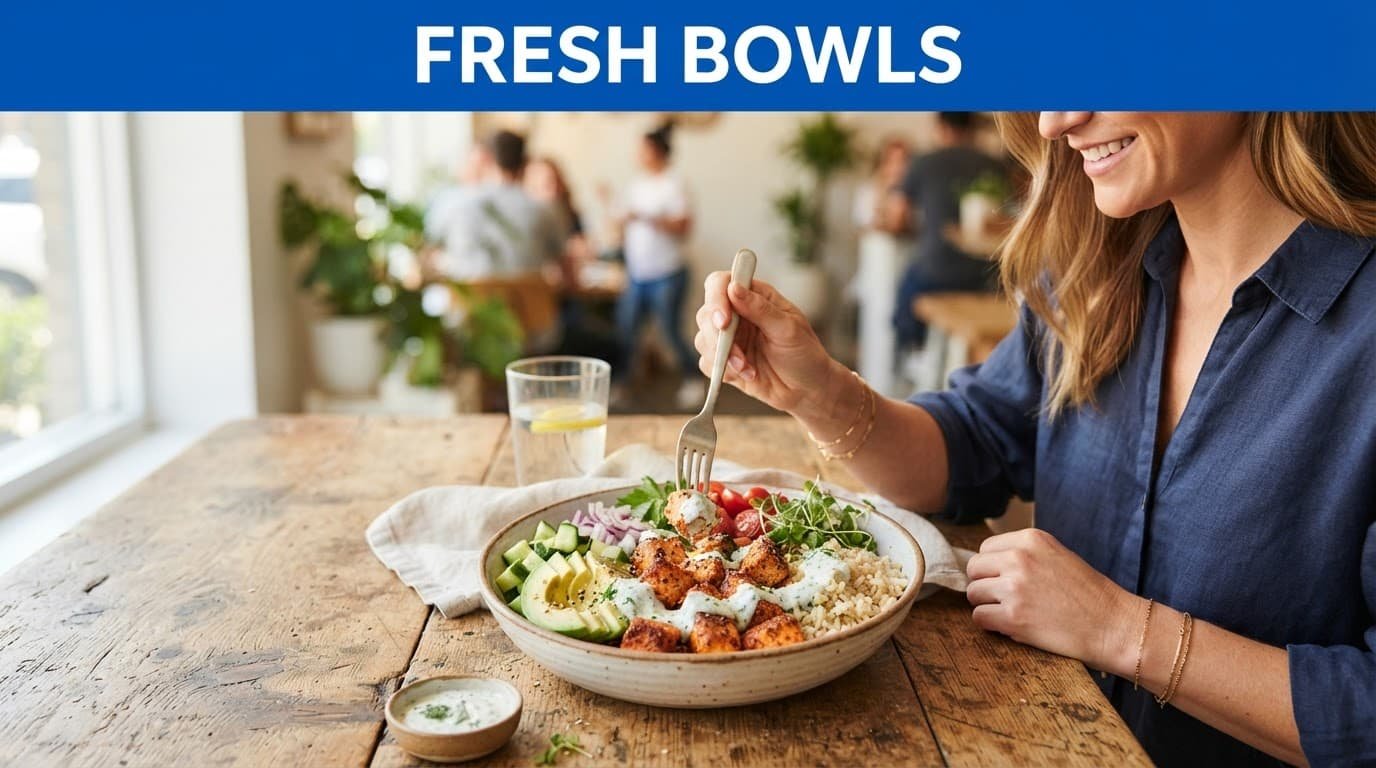
Prepare the rice ahead if you like, but cool it promptly after cooking. Store it in a shallow container in the refrigerator and use it within a few days. Don’t leave cooked rice at room temperature for extended periods.
How to Cut and Season Salmon for Even Cooking
Cut the salmon into pieces that are close in size, ideally about 1 inch. Similar cubes finish at roughly the same time, so smaller pieces don’t dry out while larger pieces remain undercooked. Remove any pin bones with clean kitchen tweezers, and take off the skin if it remains attached.
Before seasoning, pat the salmon dry with paper towels. Excess moisture creates steam, which prevents the surface from browning. Toss the cubes with a light coating of marinade rather than soaking them. A short 10-minute marinade is enough because small pieces absorb flavor quickly.
Arrange the salmon in a single layer with space between the pieces. Overcrowding traps moisture and produces softer edges. If you plan to drizzle extra marinade over the finished bowl, reserve it in a clean container before it touches the raw fish. Never reuse marinade that has contacted uncooked salmon unless you boil it first.
How to Make Crispy Salmon Bites in the Air Fryer
Preheat your air fryer to 400°F for about 3 minutes. Lightly coat the basket with oil spray, then arrange the seasoned salmon cubes in one layer with space between each piece. This setup allows hot air to reach the edges, creating browned surfaces instead of steamed fish.
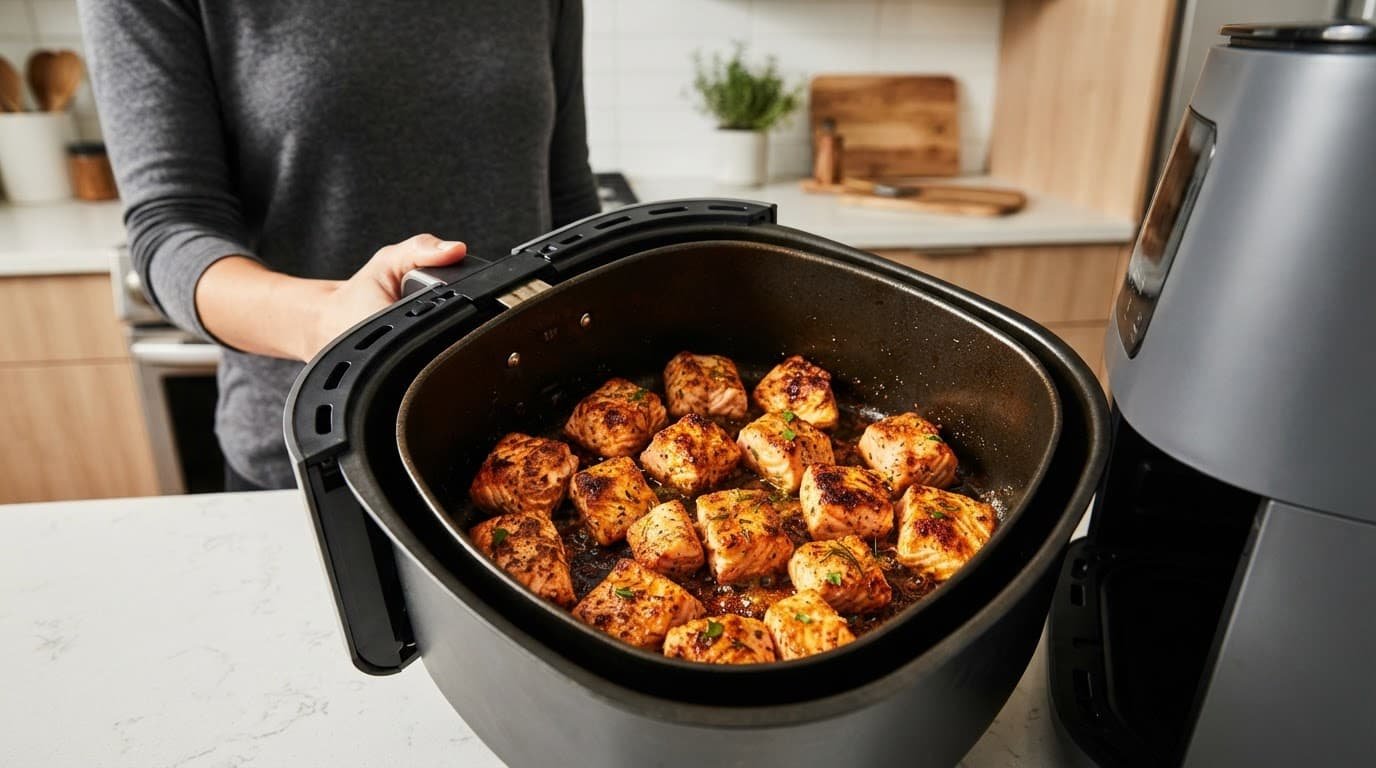
Cook the bites for about 6 to 8 minutes, shaking the basket or turning the pieces halfway through. Cooking time depends on the cube size, whether the salmon started cold or close to room temperature, the basket design, and how full the air fryer is. This air-fryer salmon bites recipe also recommends adjusting the time for smaller pieces.
How to Keep the Salmon Tender Instead of Dry
Check the salmon early, especially the first time you use a new air fryer. The outside should look lightly browned, while the center remains moist and flakes easily with a fork. Color alone isn’t a reliable safety test, so check the thickest piece with an instant-read thermometer. Salmon should reach 145°F for food safety.
If the cubes dry out, cut larger pieces next time. Small cubes cook quickly and can lose moisture before the outside browns. A light coating of olive or avocado oil helps the surface brown, but too much oil can make the bites greasy. Sweet marinades containing honey or maple syrup can also darken quickly, so use a thin coating and watch the salmon near the end.
When the basket looks crowded, cook in batches. Extra space improves airflow and gives each bite better browning. To prevent sticking, lightly oil the basket or use a small piece of perforated parchment designed for air fryers. Avoid covering the entire basket, since blocked airflow can soften the edges.
Let the salmon rest for a minute before adding it to the bowl. Keep the yogurt herb sauce off the salmon during cooking. Its dairy and herbs can scorch under high heat, while adding it after cooking keeps the sauce cool, fresh, and creamy. A squeeze of lemon juice brightens the sauce just before serving.
The Best Way to Build a Balanced Salmon Rice Bowl
Start with warm brown rice, then arrange the salmon bites over one side. Add avocado, sliced red pepper, and colorful vegetables around the fish, followed by the yogurt herb sauce and toppings.
Cucumber brings crunch, edamame adds extra protein, sprouting broccoli provides color and texture, and shredded carrots offer mild sweetness. For a more substantial bowl, add roasted sweet potato cubes. Green onion or fresh herbs brighten each bite. Adjust the rice, salmon, avocado, and toppings to match your hunger, activity level, and nutrition goals. No ingredient needs to be treated as forbidden.
Why This Salmon Bowl Works for a Busy Weeknight Dinner
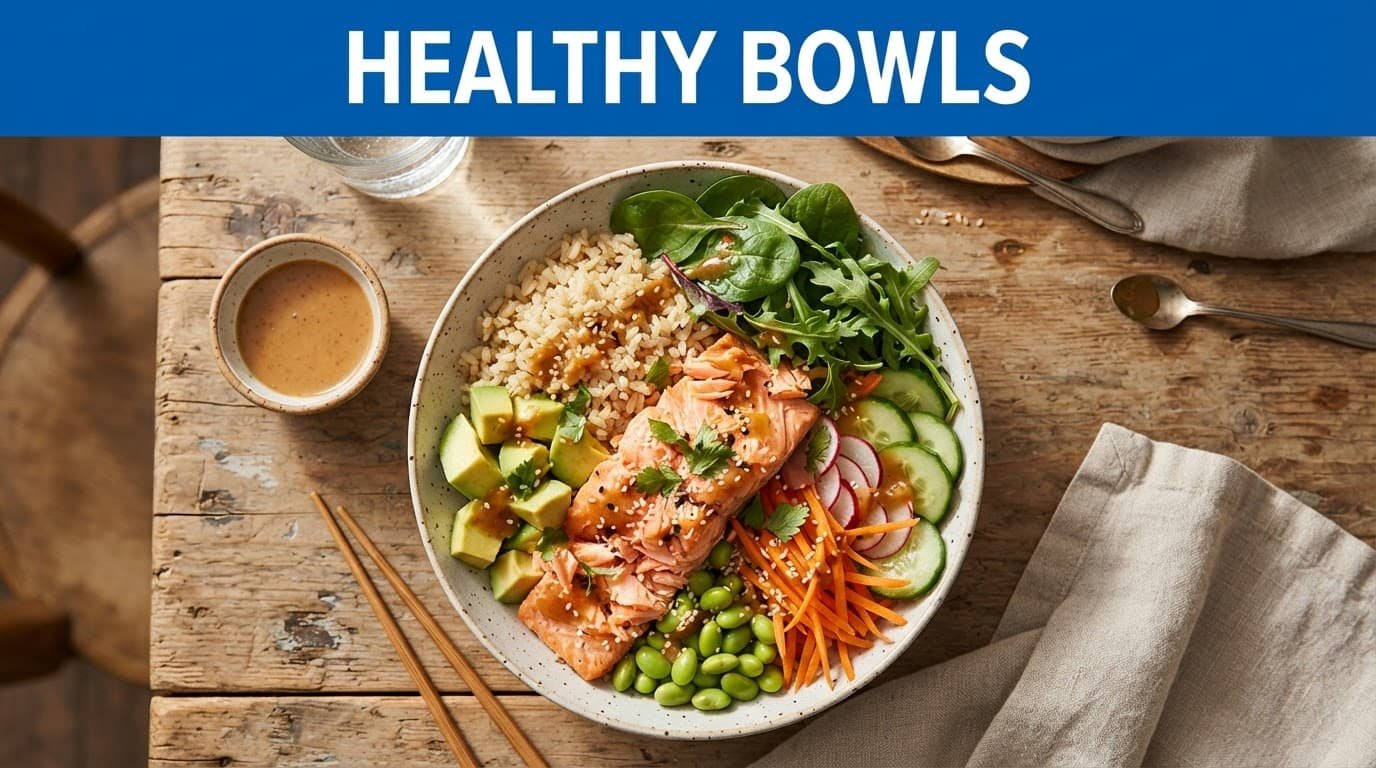
A balanced bowl makes weeknight cooking easier because each component has a clear job. Salmon provides protein and omega-3 fats, while the grain base adds whole grains and lasting energy. Vegetables bring color, crunch, and fiber, while avocado and a little oil provide satisfying healthy fats. Flexible portions and plenty of vegetables can help the bowl fit a balanced diet.
### Easy Swaps for Dietary Needs and Preferences
Keep the same bowl structure, then change individual ingredients as needed. For a gluten-free option, use certified gluten-free tamari instead of soy sauce. Coconut aminos are another choice, although they taste milder and often add more sweetness. Check labels because brands vary in sodium and added ingredients.
The marinade also works with maple syrup instead of honey. If you avoid dairy, choose an unsweetened dairy-free yogurt for the herb sauce. Blended cottage cheese offers another creamy base when dairy works for you. You can also use a peanut dressing for a different sweet-savory flavor profile. For a protein swap, chicken breast works well with the same marinade.
For a plant based variation, replace the salmon with baked tofu, tempeh, or another plant protein. Use dairy-free yogurt in the herb sauce, then adjust the lime juice, herbs, garlic, salt, or pepper. A salmon, edamame, and optional chicken breast combination creates a high protein variation when you want extra staying power.
For a gentler bowl, leave out the chili flakes and use a mild sauce. You can also reduce the garlic or replace spicy toppings with sliced cucumber and extra herbs. When you want a different base, replace the rice with quinoa, farro, cauliflower rice, or a roasted sweet potato. Quinoa adds a lighter texture, farro stays pleasantly chewy, and cauliflower rice lowers the carbohydrate content while adding more vegetables.
Fresh produce is ideal for crunch, but canned or frozen vegetables keep this recipe practical. Frozen edamame, canned corn, black beans, rinsed chickpeas, red pepper, or sprouting broccoli can fill the gap when your produce drawer is empty. Drain canned ingredients well and warm frozen vegetables before assembling the bowl.
Every substitution changes the bowl a little. Texture, flavor, sodium, calories, fiber, and protein may all shift depending on the product and portion.
How to Add Flavor Without Making the Bowl Heavy
Use small finishing touches instead of covering the salmon and rice with a large amount of sauce. A squeeze of lime or lemon juice adds tang, while toasted sesame seeds provide a nutty crunch. Sliced jalapeño or a pinch of chili flakes brings heat, and cilantro or dill adds a fresh herbal note. A small drizzle of sesame oil can provide strong flavor without requiring much.
Balance the bowl as you taste it. Add lime when it seems flat, lemon juice when it tastes rich or salty, and a little maple syrup when it needs sweetness. Herbs can also brighten a heavier bowl. Because soy sauce, tamari, and coconut aminos vary in saltiness, taste the yogurt herb sauce before adding more salt.
The yogurt herb sauce, peanut dressing, and citrus-forward options each create a different flavor profile. Finish each serving with only as much sauce and seasoning as it needs.
For more ideas on combining salmon, rice, avocado, and vegetables, see this dietitian-created salmon rice bowl.
Meal Prep, Storage, and Reheating Tips for Salmon Bites
Meal prep works best when you protect each ingredient’s texture. Cook the grain and chop sturdy vegetables ahead, but keep the salmon, avocado, and sauce separate until serving. This simple setup keeps the bowl fresh instead of turning into one soft mixture.
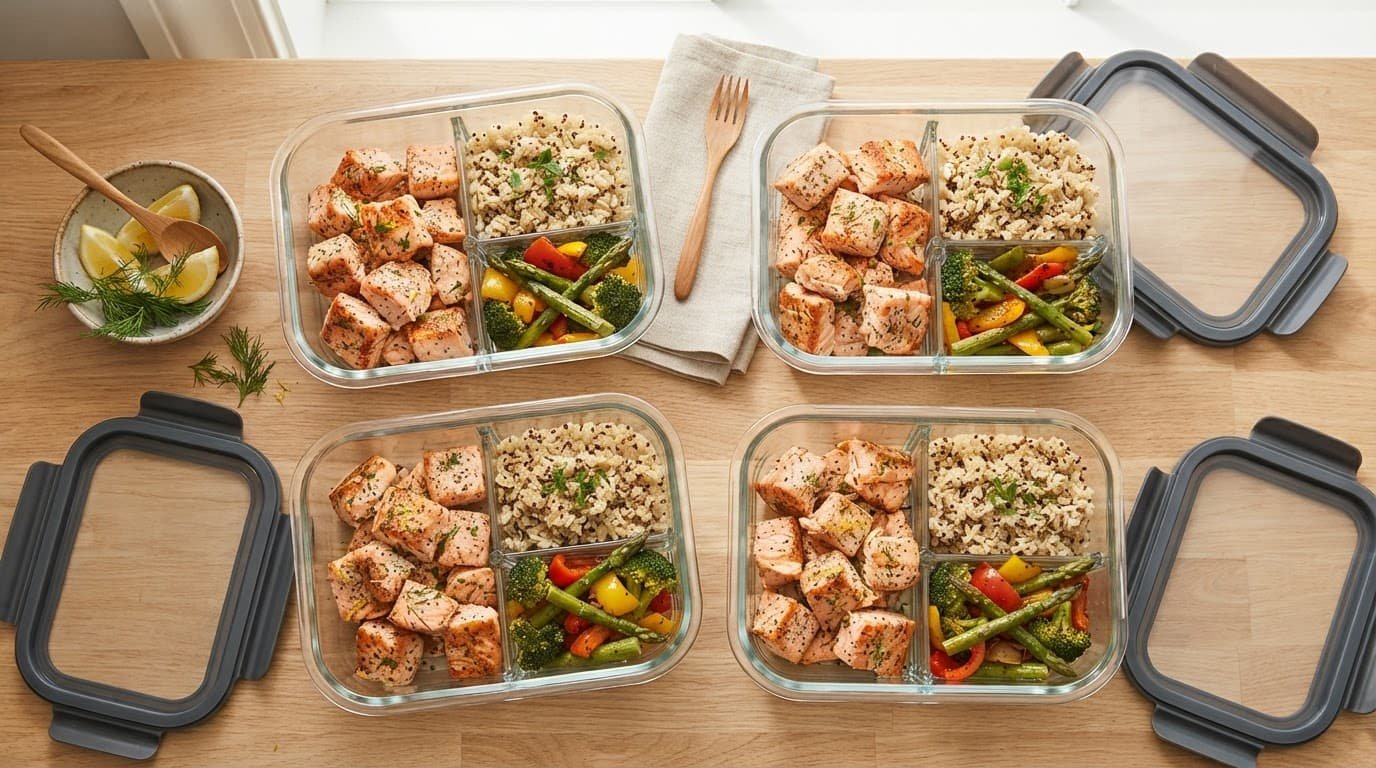
Cook brown rice according to the package directions, fluff it, and cool it promptly. Chop vegetables such as carrots, cucumber, and green onion, then store them in separate airtight containers. You can make the yogurt herb sauce up to a few days ahead. Keep it sealed in the refrigerator and stir it before serving.
Whenever possible, store the cooked salmon, rice, vegetables, avocado, and sauce separately. Place leftovers in shallow containers so they cool more quickly, refrigerate them promptly, and use them within 3 to 4 days. The USDA leftovers guide recommends reheating leftovers to 165°F, measured with a food thermometer.
Cut avocado just before assembling each bowl. If you need to prep it earlier, toss the pieces with lemon juice to slow browning, then cover them tightly. For reheating, warm the rice separately with a small splash of water and a covered container. Reheat salmon gently in the air fryer at a lower temperature or in the microwave in short intervals. Stop as soon as it is warm, since repeated high heat dries the fish. You can also serve leftover salmon cold over greens as a fresh salad with the vegetables and yogurt herb sauce.
Common Mistakes That Can Ruin the Bowl
Small preparation errors can change the texture of the entire meal. Use these quick fixes when something goes wrong:
- Wet salmon will not brown: Pat the cubes dry before seasoning, and use only a thin coating of marinade. Excess liquid creates steam.
- Crowded basket pieces steam: Arrange the salmon in one layer with space between pieces. Cook in batches if necessary.
- Oversized cubes cook unevenly: Cut the salmon into pieces close to 1 inch. Smaller pieces may dry out before larger ones finish.
- Overcooked fish turns dry: Check early, especially after 6 minutes, and use a thermometer on the thickest piece. Salmon should reach 145°F.
- Thin sauce runs into the rice: Stir in more Greek yogurt, or chill the sauce briefly before serving. Add water one teaspoon at a time when thinning it.
- Rice becomes dry: Add a teaspoon or two of water, cover the container, and reheat gently. Fluff the rice before adding the toppings.
Never pour marinade that touched raw salmon over finished food unless you boil it first. Use a clean spoon for serving sauce, and never return it to the storage container after it touches cooked food.
Frequently Asked Questions
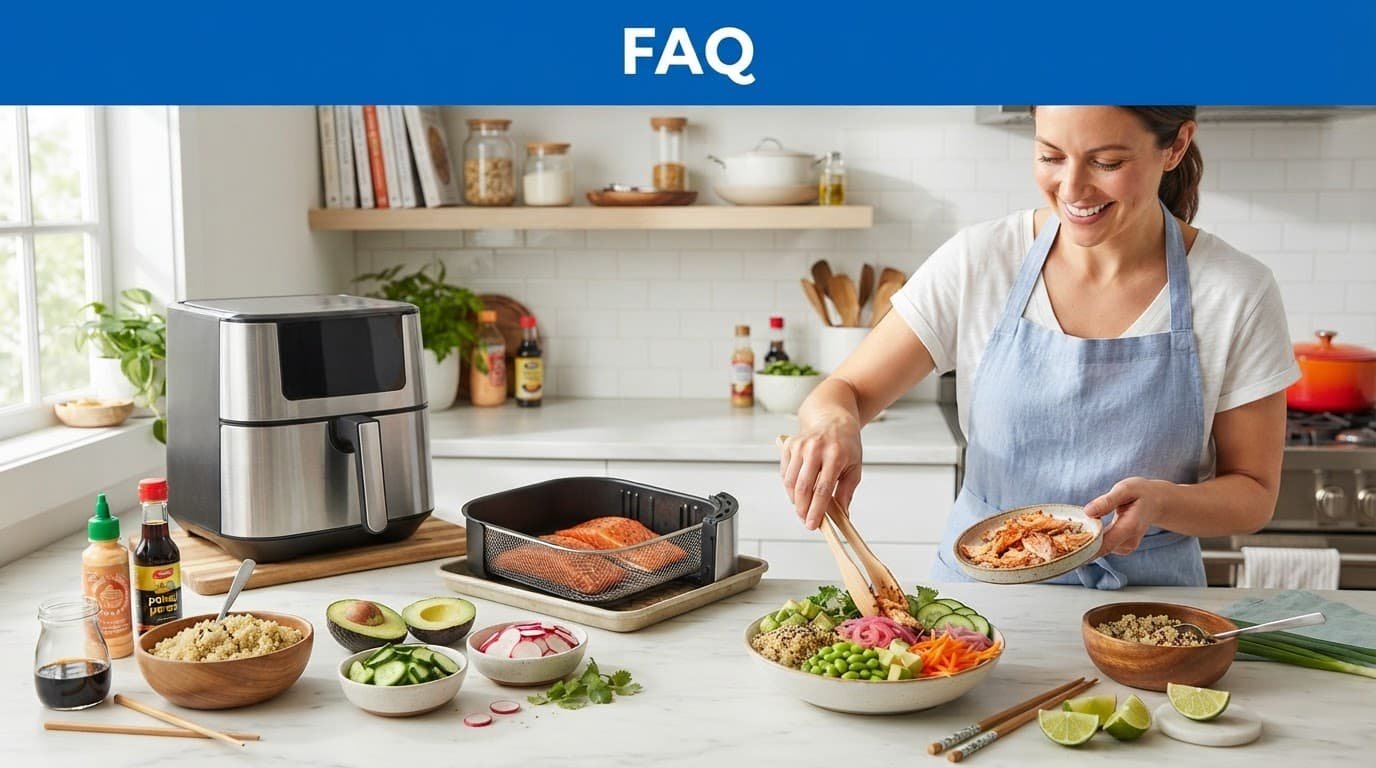
These answers cover common questions about preparing, cooking, storing, and customizing this healthy salmon rice bowl. Use them to adjust the recipe while keeping the salmon moist, the sauce creamy, and the vegetables crisp.
### Can I use frozen salmon for air-fryer salmon bites?
Thawed salmon is the best choice for air-fryer salmon bites. It is easier to cut into evenly sized cubes, and removing surface moisture helps the pieces brown instead of steam.
If your salmon is frozen, thaw it safely in the refrigerator. Once thawed, pat it thoroughly with paper towels before cutting and seasoning. Remove any excess moisture from the fillet and cutting board so the marinade clings to the fish.
How do I know when salmon bites are done?
The safest way to check salmon is with an instant-read thermometer. Insert it into the center of the thickest piece, avoiding the basket, and cook until it reaches 145°F.
The salmon should also look opaque and flake easily with a fork. However, appearance alone is less reliable than temperature, especially when the cubes vary slightly in size.
Can I make the yogurt herb sauce without Greek yogurt?
Yes. Plain regular yogurt, skyr, cottage cheese, or unsweetened dairy-free yogurt can replace Greek yogurt in the herb sauce. Blend cottage cheese until smooth, then thin it as needed with water or citrus.
Choose an unflavored yogurt so it works with the lemon, garlic, and fresh herbs. Thinner yogurt may need less water, so add liquid gradually. If you use very thick skyr or strained yogurt, stir in a small splash of lemon juice or water until the sauce reaches a smooth, drizzling texture.
What vegetables go well with salmon rice bowls?
Cucumber, edamame, shredded carrots, cabbage, broccoli, snap peas, spinach, red pepper, and sprouting broccoli all pair well with salmon and the grain base. Choose vegetables with different colors and textures so each bite feels fresh and balanced.
Use whatever you have available, including fresh, frozen, or leftover vegetables. Frozen edamame and broccoli are especially convenient for busy weeknights, while sprouting broccoli is delicious steamed or roasted.
Can I prepare this salmon bowl ahead of time?
Prepare the rice, vegetables, and yogurt herb sauce ahead, then refrigerate each component promptly. Keep the sauce in a separate container for the best texture, and assemble the bowl shortly before eating.
For the freshest result, add the salmon and avocado close to serving. If you adapt the recipe with cooked chicken breast, store it separately from the vegetables and sauce. Store all cooked components in shallow, airtight containers, then reheat the rice and protein gently to prevent dryness.
What can I use instead of brown rice?
Quinoa, white rice, wild rice, farro, barley, couscous, cauliflower rice, and roasted sweet potato all work well. Each option changes the bowl’s texture and nutrition, so choose the base that best fits your preference.
Cooking times vary, so prepare the replacement before assembling the bowl. Grain-based options offer a chewier bite, while cauliflower rice and sweet potato create a lighter or heartier vegetable base.
Conclusion
When a busy weeknight calls for a balanced dinner, these air-fryer salmon bites deliver a practical solution. The short cooking time keeps the salmon tender, while satisfying protein, whole-grain brown rice, fresh produce, and creamy avocado create a filling bowl. A bright yogurt herb sauce adds freshness without overpowering the other ingredients.
This healthy recipe also fits different routines and preferences. Use quinoa or another grain, switch the vegetables, adjust the spice level, or thin the sauce with a little water until the bowl suits you. Keeping the components separate makes meal prep easier and helps preserve their textures.
Try the salmon rice bowls on your next busy night, or prepare the rice, vegetables, sauce, and salmon separately for several easy lunches. A flexible bowl like this can make healthy eating more manageable without making dinner complicated.