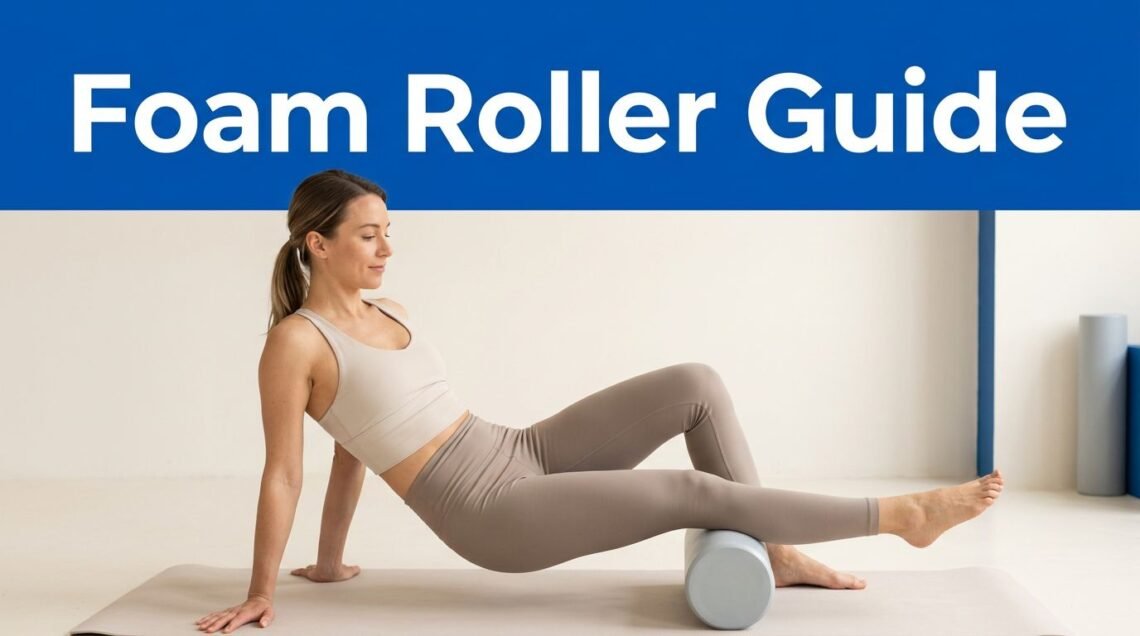
Your first foam roller should feel comfortable, not punishing, and leave you feeling looser.
The best foam rollers for beginners give you enough pressure to notice tight muscles while still letting you relax and control the movement.
A smooth or soft foam roller is usually the right starting point for mobility, post-workout comfort, and everyday stiffness. Use it with patience, because forceful rolling rarely produces better results.
This post may contain affiliate links. If you make a purchase through these links, I may earn a small commission at no extra cost to you.
What a foam roller can realistically do
Rolling is a form of self-myofascial release. It applies pressure to muscles and nearby connective tissue, which may temporarily ease the feeling of tight muscles and make movement feel easier.
The popular claim that rolling “breaks up” fascia goes beyond the evidence. A review of the science behind foam rolling found that improvements in flexibility and comfort tend to be temporary. Rolling isn’t a structural cure for adhesions or pain.
It can create a short mobility window
Rolling can help you access a little more range of motion before a workout or stretching session. A systematic review of foam rolling research found that it can improve joint range of motion without hurting strength or speed performance.
That makes it useful before squats, running, or a long walk. However, rolling doesn’t replace a warm-up, strength work, or a mobility plan that addresses your individual limitations. A tender-feeling area can resemble trigger points, but that sensation doesn’t prove a specific anatomical problem.
Soreness relief is possible, not guaranteed
After hard exercise, rolling may reduce perceived muscle soreness and help you feel more comfortable moving. In a study on delayed-onset muscle soreness, participants who rolled after demanding exercise had less tenderness and smaller performance declines.
Still, rolling isn’t the same as a deep tissue massage, and it isn’t a substitute for physical therapy. It won’t erase soreness after a new workout. Sleep, sufficient food, gradual training increases, and rest have a much larger role in recovery.
Rolling should feel like firm, manageable pressure. Sharp pain, tingling, or numbness means you should stop.
How to choose a beginner foam roller
Your first roller doesn’t need grooves, vibrating features, or an aggressive surface. Control matters more than intensity, especially while you learn how much pressure your body tolerates.
Start with the right foam roller density
A smooth surface spreads pressure across a wider area. The right foam roller density should match your pressure tolerance as you learn what feels comfortable.
A soft foam roller is easier to use on calves, quads, hamstrings, glutes, and the upper back. Soft foam works well for sensitive muscles, older adults, and anyone returning to exercise. If a soft roller feels too mild after several weeks, medium density is a sensible next step.
If you want slightly more pressure, choose medium density before trying a firmer model. Firm models with high density feel intense, while a textured foam roller concentrates pressure into smaller points.
For most people, avoid a firm, bumpy model as a first purchase. Muscle knots don’t need aggressive treatment to respond.
Pick a size that matches your routine
A 36-inch roller provides stability for an upper back exercise and gentle balance work. It suits home use but takes up closet space.
An 18-inch roller is easier to store and carry. A 12-inch compact roller can fit in a gym bag, although its smaller surface requires more careful positioning. The best model for recovery is the one you’ll use consistently at a comfortable pressure.
Best foam rollers for beginners by use case
These models suit different preferences. Compare a foam roller’s surface, size, and listed foam roller density. Prioritize pressure tolerance and storage or portability over brand loyalty.
| Use case | Suggested model | What to know |
|---|---|---|
| Gentle home recovery | OPTP PRO-ROLLER Soft | Soft-density EVA foam with a smooth surface, suited to gentle muscle recovery. Current listed prices range from $31.95 to $50.95, depending on size. |
| A long roller for home use | OPTP PRO-ROLLER Standard | OPTP describes this medium density model as moderately firm with some give. Its 36-inch versions work well for upper-back mobility. |
| Travel and deeper pressure | Brazyn Morph Alpha | This collapsible model has raised nubs. Brazyn includes first-time users who prefer a deep tissue massage, but the sensation can be too intense for a first purchase. |
| Compact textured option | RumbleRoller 12-inch Compact Original | As a compact textured foam roller, it suits experienced travelers better than people seeking a gentle first option. |
The OPTP PRO-ROLLER Soft is the clearest first choice if comfort is your priority. Meanwhile, the Morph Alpha can work for someone who already prefers stronger pressure and needs a packable option.
Save aggressive texture for later. You can increase pressure with body position on a smooth model, whereas you can’t soften a hard textured surface.
Proper foam-rolling technique for safe results
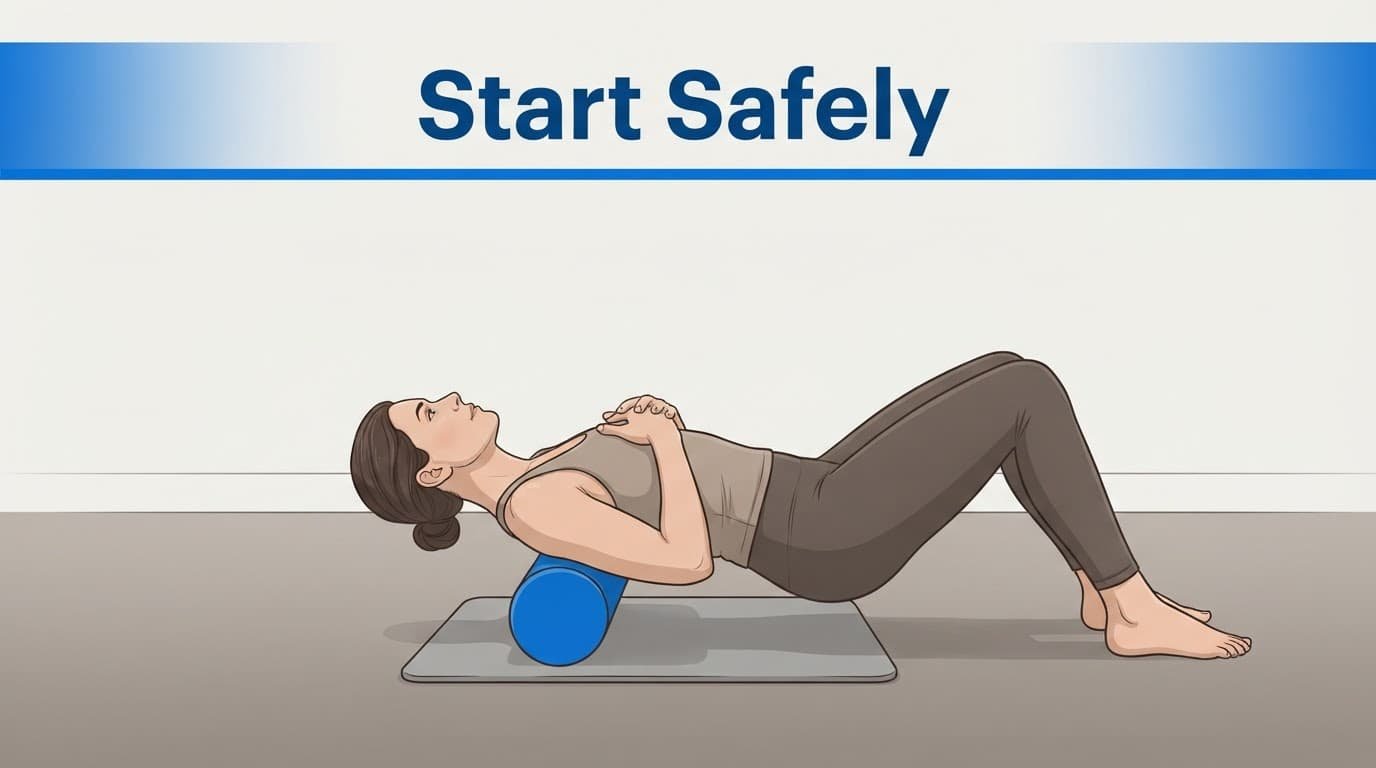
Good technique keeps self-myofascial release focused on muscle tissue instead of sensitive joints or your lower back. Start on the floor with your foam roller, hands and feet ready to take some of your body weight.
Use a slow, light first pass
Place the foam roller under the middle of a muscle, then glide slowly, roughly one inch per second. Roll back and forth for three to six passes rather than rushing across the whole area.
When you find tender spots, pause for 20 to 30 seconds and take slow breaths. Keep the pressure tolerable, and don’t assume each one is a trigger point. If you tense your jaw, hold your breath, or brace hard against the floor, reduce the load by shifting more weight into your hands or feet.
Avoid joints, the low back, and warning signs
Don’t roll directly over your knees, ankles, elbows, neck, or the lumbar spine. Your lower back has limited protection from direct pressure, so rolling there isn’t a treatment for lower back pain and may irritate the area.
The IT band often feels painfully sensitive. Instead of pressing hard along the outside of the thigh, start with the glutes and quads that influence hip and knee movement. If you do roll the outer thigh, use less pressure and fewer passes.
Skip foam rolling over open wounds, fresh bruises, suspected fractures, or an acutely injured area. Get medical care for severe pain, sudden swelling, redness or warmth in a calf, weakness, or symptoms that don’t improve. A roller can support muscle comfort, but it can’t diagnose or treat an injury, and persistent symptoms may require physical therapy.
A 10-minute beginner foam rolling routine
Use this routine after a workout, on a rest day, or after hours at a desk. It can support muscle recovery after training. Complete one round during your first week. A second round is fine later if your muscles feel good the next day.
Move through four low-risk areas
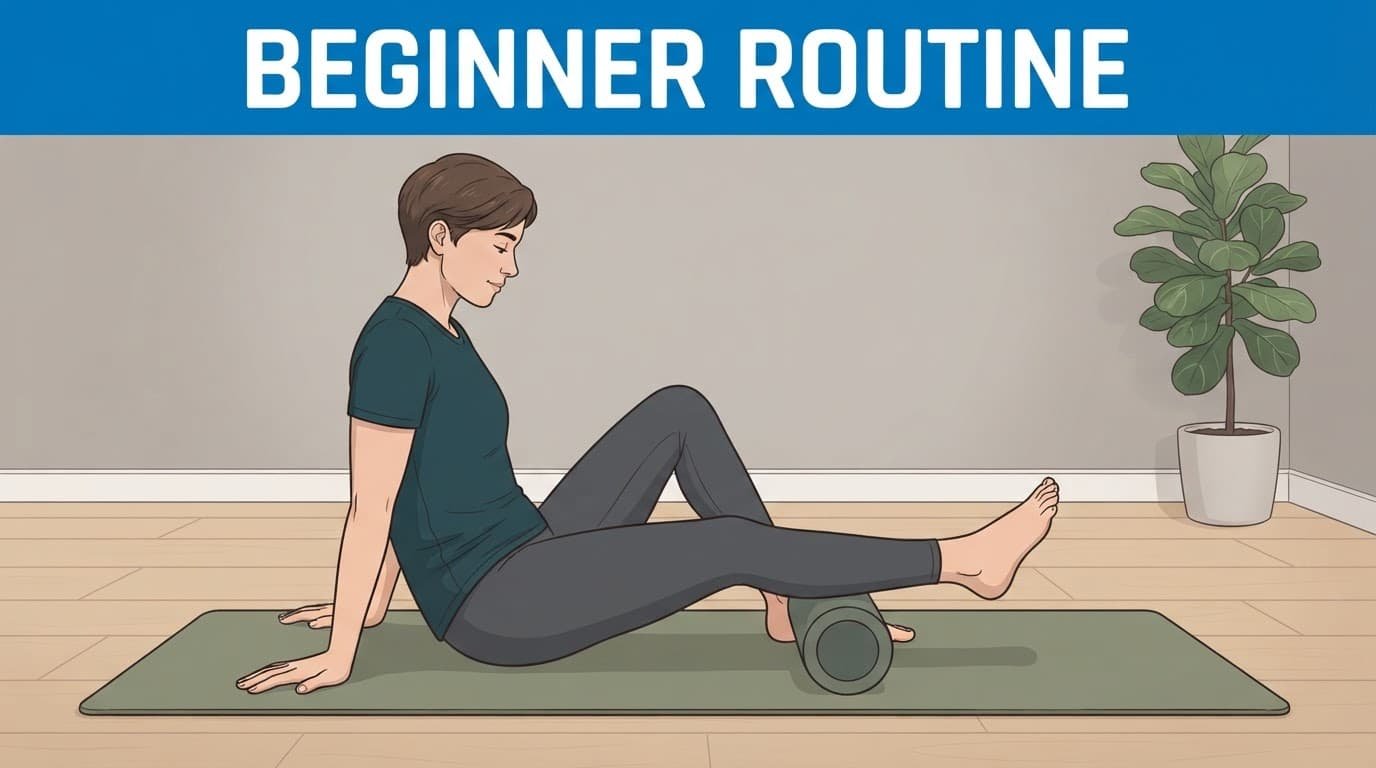
- Calves, 60 seconds: For a gentle calf exercise, sit with both calves on the smooth foam roller. Use your hands behind you to reduce pressure, then roll between the ankles and just below the knees.
- Quads, 90 seconds: For a gentle quad exercise, lie face down on your forearms with the roller under your thighs. Roll between the tops of the knees and upper thighs, while keeping your hips relaxed.
- Glutes, 90 seconds: Sit on the roller and shift gently toward one side. Roll the fleshy part of the buttock, not the tailbone, then switch sides.
- Upper back, 90 seconds: For an easy upper back exercise, lie with the roller beneath your shoulder blades and feet on the floor. Hug your arms across your chest, then move between the shoulder blades and the bottom of the rib cage. Stay within a comfortable range of motion.
Use the remaining time to repeat the area that felt most restricted. Keep your first sessions easy, particularly after leg day or a long run, when muscle soreness may be higher.
Adjust it for your day
Desk workers with tight muscles often benefit most from upper-back, glute, and calf work. Runners may prefer calves, quads, glutes, and hamstrings. Add a hamstring exercise by sitting with straight or slightly bent legs, then rolling between the back of the knees and the glutes.
Avoid forcing the same routine every day. If you find tender spots, use less pressure, shorten the session, or take a full day off.
When to foam roll for mobility and recovery
Before exercise, use a foam roller briefly, about 30 to 60 seconds per area, then follow with dynamic movement. For example, roll your calves before doing ankle rocks and bodyweight squats.
After a workout, slower rolling can feel calming when muscles are warm. A temporary warming sensation may reflect local blood flow changes, but it isn’t proof of faster healing. Rolling can be one small part of muscle recovery, alongside sleep, food, rest, walking, and strength training. Spend no more than a few minutes per area. On rest days, a 5 to 10-minute session is enough if it helps you move comfortably.
Keep expectations practical
Foam rolling may help you feel better in the short term, but it doesn’t guarantee faster recovery or prevent injuries. A review of long-term foam-rolling studies found that regular rolling can support flexibility, though results vary and it doesn’t outperform every other method.
Combine your roller with regular strength training, walking, sleep, and gradual increases in exercise. That approach gives mobility improvements a better chance to last.
best foam rollers to get on amazon 👇
- Amazon Basics High-Density Foam Roller for Exercise and Recovery
- 321 Strong Foam Roller – Medium Density Deep Tissue Massager for Muscle Massage and Myofascial Trigger Point Release,
- TriggerPoint Grid 1.0 Foam Roller
Frequently Asked Questions
What is the best foam roller for a beginner?
A smooth, soft foam roller is usually the best starting point because it spreads pressure and is easier to control. If it feels too mild after several weeks, move to a medium-density model rather than starting with an aggressive textured roller.
How often should I use a foam roller?
A 5- to 10-minute session is enough for most beginners, whether you roll after exercise or on a rest day. Use less pressure, shorten the session, or take a day off if your muscles feel more tender afterward.
Should foam rolling hurt?
Foam rolling should feel like firm, manageable pressure, not sharp pain. Stop if you feel tingling, numbness, significant pain, or strong tension that makes you hold your breath or brace hard.
Can I use a foam roller for lower back pain?
Avoid rolling directly over the lumbar spine because the area has limited protection from direct pressure. If lower back pain is severe, persistent, or accompanied by weakness or other warning signs, seek medical care rather than trying to treat it with a roller.
Is it better to foam roll before or after a workout?
Brief rolling before exercise may help you access temporary range of motion, especially when followed by dynamic movement. Slower rolling after exercise or on a rest day may help you feel more comfortable, but it does not replace a warm-up, strength training, sleep, or rest.
Final Thoughts
A smooth, soft beginner foam roller gives you room to learn without turning recovery into an endurance test. Start with light, comfortable pressure, roll slowly, and focus on your calves, quads, glutes, and upper back.
The useful outcome is comfortable movement, not guaranteed pain relief. When rolling becomes a brief, repeatable habit, it can fit naturally around workouts and busy days.