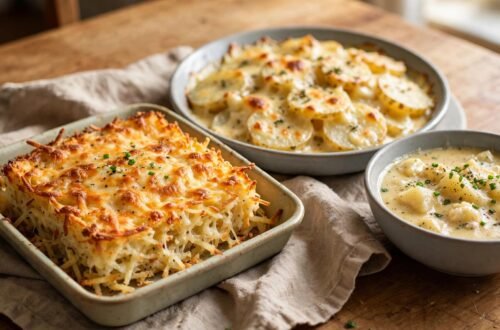
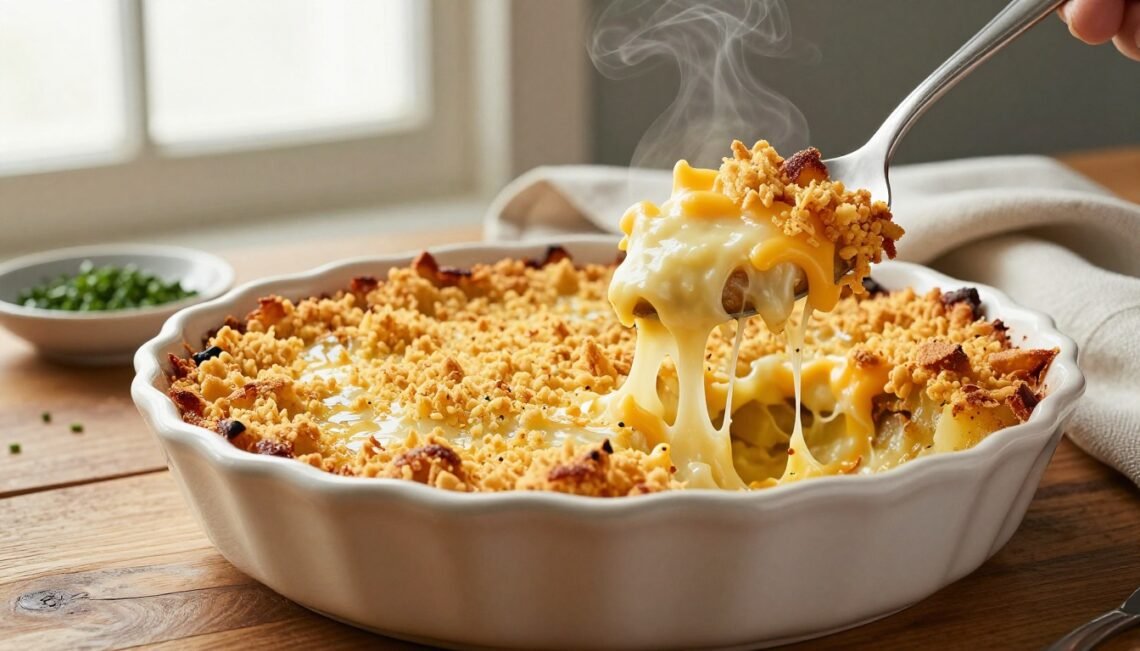
Creamy, cheesy funeral potatoes combine tender shredded potatoes with a crisp, buttery cornflake topping. Simple ingredients make this casserole classic comfort food and an easy-to-share crowd-pleaser for gatherings or family dinners.
The appeal is in the contrast: a rich potato filling underneath a crunchy topping that stays golden above the bubbling cheese. Start with thawed hash browns, mix the filling gently, and bake until the center is thoroughly hot. The recipe below keeps preparation straightforward, with practical tips for serving, making ahead, and storing leftovers.
Key Takeaways
- Thaw frozen hash browns before mixing, and remove excess moisture so the filling stays creamy rather than watery.
- Use a 9-by-13-inch baking dish and bake uncovered at 350°F for about 45 to 55 minutes.
- Season lightly because condensed soup and cheddar already contribute salt to the filling.
- Add buttered cornflakes just before baking when preparing the casserole ahead.
- Refrigerate leftovers promptly, use within 3 to 4 days, and reheat thoroughly before serving.
How to Make Classic Funeral Potatoes
This classic version uses shredded hash browns, condensed soup, sour cream, and cheddar for a creamy filling. Buttered cornflakes add the familiar crisp finish.
Yield: 10 to 12 servings as a side dish Prep time: About 20 minutes, plus thawing Bake time: 45 to 55 minutes Rest time: 10 minutes Baking dish: 9×13 baking dish
For a visual look at assembling a cheesy potato casserole, watch this recipe demonstration:
Ingredients for the Creamy Potato Filling and Crunchy Topping
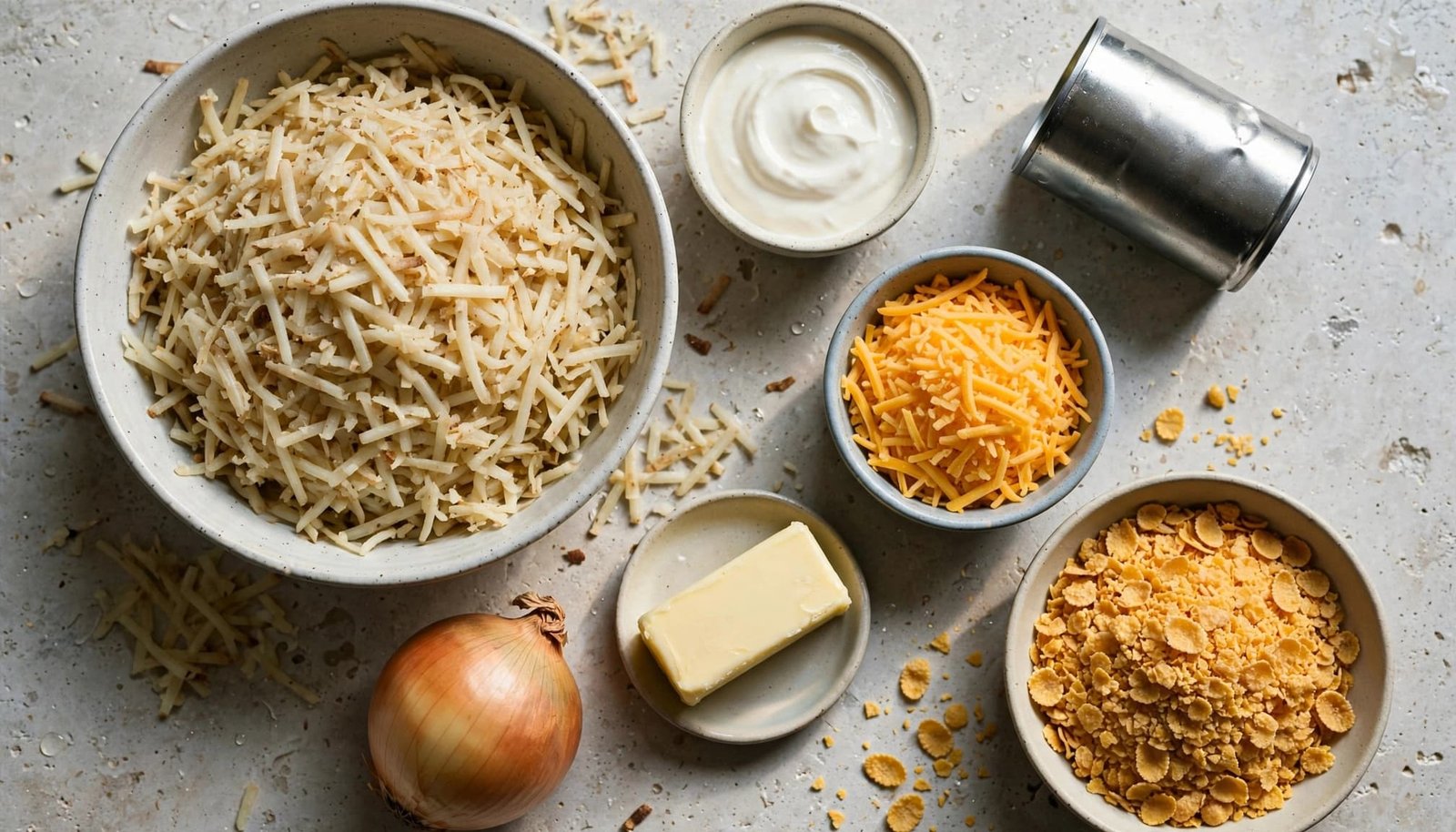
Gather everything before mixing so the potatoes fold easily into a well-blended sauce. Measure the filling butter separately from the topping butter.
For the potato filling, you’ll need:
- 30 ounces frozen shredded hash browns, fully thawed and drained
- 1 can (10.5 ounces) condensed cream of chicken soup, undiluted
- 2 cups sour cream
- 1/2 cup unsalted butter, melted and cooled slightly
- 1 small onion, finely chopped
- 2 cups shredded cheddar cheese
- Up to 1/4 teaspoon salt, adjusted to taste
- 1/4 teaspoon ground black pepper
For the topping, combine 2 cups crushed corn flakes with 3 tablespoons melted butter. Measure the cornflakes after crushing them, and leave some small flakes intact for texture.
Sharp cheddar gives the filling a stronger cheese flavor, while mild cheddar makes a gentler version. Freshly shredded cheese melts smoothly into the sauce. Finely chopping the onion helps it soften during baking without leaving large, crunchy pieces.
Because the soup and cheese already contain salt, start with less than the listed amount. Taste the creamy mixture before adding the potatoes, then adjust the seasoning.
Mix, Top, and Bake Until Golden
- Heat the oven to 350 degrees. Grease the bottom and sides of a 9-by-13-inch baking dish with butter or cooking spray. Position a rack near the center of the oven.
- In a large bowl, stir together the condensed soup, sour cream, 1/2 cup melted butter, onion, cheddar, and black pepper. Mix until the sauce looks evenly blended, then taste and add salt as needed.
- Fold in the thawed hash browns with a broad spatula. Lift the mixture from the bottom of the bowl and turn it over gently until the sauce coats the potatoes. Break apart any remaining cold clumps without mashing the shreds.
- Transfer the filling to the prepared dish. Spread it evenly into the corners and smooth the surface without packing it down firmly. An even layer helps the center heat at a similar pace to the edges.
- Toss the crushed cornflakes with the remaining 3 tablespoons melted butter in a separate bowl. Stir until the crumbs look lightly coated, then scatter them evenly over the filling. Avoid pressing them into the sauce.
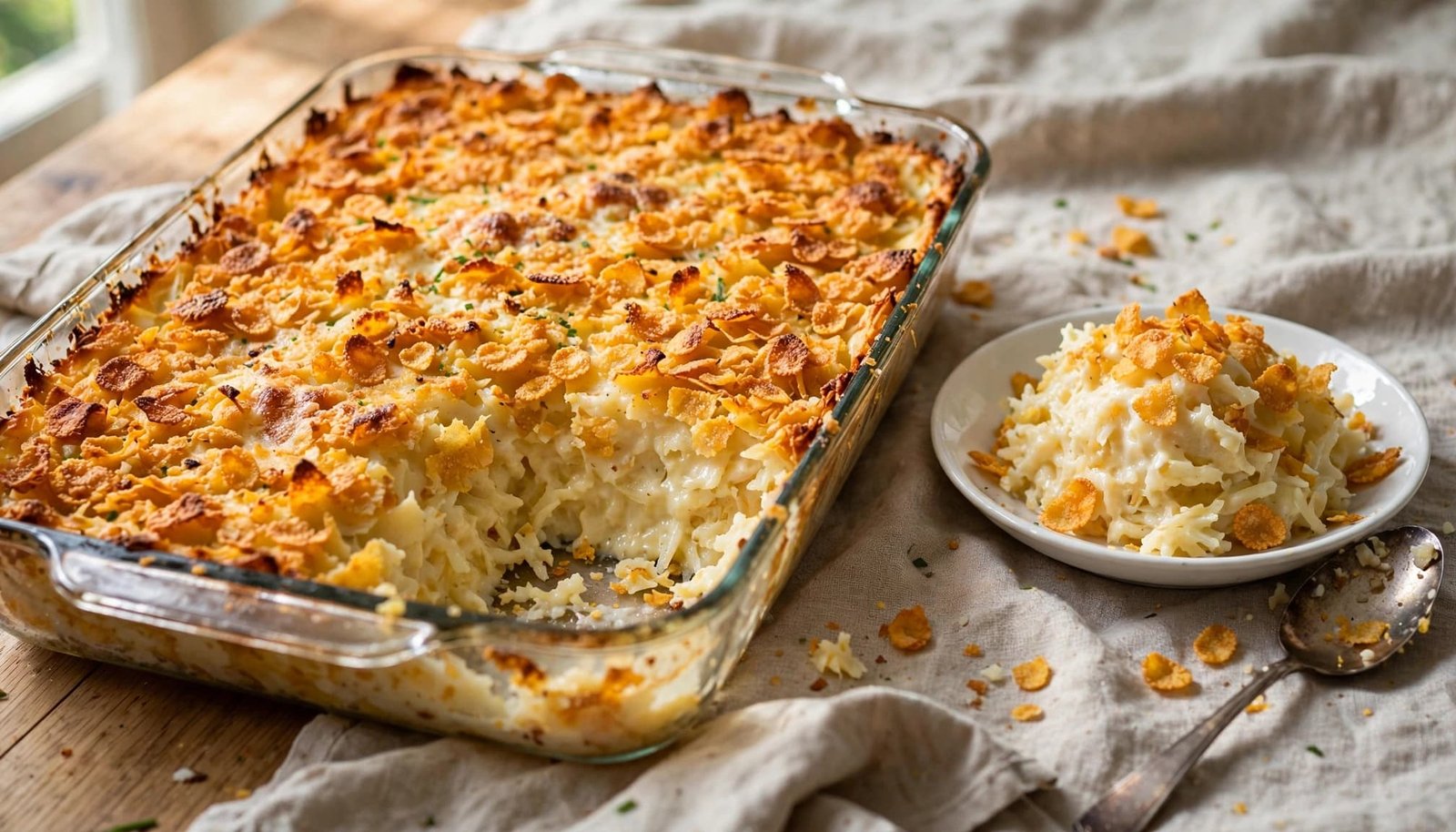
- Bake uncovered for 45 to 55 minutes, until the edges bubble and the topping turns golden brown. The center should be thoroughly hot, with tender potatoes beneath the crust. Let the casserole rest for about 10 minutes before serving.
The short rest lets the filling settle, so each serving holds together better. Use a wide serving spoon to scoop through both layers.
Simple Tips for Creamy Potatoes and a Crisp Topping
Frozen hash browns release moisture as they thaw. If that liquid goes into the casserole, it can loosen the sauce and leave the potatoes watery.
Thaw the bag in the refrigerator, then drain any pooled liquid. If the shreds feel wet, blot them with clean paper towels. Keep them refrigerated until you’re ready to mix, consistent with USDA’s safe food-handling guidance.
Mix the sauce completely before adding the potatoes. That way, you won’t need vigorous stirring to distribute sour cream or condensed soup through the shreds. A few gentle folds preserve their texture.
For the topping, crush the corn flakes into uneven small pieces rather than powder. Fine crumbs can absorb butter and moisture quickly, producing a heavier crust.
Keep the topping separate when assembling ahead. Cornflakes soften as they sit against the moist potato filling.
Baking time also depends on the dish and the filling’s starting temperature. A refrigerated casserole generally needs longer than one assembled immediately before baking, so don’t rely on the timer alone.
If the topping browns before the center heats through, loosely cover the dish with foil. Leave a little space above the crumbs rather than pressing the foil onto them.
Easy Swaps and Variations to Fit Your Table
Cream of mushroom soup is an easy substitute for cream of chicken soup. For a vegetarian-friendly casserole, choose a version without meat-based stock or other meat ingredients. Packaged soups vary, so read the ingredient label. If you’re out of chopped onion, use 1 teaspoon of onion powder instead.
Sodium levels vary, too. A lower-sodium soup gives you more control over seasoning, although the cheddar still contributes salt. Taste the sauce before adding extra.
For gentle heat, fold in a small can of drained diced green chiles. Cooked, crumbled bacon adds a smoky flavor, but it also increases saltiness. Let it drain before mixing it into the filling.
Crushed potato chips make a salty, crisp topping. Because potato chips already contain oil, skip the extra butter. Crushed Ritz crackers also make a crisp topping and need no added butter. Panko breadcrumbs offer a lighter crunch; toss them with a little melted butter before scattering them over the casserole.
Keep additions modest so the potatoes remain the main ingredient and the dish doesn’t become crowded.
For serving, pair funeral potatoes with roasted broccoli, green beans, or a crisp salad. They also work beside roast chicken or baked ham, and travel well to a potluck. Since the casserole is rich, simply prepared vegetables provide a useful contrast without another creamy sauce.
Make-Ahead, Storage, and Reheating Tips
To make ahead, assemble the potato filling up to a day in advance, spread it in the baking dish, and refrigerate it covered. Keep the crushed cornflakes separate if you make ahead, then toss them with melted butter just before baking.
A cold filling takes longer to heat through, so allow extra oven time. If you’re using glass bakeware, follow its temperature-change instructions to avoid thermal shock.
After serving, transfer leftovers into shallow, covered containers and refrigerate promptly. Don’t leave the casserole at room temperature for more than two hours, or one hour when temperatures exceed 90°F.
USDA recommends using refrigerated leftovers within 3 to 4 days. Smaller containers help the dense potato filling cool faster than leaving it in one deep dish.
Freeze individual portions in freezer-safe containers for longer storage. Leave a little space for expansion and label each container with the date. Thaw overnight in the refrigerator; expect the filling and cornflake crust to soften somewhat after freezing.
To reheat, place a portion in an oven-safe dish, cover loosely, and warm in a 350°F oven until steaming hot throughout. Uncover briefly at the end to dry the topping. A single serving reheats faster than a full casserole, so check the center rather than using one fixed time.
Related posts
Frequently Asked Questions
Why Are They Called Funeral Potatoes?
The name comes from the casserole’s place at meals following funerals, especially in Utah and Latter-day Saint communities. Its inexpensive ingredients and generous yield make it easy to share at a post-funeral luncheon. It’s also common at holidays, potlucks, and ordinary family dinners.
Can I Use Fresh Potatoes Instead of Frozen Hash Browns?
Yes, although fresh potatoes won’t behave exactly like packaged frozen hash browns. Peel or scrub them, shred them, and squeeze out excess moisture with a clean kitchen towel. Fresh shreds may need more cooking time, so check their tenderness before serving.
Can Funeral Potatoes Be Made Without Cream of Chicken Soup?
Cream of mushroom soup is the easiest replacement. You can also use a thick homemade white sauce seasoned with onion, pepper, and broth or milk. Keep it thick enough to coat the potatoes because a thin sauce can make the finished casserole loose.
How Can I Tell When the Casserole Is Done?
Look for bubbling edges, a golden topping, and a thoroughly hot center with tender potatoes. An instant-read thermometer provides a more reliable check than surface browning alone. For leftovers, follow FoodSafety.gov’s reheating guidance and bring the center to 165°F.
Bring a Comforting Casserole to the Table
Funeral potatoes are simple to customize and easy to share. Start with the classic recipe so you can enjoy the balance of creamy potatoes, cheddar, and buttery cornflakes.
Then adjust the seasonings or try another topping to suit your table. Thawed, well-drained potatoes and a topping added just before baking will help you keep that welcome contrast between a soft filling and a crisp crust.