
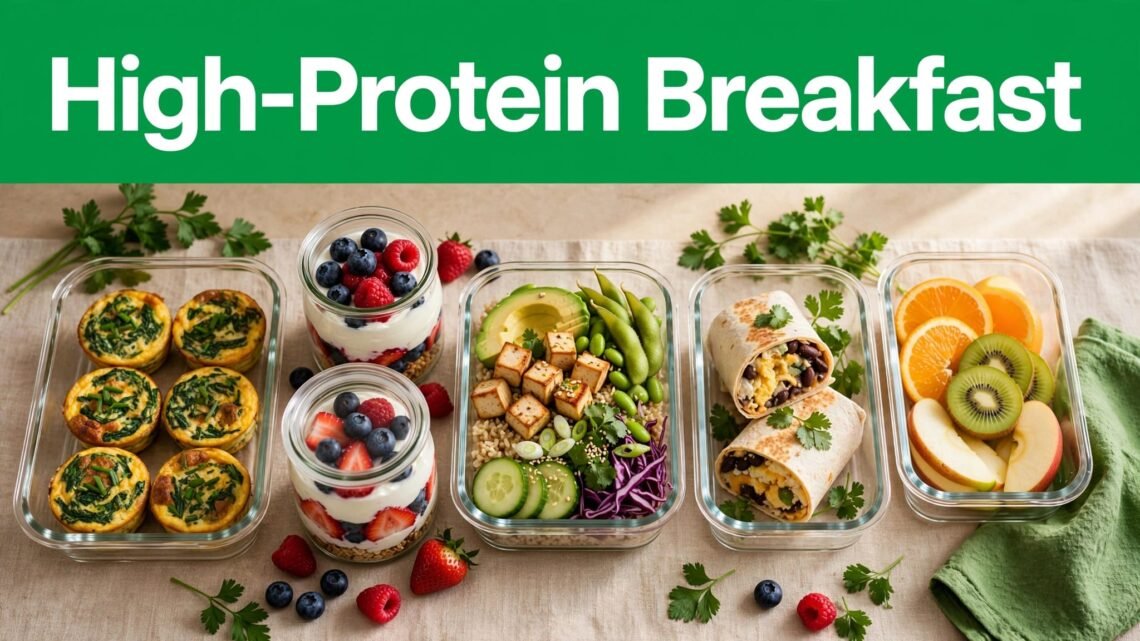
A rushed morning can turn breakfast into a granola bar eaten between emails. However, preparing a high protein breakfast ahead of time gives you a healthy breakfast before the day starts pulling at your attention.
You don’t need specialty foods, protein powder, or an hour of cooking each morning. Eggs, yogurt, beans, and tofu all work in a few well-planned batches. You’ll have warm savory breakfast options, cold grab-and-go jars, and freezer backups that take minutes to heat.
Key Takeaways
- Aiming for 30 to 40 grams of protein at breakfast can be a practical starting point for many active adults, though individual needs vary.
- Pair protein rich foods such as eggs, Greek yogurt, tofu, beans, or cottage cheese with fiber, produce, whole grains, and healthy fats for a more satisfying meal.
- Choose one refrigerator recipe and one freezer recipe each week to create variety without making meal prep overwhelming.
- Egg muffins, burritos, baked oats, yogurt jars, and tofu bowls can all provide make-ahead high protein breakfast options without requiring protein powder.
- Refrigerate cooked foods within two hours, use most leftovers within three to four days, and reheat dense dishes until the center reaches 165 F.
How a high protein breakfast fits your day
Protein supports muscle maintenance and repair, helping preserve muscle mass while making breakfast more satisfying. For people focused on weight loss, that fuller feeling can make it easier to manage snack cravings at 10:30 a.m. Still, protein is not a shortcut around overall food intake, sleep, activity, or hunger cues.
The adult Recommended Dietary Allowance is 0.8 grams of protein per kilogram of body weight daily, according to the American Heart Association’s protein guidance. That number is a daily baseline, not a required amount for breakfast.
Use 30 grams as a practical starting point
Getting 30 to 40 grams of protein from protein rich foods at breakfast is a useful meal-planning target for many active adults. It is not an official rule, and your needs depend on body size, activity, age, health conditions, and the rest of your diet.
Start lower if 30 grams feels like a big jump. Moving from a pastry to Greek yogurt with oats and nuts can make a real difference. Add protein in layers rather than building an enormous breakfast.
Pair protein with fiber and fat
Eggs, yogurt, tofu, beans, and cottage cheese work better in a meal that also has produce, whole grains, or healthy fats. Fiber slows the meal down, while avocado, nuts, seeds, or olive oil make flavors more satisfying. Pairing protein with fiber and minimally processed carbohydrates may support steadier energy or blood sugar for some people.
A breakfast of protein powder and water may meet a number, yet it often won’t feel like a meal. Protein, fiber, and flavor make meal prep easier to keep doing.
Build an easy breakfast meal prep routine
Choose two breakfast recipes each week, not five. Make one recipe that freezes well and one that stays good in the refrigerator. This creates a manageable meal prep system, giving you variety without filling every shelf with identical containers.
Set out containers before cooking. Then portion food as soon as it has cooled enough to handle. Use a marker or small label to date frozen items, even if you think you will remember.
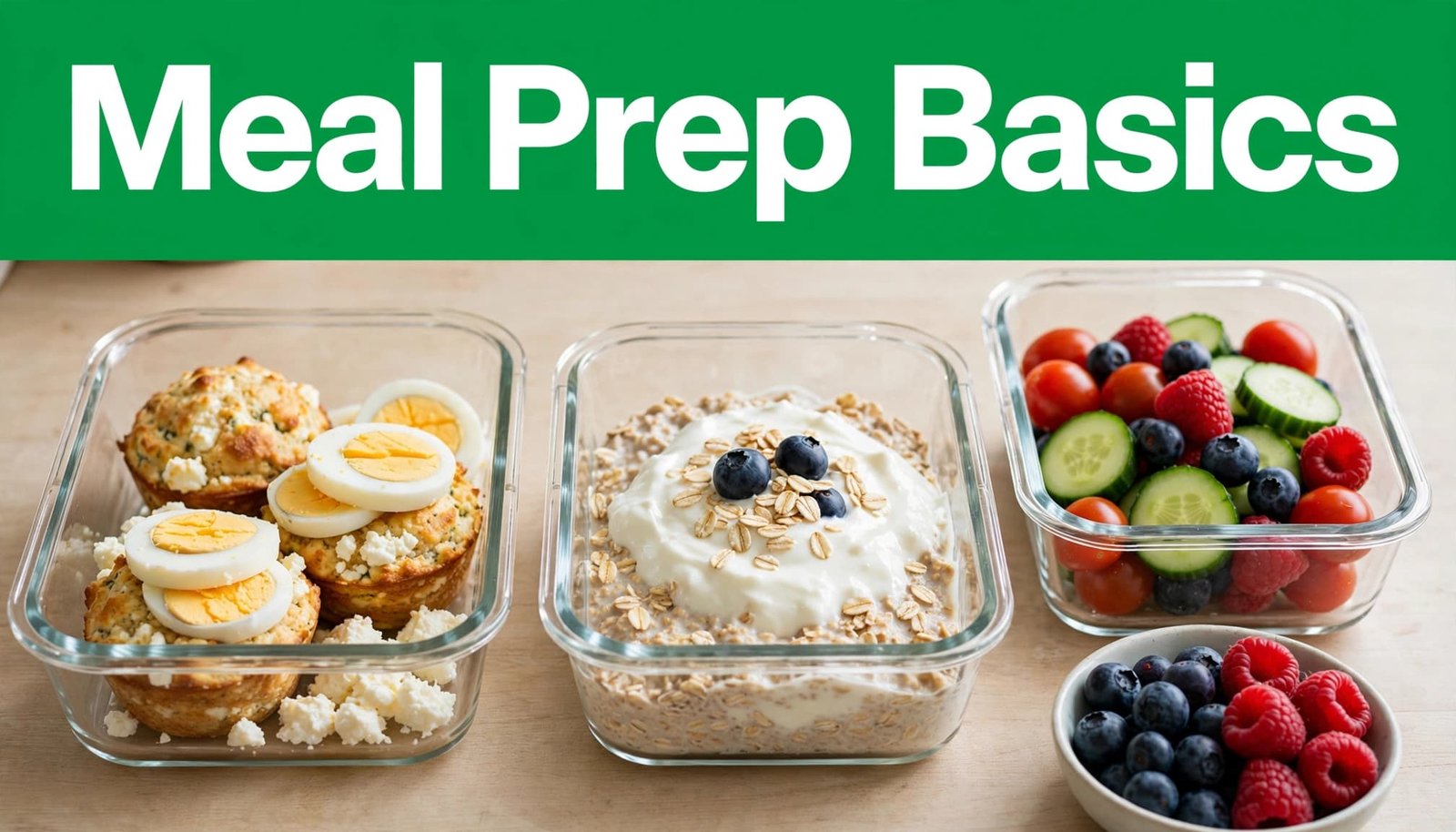
A simple batch formula
Pick one main protein, one fiber-rich ingredient, and one produce item, such as vegetables, berries, or fresh fruit, for every batch. For example, eggs, black beans, and spinach become burritos. Greek yogurt, oats, and berries become breakfast jars.
The American Heart Association’s serving guide can help you visualize portions of common protein foods. You don’t need a food scale for every meal. Measuring ingredients during prep can improve your approximate protein estimates.
Nutrition figures below are estimates. Brands, portion sizes, and ingredient swaps can change calories, sodium, and protein.
Cottage Cheese Egg Bites for Four Mornings
Cottage cheese blends into eggs and gives baked egg bites a tender, portable texture. They’re useful when plain eggs leave you hungry too soon.
Make the spinach and pepper egg muffins
Prep time: 15 minutes
Cook time: 20 minutes
Makes: 12 muffins, 4 servings of 3 muffins
Estimated protein: 24 to 26 grams per 3-muffin serving
Heat the oven to 375 F. Grease a 12-cup muffin pan well or use silicone liners.
Whisk 10 large eggs with 1 cup cottage cheese, 1/2 cup shredded cheddar, 1/2 teaspoon garlic powder, 1/4 teaspoon black pepper, and a pinch of salt. Fold in 1 chopped bell pepper and 2 packed cups of chopped spinach.
Divide the mixture among the cups. Bake for 18 to 22 minutes, until the centers are set. Let the muffins cool for 10 minutes before storing.
Three muffins with a slice of whole grain toast usually brings breakfast close to 30 grams of protein. Swap cheddar for feta, use chopped broccoli instead of pepper, or add cooked turkey sausage for a heartier option.
Store the muffins in the refrigerator for up to four days. Reheat three at a time for 45 to 75 seconds, though microwave times vary, until hot throughout. They can also be frozen in portions for up to three months.
Freezer breakfast burritos that reheat well
Well-made breakfast burritos avoid the sad, soggy middle that ruins many make-ahead breakfasts. The fix is simple: cook moisture from the vegetables and cool the filling before rolling.
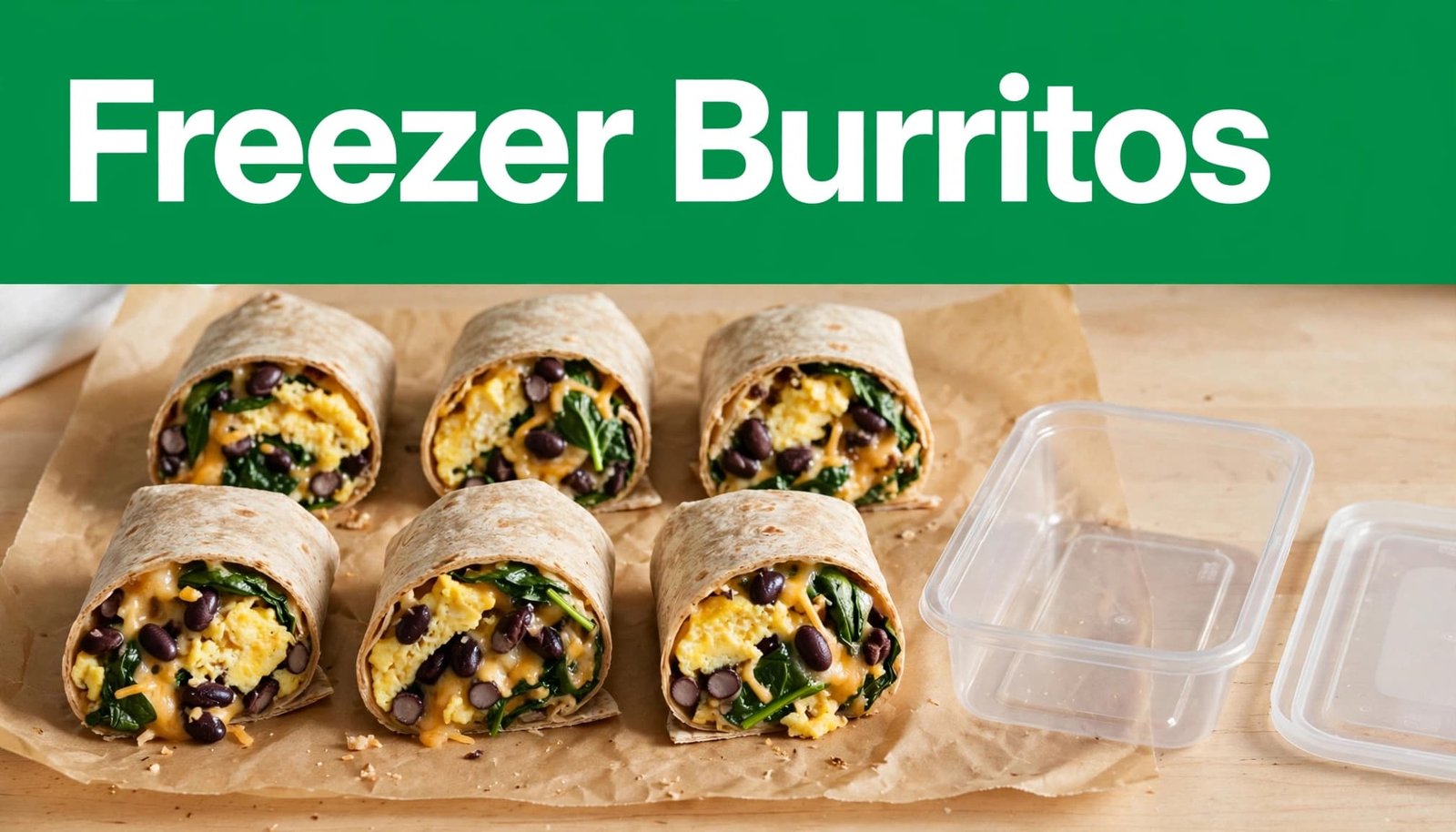
Make six bean, egg, and sausage burritos
Prep time: 20 minutes
Cook time: 20 minutes
Makes: 6 burritos
Estimated protein: 29 to 32 grams per burrito
Cook 12 ounces of chicken or turkey breakfast sausage in a large skillet, breaking it into small pieces. Add 1 diced onion and 1 chopped bell pepper. Cook until soft and until no liquid remains in the pan.
Whisk 8 eggs with pepper, then scramble them in a separate skillet. Stir together the sausage mixture, eggs, 1 drained and rinsed 15-ounce can of black beans, 1 cup shredded cheese, and 2 cups baby spinach. The residual heat wilts the spinach.
Place about 1 cup of cooled filling in the center of each of 6 large whole wheat tortillas. Fold in the sides, roll tightly, and wrap each burrito in parchment before placing it in a freezer bag.
Use refrigerated burritos within three to four days. Frozen burritos retain their best quality for roughly three months, so label each bag with the date.
For a refrigerated burrito, microwave on high for 1 1/2 to 2 minutes. For a frozen burrito, remove foil if used, wrap it in a damp paper towel, and microwave at 50 percent power for 2 minutes. Then microwave on high in 45-second bursts until the center reaches 165 F. Let the burrito stand for one minute before eating. Salsa or hot sauce adds brightness without making the burrito soggy.
Baked oatmeal with yogurt, cottage cheese, and berries
Baked oatmeal is often too low in protein to carry a morning. Adding Greek yogurt, eggs, and peanut butter changes that without relying on protein powder.
Bake six squares for weekday breakfasts
Prep time: 15 minutes
Cook time: 35 minutes
Makes: 6 servings
Estimated protein: 24 to 27 grams per serving
Heat the oven to 350 F and lightly oil an 8-inch square baking dish. In a large bowl, stir together 2 cups rolled oats, 2 tablespoons chia seeds, 1 teaspoon cinnamon, and 1 teaspoon baking powder.
In another bowl, whisk 1 1/2 cups plain Greek yogurt, 1 cup cottage cheese, 4 eggs, 1 1/2 cups milk, 1/3 cup peanut butter, 2 tablespoons maple syrup, and 1 teaspoon vanilla. Combine the wet mixture with the oats, then fold in 1 1/2 cups blueberries.
Bake for 30 to 35 minutes, until the center no longer looks wet. Cool before cutting into six squares. A square with an extra spoonful of Greek yogurt reaches about 30 grams of protein.
Use frozen berries such as blueberries without thawing. Almond butter works in place of peanut butter, though it or lower-protein milk can slightly change the nutrition estimate. Lactose-free Greek yogurt and milk suit many people who have trouble with dairy. These squares make a healthy breakfast and keep in the refrigerator for four days. Eat cold or warm one square for 60 to 90 seconds.
No-cook Greek yogurt jars for early starts
Some mornings don’t allow time for a microwave. These thick yogurt jars travel well in an insulated lunch bag with an ice pack and take less than 10 minutes to assemble.
Stir together five high-protein overnight oats jars
Prep time: 10 minutes
Cook time: None
Makes: 5 jars
Estimated protein: 31 to 35 grams per jar
For each jar, combine 1 cup plain Greek yogurt, 1/2 cup cottage cheese, 1/3 cup rolled oats, 1 tablespoon chia seeds, 1/2 cup berries, and 1 tablespoon chopped walnuts. Add a splash of milk if you prefer a looser texture.
Stir each jar well, cover, and refrigerate overnight. As the overnight oats sit, the oats and chia seeds soften, while the dairy adds protein without making the jar taste savory.
Use mashed banana and cinnamon instead of berries for a lower-cost version. If you dislike the curds, blend the yogurt and cheese before adding oats. Keep the jars refrigerated and eat them within three days for the best texture.
Put crunchy toppings, such as nuts or toasted seeds, in a separate small container. They stay crisp until breakfast instead of turning soft overnight.
Vegetarian high-protein meal prep beyond eggs
Vegetarian breakfasts can reach 30 grams without relying on a giant smoothie. Tofu, edamame, chickpeas, whole-grain bread, and seeds create protein rich meals with varied textures.
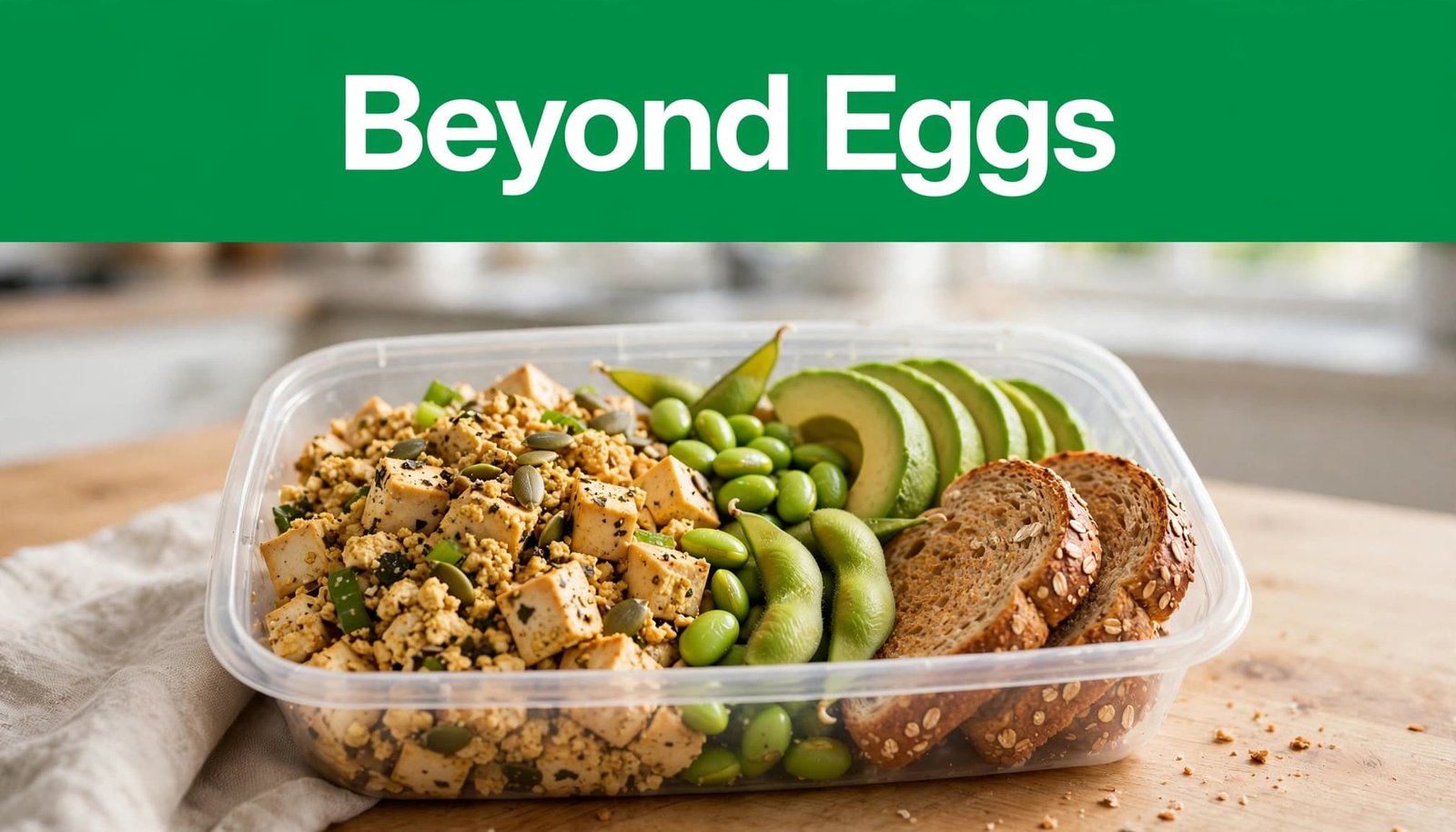
Prepare four bowls with tofu scramble, edamame, and chickpeas
Prep time: 15 minutes
Cook time: 18 minutes
Makes: 4 bowls
Estimated protein: 30 to 34 grams per bowl
The total can change substantially with the bread, seed portion, and replacement choices.
Warm 1 tablespoon olive oil in a skillet. Cook 1 diced onion and 1 chopped red bell pepper for five minutes. Crumble in 16 ounces extra-firm tofu, then season with 1 teaspoon turmeric, 1 teaspoon smoked paprika, 1/2 teaspoon garlic powder, salt, and pepper.
Add 2 cups shelled edamame and 1 drained 15-ounce can of chickpeas. Cook for another six to eight minutes, stirring until hot. Divide the mixture among four containers with one slice of whole grain toast and 1 tablespoon pumpkin seeds each. Add avocado only after reheating, or pack it separately with lemon juice.
To make this recipe vegan, choose bread without dairy or eggs. If soy isn’t an option, replace the tofu and edamame with 2 cups cooked lentils plus 1 cup hemp hearts, though the flavor and texture will change.
Refrigerate the bowls for up to four days. Keep the toast and avocado separate while reheating. Microwave the tofu scramble portion for 90 seconds to two minutes, then add the toast and avocado with a squeeze of lime.
Where protein powder belongs in breakfast prep
Protein powder can be convenient when food alone doesn’t fit your schedule. Add an unflavored or vanilla product to oatmeal, protein pancakes, or a smoothie, but treat it as an ingredient rather than the whole breakfast.
A smoothie with milk, Greek yogurt, frozen fruit, oats, and protein powder can provide 30 grams or more. However, a shake may leave some people hungry sooner than a meal they chew. Pair it with fruit, toast, or a handful of nuts when that happens.
For healthy adults, daily protein powder use depends on total diet quality, ingredients, and personal tolerance. Treat it as a dietary supplement, not a replacement for a balanced breakfast. Look for a product with a short ingredient list and independent quality testing. People with kidney disease, liver disease, a history of disordered eating, or clinician-directed protein limits should ask their healthcare professional before increasing protein or using supplements.
Store and reheat make-ahead breakfast safely
Food safety is essential for successful meal prep. Refrigerate cooked breakfast food within two hours, using shallow containers so it cools faster. Keep your refrigerator at 40 F or below, as the FDA’s food storage advice recommends.
Most cooked egg dishes, oatmeal bakes, tofu bowls, and opened breakfast fillings are best used within three to four days. The USDA says refrigerated leftovers last three to four days, while frozen leftovers generally keep good quality for three to four months.
Reheat until the center is hot
Microwaves heat unevenly, so stir bowls halfway through when possible, or rotate them for more even heating. Turn burritos over during reheating, then let them stand for one minute before eating.
The USDA’s safe food handling guidance recommends reheating leftovers to 165 F. Use a small instant-read thermometer to verify the center reaches 165 F, especially in dense burritos and egg dishes.
Discard meals left at room temperature for more than two hours. Don’t rely on smell alone, since harmful bacteria can grow without an obvious odor or visible change.
Frequently Asked Questions
How much protein should a high protein breakfast include?
Thirty to 40 grams is a useful meal-planning target for many active adults, but it is not an official requirement. Your ideal amount depends on body size, activity, age, health conditions, and the rest of your daily diet.
How long do make-ahead breakfasts last in the refrigerator?
Most cooked egg dishes, baked oatmeal, tofu bowls, and breakfast fillings are best used within three to four days. Keep them refrigerated at 40 F or below and reheat leftovers until the center reaches 165 F.
Can a vegetarian breakfast provide enough protein?
Yes. Tofu, edamame, chickpeas, Greek yogurt, cottage cheese, whole-grain bread, and seeds can be combined to create a filling vegetarian breakfast with about 30 grams of protein.
Do you need protein powder for a high protein breakfast?
No. Eggs, dairy, beans, tofu, oats, nuts, and seeds can provide substantial protein, while protein powder is simply a convenient optional ingredient. People with kidney or liver disease, clinician-directed protein limits, or a history of disordered eating should ask a healthcare professional before increasing protein or using supplements.
A breakfast routine that holds up on busy days
The best high protein breakfast meal prep is the one you will still want on Thursday. Start with one refrigerator recipe and one freezer recipe, then adjust portions after a week of real mornings.
Egg muffins, breakfast burritos, yogurt jars, baked oats, and tofu bowls make protein easier to reach without losing fiber or satisfaction. Breakfast sandwiches can be a future rotation option, too. Prepared food won’t solve every busy morning, but it can make the first decision of the day much easier