A resistance machine can feel awkward before you even lift the first rep. Learning to adjust gym machines for your body turns an intimidating station into a predictable tool.
No single setting works for everyone, so this beginner guide starts with fit and stability before resistance. Unlike free weights and cardio equipment, resistance stations use settings based on your height, limb length, mobility, and the exercise performed. These principles apply to upper body pressing and pulling stations, which can support a full body workout.
This post may contain affiliate links. If you make a purchase through these links, I may earn a small commission at no extra cost to you.
How to Set Up Exercise Machines for Your Height
Start every new weight machine with no resistance selected, and let the weight stack rest fully. Read the instruction panel, identify every adjustment lever, and sit in the position the station intends. Test the movement before selecting a working load.
A good setup gives you stable contact with the seat, back pad, platform, or floor. Your joints should move freely without an awkward angle. Fixed-path machines need different checks than a squat rack, and neither suits every lifter.
Find the machine’s contact points first
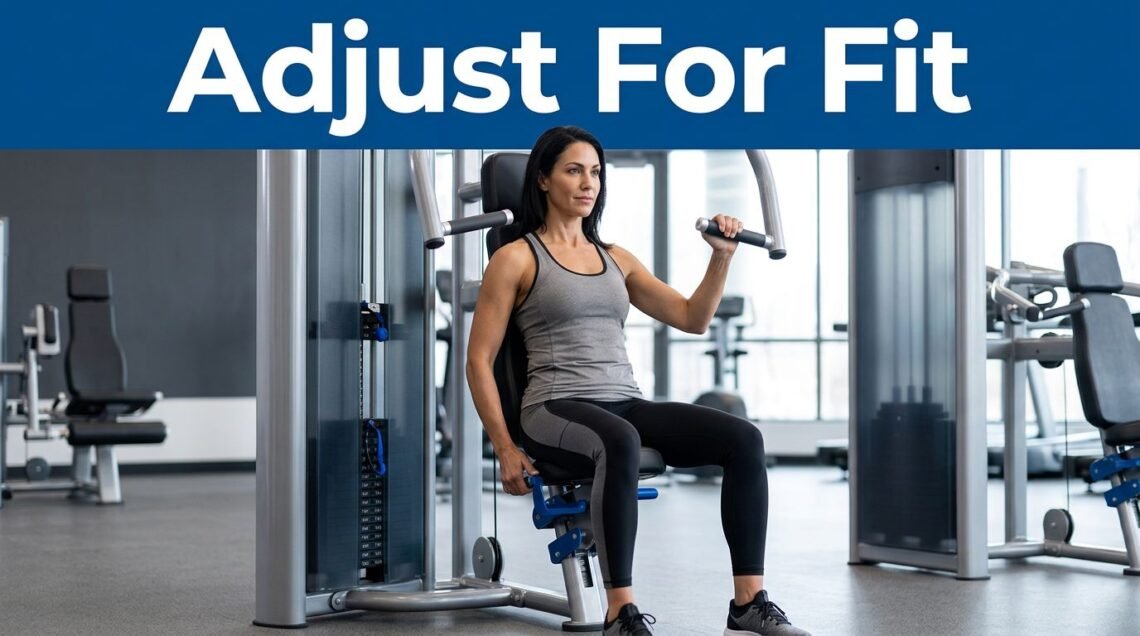
Look for the parts that hold you in place: the adjustable seat, backrest, thigh pad, platform, chest pad, or handles. These contact points vary with the muscle groups a station targets, so set them before selecting resistance.
Your hips should stay supported on seated machines. On a chest press or shoulder press, keep your back against the pad and your upper body stable rather than sliding forward to reach the handles. On leg-focused machines, place your feet securely on the foot platform before moving the lever.
For a practical starting point, Gold’s Gym recommends a seat position that lets your feet rest flat on the floor or platform in its beginner machine workout guide. Use the machine’s own instructions when they differ.
Match your joints to the pivot point
A weight machine usually has a visible pivot point, such as a round bolt or housing. Align the nearby joint with that point as the lever arm rotates. On pin-loaded models, secure the selector pin and confirm the weight stack is settled before changing settings.
For a leg extension, your knee should sit close to the machine’s knee-level pivot. For a chest press, set the seat so the handles meet around mid-chest, not near your ears or low ribs. On a seated row, the handles should be reachable without rounding your shoulders forward.
A shorter user may need to raise a machine seat or move it closer. A taller user may need a lower seat or more distance from the back pad. Those are common changes, not fixed rules. Recheck your position every time you use a different brand or model.
Set Up Upper Body Machines Without Straining
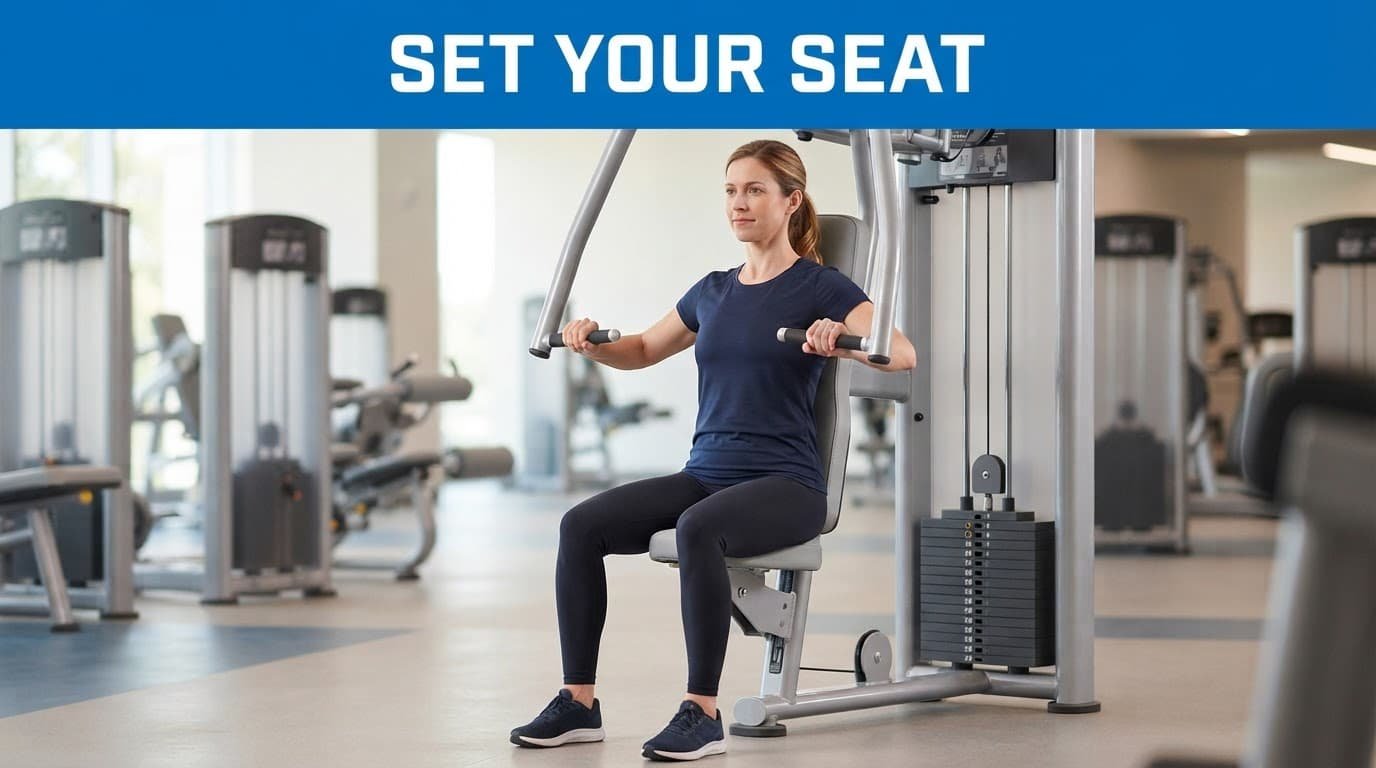
Upper body exercise machines often feel wrong because seat height changes the handle path. Before setting up a pressing or pulling station, settle your hips and ribs against the pads on the weight machine.
Chest press, row, and lat pulldown setup
On a chest press, use the adjustable seat so your hands start around chest level. Keep your wrists fairly straight, and don’t let your shoulders rise toward your ears. If the handles pull your shoulders too far back at the start, move the seat or backrest to reduce that stretch.
For a seated row, sit tall with your feet braced. Reach for the handles without locking your knees or rounding your lower back. Pull toward your lower ribs or torso while keeping your shoulders down.
On this station, adjust the thigh pad so it holds you in place without pressing painfully into your legs. Choose a bar that you can grasp while seated. Pull it down in front of you with control, rather than leaning far back to turn the movement into a swing.
Adjust a Cable Machine for Each Exercise
Cable stations have fewer fixed pads, so setup depends on the handle height and your stance. A pin-loaded station differs from a cable setup, so check the weight stack before changing its setting.
For a cable machine, clip the attachment on while the stack is at rest. Then move the pulley to a height that lets the cable follow the intended direction. Some cable stations use a weight stack, so begin with light tension on the cable.
For a cable row, set the pulley low enough that you can pull toward your torso. For a standing chest press, place it around chest height. A triceps pressdown usually begins with the pulley high.
Stand far enough away to stay balanced, and don’t let the cable pull you out of position. The Gym80 guide to weight-stack machines also advises aligning joints such as knees and elbows with the machine’s path and pivot where possible. Together, these settings keep upper body work comfortable in a full body workout.
Set Up Lower Body Exercise Machines for a Comfortable Range of Motion
Lower-body equipment can make you feel locked into one position. However, the machine seat height, backrest angle, and foot placement should let your hips and knees move comfortably.
Leg extension and leg curl adjustments on pin-loaded stations
For a leg extension, line your knee up with the machine pivot. The lower shin pad should rest above your ankles, not on your feet. Sit back fully, then choose a light test weight on this weight machine. Check that the weight stack is settled before you extend and lower.
On a seated leg curl, adjust the thigh pad so your legs stay down without being crushed. The moving roller should contact the lower part of your legs, above the heels. Test this weight machine with a light load. If the weight stack or pad movement feels uneven, stop and refine the setup or reduce the load.
Proper form on weight machines often looks less dramatic than people expect. A controlled path and stable posture matter more than forcing extra depth or speed.
Set up the incline leg press and safety handles safely
Begin by adjusting the backrest so your lower back and hips stay supported. On the incline leg press, place both feet flat on the foot platform, usually about shoulder-width apart. Keep your heels in contact with the foot platform, then check that your knees track in the same direction as your toes.
Unlike a squat rack, the supported sled changes how you manage depth and stability. Set the safety handles or stops before beginning. If you are unfamiliar with the lock system, ask a staff member to show you how it releases and re-engages. Never unlock a loaded sled until your feet are planted and you can control it.
Lower the platform only as far as you can without your hips rolling up or your back losing contact with the pad. Then press smoothly without snapping your knees straight. Adjusting gym equipment for height may mean changing the backrest angle or foot position, rather than copying another person’s depth.
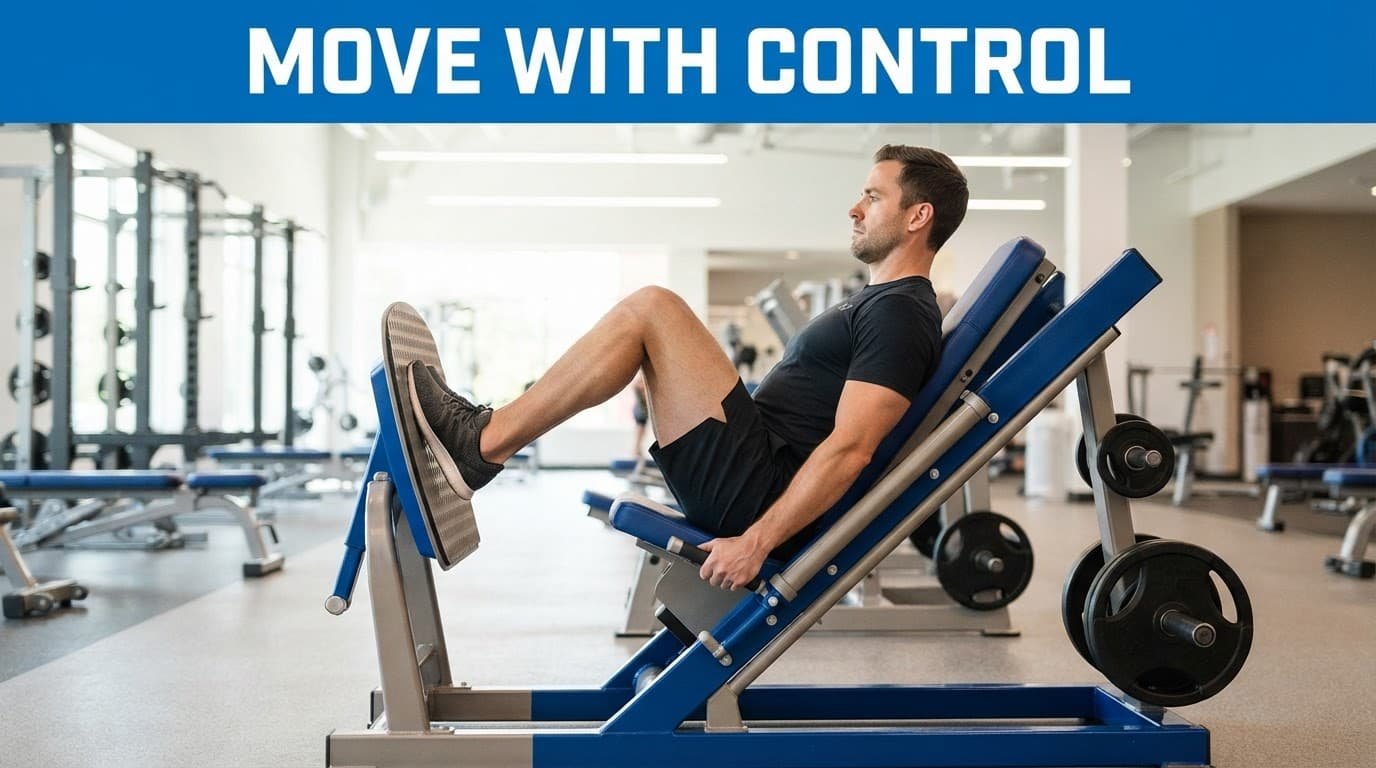
A shorter, controlled movement that keeps your hips, back, and joints comfortable is a better starting point than a deeper movement you can’t control.
Choose resistance after you test the setup
When starting resistance training, choose the weight pin last. Even a well-positioned weight machine can feel unsafe if the load is too heavy for a smooth first repetition.
Change the Weight Stack the Safe Way
Make changes only when the weight stack is fully at rest. Don’t change the pin while another person is using the machine or while the plates are raised.
For a pin-loaded station, insert the selector pin completely into one plate within the weight stack, then check that it sits securely. Before beginning the test set, confirm the weight stack remains settled.
Start with a conservative starting weight, and let control, not ego, guide the choice. Perform a few slow test repetitions, and check your posture, joint position, and breathing. Planet Fitness also places seat adjustment before weight selection in its beginner gym machine routine.
Increase resistance only when you can move through your available range without jerking, holding your breath, or shifting away from the pads. Let your fitness goals and repeatable technique guide the increase, not someone else’s numbers.
Know effort from pain
Normal exercise effort includes muscle fatigue, warmth, and a sense that the final repetitions require focus. You may feel your muscles working hard, but the motion should remain controlled.
Stop if you feel sharp pain, catching, tingling, numbness, or joint discomfort. Don’t force a painful movement or use excessive load, as either can increase your risk of injury. Reset the setup, choose less resistance, or skip that machine for the day.
If pain returns or you have an injury or health concern, speak with a qualified fitness professional or healthcare professional before continuing.
When a pin or adjustment knob gets stuck
A stuck pin on a weight machine often means a raised weight stack is under tension. Return the handle fully, let the weight stack settle, and try again. Never pull hard on a selector pin while the stack is suspended.
For a tight spring-loaded seat lever, take pressure off the seat first. Shift your body position, hold the lever firmly with your full hand, and move the seat in small increments. Avoid putting fingers near gaps, hinges, or moving rails.
If the weight stack remains raised or the adjustment still won’t release, leave the machine alone and tell gym staff or a personal trainer. Forcing a jammed mechanism can damage it or cause a sudden movement.
Feeling unsure in the weight room is common, especially when the equipment has unfamiliar gym equipment handles and levers. Visit during a quieter time, read the machine’s instruction panel if your gym permits it, and ask for a short orientation. Machine adjustments become routine after a few sessions.
Final Thoughts
Exercise machines should fit your body before they challenge your muscles. Set the seat, pads, handles, and pivot alignment first, then use a light test weight to check your movement.
The best setup supports proper form through a controlled, comfortable movement path. Repeat these fit checks between stations during a full body workout, and strength training will feel more confident and controlled.
FAQs
How do I know if the seat height is correct?
Sit with your back and hips supported, then reach for the handles or pads. Your joints should roughly align with the machine’s pivot, and you should move without shrugging, sliding, or straining to reach. Seat positions vary across exercise machines, so test each one with a light load before your set.
Should taller people always use the lowest seat setting?
No. Taller users often need more space, while shorter users may need a higher or closer setting. Each machine has a different design. Use joint alignment, stable contact points, and comfortable movement instead of relying on one setting.
What should I do if a machine still feels uncomfortable after adjustment?
Stop the set and reduce the weight. Check the instruction panel, try another adjustment point, or ask gym staff for help. If the machine continues to cause sharp pain or joint discomfort, choose another exercise.
Anytime Fitness Workouts for Beginners: A Simple 20-Minute Start