Your first gym visit shouldn’t feel like preparing for a camping trip. A few reliable gym bag essentials will cover your workout, comfort, and plans afterward without leaving you hauling a bulky bag across town.
Start with what you know you’ll do, then add only what your gym and schedule require. This gym bag checklist makes it easier to walk in prepared, even if you’re still learning the equipment and locker room routine.
This post may contain affiliate links. If you make a purchase through these links, I may earn a small commission at no extra cost to you.
Key Takeaways
- Start with a small core kit: comfortable workout clothes, suitable shoes, water, a towel, a lock if needed, and your gym access items.
- Match your bag to the workout on your schedule instead of packing for every possible activity or advanced training goal.
- Add shower supplies, clean clothes, a wet bag, snacks, or headphones only when your commute and routine make them useful.
- Choose a comfortable, organized bag and separate clean clothes from damp gear to make commuting and changing easier.
- Reset your bag after every session by removing wet items, washing your bottle, charging devices, and replacing anything you used.
Gym Bag Essentials for a Basic Workout
Before packing, check your gym’s rules and amenities. Some locations provide towels, lockers, shampoo, hair dryers, or filtered water. Others require you to bring a lock and every shower item. A quick look at the gym’s website or a call to the front desk prevents unnecessary purchases.
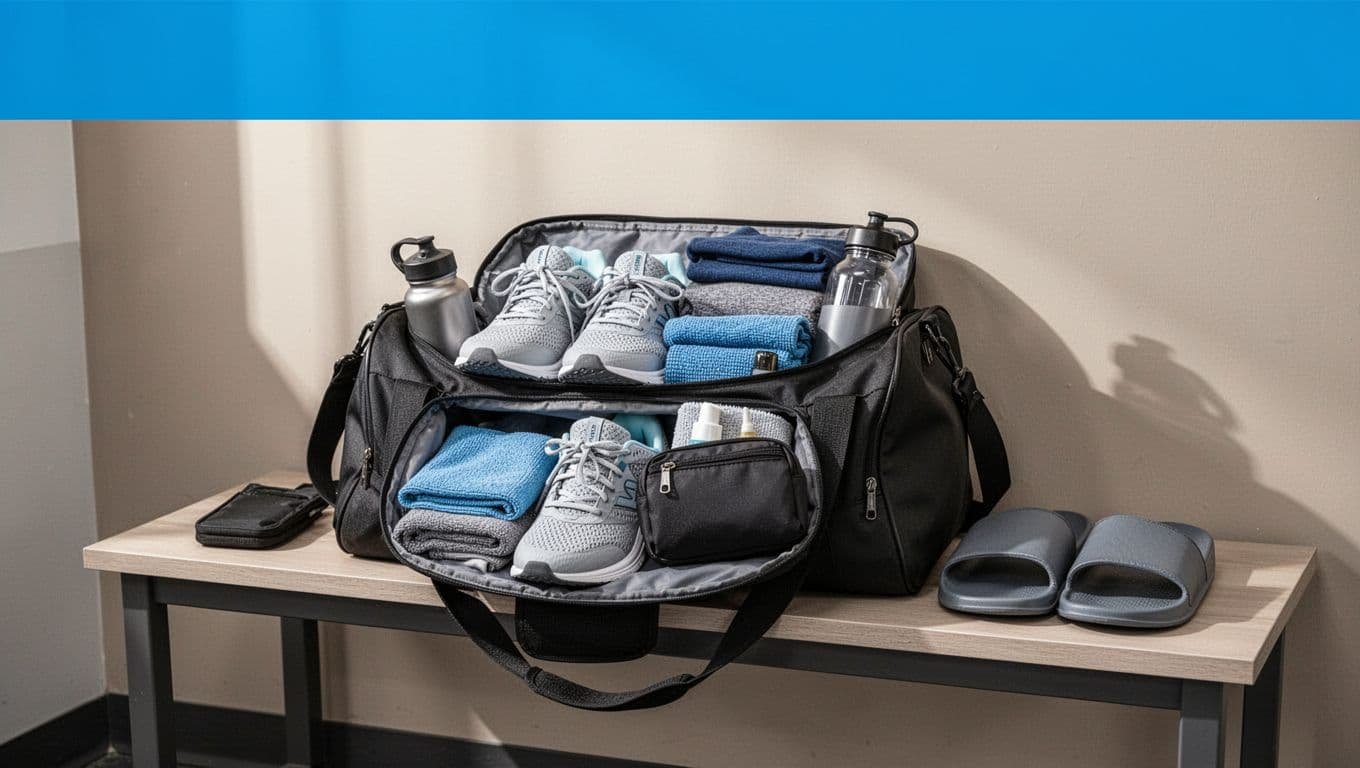
The small core kit
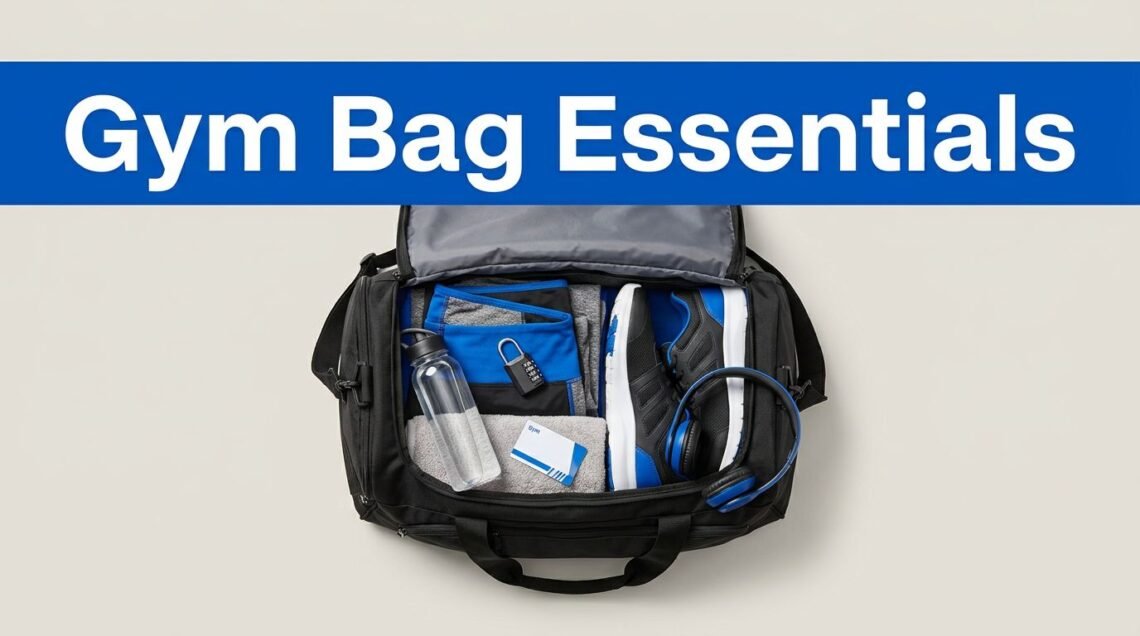
For a first strength or cardio session, pack these basics:
- A clean set of workout clothing that lets you move comfortably, such as a T-shirt or tank, shorts or leggings, athletic socks, and a supportive sports bra if you wear one.
- Workout shoes that suit your planned activity.
- A filled reusable water bottle.
- A small towel, especially if your gym doesn’t supply one.
- A padlock for day-use lockers, if needed.
- Your membership card, gym app access, ID, and any prescription items you need.
That is enough for most beginner workouts. You don’t need a lifting belt, protein powder, resistance bands, lifting straps, or premium headphones on day one. Bring the basics first, then notice what would make your own routine easier.
Choose workout shoes for the session
Your shoes affect comfort more than most gym accessories. Cushioned running shoes work well for treadmills, walking, cycling, and many beginner classes. For a workout built around squats, deadlifts, and machine strength work, flat-soled shoes can feel more grounded.
Avoid wearing outdoor shoes that are muddy or wet, since many gyms ask members to use clean indoor footwear. If you’re doing a simple mix of machines and cardio, one clean pair of trainers is completely fine. Save a separate shoe choice for later, once your workouts become more specific.
Match Your Bag to What You Plan to Do
Packing for every possible activity creates clutter. Instead, let your training plan decide what comes with you. Review the class description or your workout notes before leaving home.
For cardio, classes, or a first circuit
A basic cardio session needs little more than breathable clothes, running shoes, water, a towel, and perhaps wireless headphones. If you sweat heavily, add a spare top and an extra pair of socks. Hair ties can also be useful for people with longer hair.
For group classes, arrive with water and a towel even if equipment is supplied. Yoga and Pilates studios may have mat policies, so check before carrying your own. If the gym has limited floor space, bringing a large pile of personal gear can become a hassle.
The ACSM physical activity guidance describes the broad weekly activity targets for healthy adults. Your first few visits don’t need to match those targets perfectly. A consistent, manageable habit matters more than packing for an intense session you won’t enjoy.
For beginner strength training
If your plan includes free weights, bring a small notebook or use a phone note to record exercises, weight, and repetitions. This helps you remember what felt appropriate next time.
Lifting straps, chalk, a weightlifting belt, and resistance bands are optional. They can help with certain exercises, but new members can wait until they understand safe form, gym etiquette, and which movements actually need them. Most machines, benches, and dumbbells require no extra equipment.
Pack for the workout on your calendar, not the more advanced workout you might do months from now.
Post-Workout Shower and Hygiene Items That Earn Their Space
Showering at the gym can make an after-work session practical. It also supports personal hygiene, but adds a few items to your bag. A compact toiletry pouch keeps them from getting lost among clothes and cables.
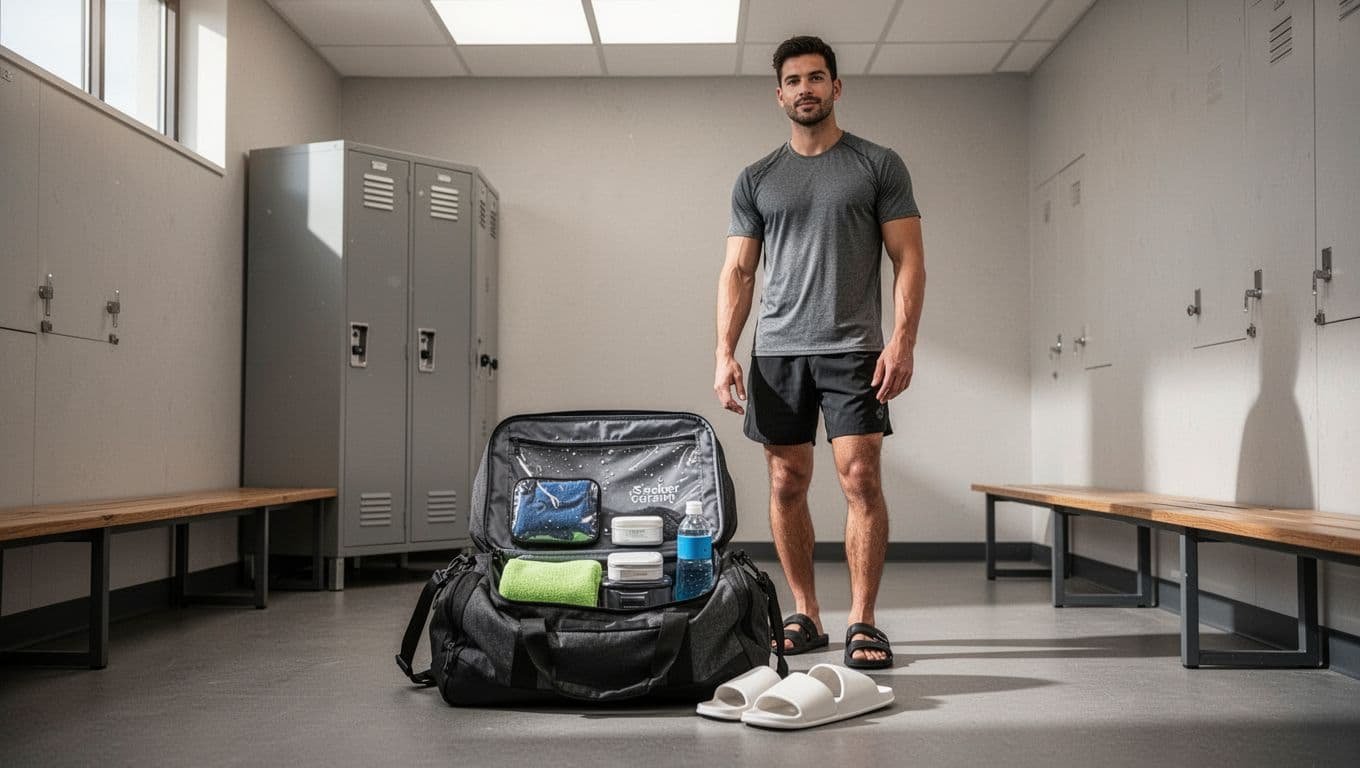
Keep a ready-to-go toiletry pouch
Choose travel-size toiletries you already use at home. A practical pouch can hold deodorant, body wash, shampoo, conditioner if needed, face wash, a toothbrush, toothpaste, and preferred hair-care items. Face wipes can be handy when you don’t have time for a full shower, although they don’t replace one when you want to rinse off.
Include shower slides or flip-flops if you plan to use shared showers. They also help on wet locker room floors. The guidance in this shower-shoe guidance explains why bare feet are a poor choice in communal changing areas.
A microfiber towel is worth keeping in the bag because it folds small and dries faster than a thick cotton bath towel. Still, bring a regular towel if that feels more comfortable and your commute allows it.
Separate clean clothes from damp gear
Use one waterproof or washable pouch for sweaty clothing, damp towels, and shower slides. Put your clean change of clothes in a different compartment or packing cube. A simple grocery bag works in a pinch, although a reusable wet bag creates less waste over time.
After getting home, remove damp items immediately. Open the bag and let it air out before the next use. A forgotten towel can make the whole bag smell stale, including clothes that never touched it.
For an office-to-gym day, pack your change of clothes in a wrinkle-resistant fold and keep shoes at the bottom of the bag. Place your toiletries near the zipper so you can grab them without unpacking everything at the locker.
Water, Food, and Technology Without the Clutter
Hydration and a post-workout snack can help you avoid the hungry, hurried feeling that often leads to skipping your evening plans. They don’t need a dedicated supplement setup.
Pack water and simple post-workout fuel
Fill your water bottle before you leave. A bottle with a secure lid is easier to carry on public transit or in a work tote. The American College of Sports Medicine’s fluid replacement position stand discusses matching fluid intake to exercise conditions and individual needs.
For a short, ordinary workout, water and your next planned meal may be all you need. If you have a long commute, pack healthy snacks such as fruit, yogurt kept cold, nuts, or a sandwich. A shaker bottle and protein powder are optional, not required. They can be convenient when you already use them, but food you enjoy and can safely carry works just as well.
Rinse a shaker bottle as soon as possible. Dried residue is difficult to clean and can make the bottle unpleasant to reuse.
Bring only the tech you will use
Wireless headphones can make cardio more enjoyable, but they’re optional gym accessories, not requirements. Keep them in a small case and charge them before leaving instead of carrying tangled cords. A fitness tracker may record your session, though your first goal can be as simple as learning the gym layout.
Take your phone, access pass, and headphones if they help. Leave expensive extras at home or locked away. If you use a locker, never assume it is secure without your own lock.
Pack for the Commute, Not Just the Gym
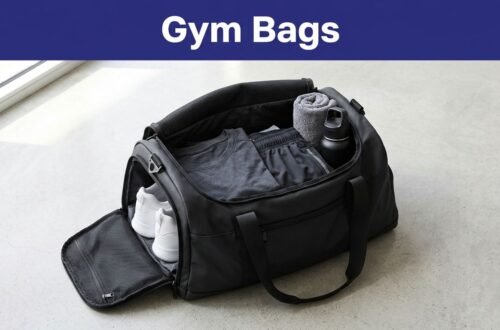
A bag that looks organized at home can become uncomfortable after a train ride, bike commute, or full workday. Choose a bag with padded shoulder straps, a wide opening, and separate areas for shoes or damp gear. The right size is one you can carry comfortably, not the biggest model on the shelf.
Reduce weight before you leave home
Wear your bulkiest items instead of packing them. That may mean commuting in your running shoes if they are clean and appropriate, or wearing a lighter jacket rather than stuffing it into the bag. Refillable bottles are useful, but carry them empty if you can refill at the gym and weight is a concern.
Keep duplicate toiletries in the gym pouch rather than moving them back and forth each day. A small deodorant, mini toothpaste, and spare hair ties add little weight but prevent last-minute packing mistakes.
Reset the bag after every session
A two-minute reset keeps your gym routine easy. Take out wet gear, wash your bottle, charge headphones, and replace anything you used. Then set out tomorrow’s workout clothes if you plan to train again.
This habit also shows you which items never leave the bag. Remove them after a few weeks. Your gym essentials for beginners should support your routine, not turn each workout into a packing project.
Frequently Asked Questions
What should I pack in my gym bag for the first week?
Pack comfortable workout clothes, suitable shoes, a reusable water bottle, a small towel, and a lock if your gym requires one. Bring your membership card or app access, ID, and any prescription items you need.
Do I need special shoes for the gym?
Not necessarily. One clean pair of trainers works well for a mix of beginner cardio, machines, and classes, while flat-soled shoes may feel more stable for strength exercises.
What should I bring if I plan to shower at the gym?
Pack travel-size toiletries, shower slides or flip-flops, a towel, and clean clothes. A separate waterproof or washable pouch helps keep damp towels and sweaty clothing away from the rest of your bag.
Do I need protein powder or other workout accessories?
No. For a short, ordinary workout, water and your next planned meal may be enough, and items such as protein powder, lifting straps, belts, and resistance bands are optional.
How do I keep my gym bag from smelling stale?
Remove damp clothes and towels as soon as you get home, wash your water bottle, and leave the bag open to air out. A reusable wet bag can also keep sweaty gear contained until you can wash it.
A Bag That Makes Showing Up Easier
The most useful gym bag essentials are the items that remove friction between your day and your workout. Clean clothes, suitable shoes, water, a towel, and a secure place for your belongings cover the basics.
Add shower supplies, snacks, or training accessories only when your schedule calls for them. A light, organized bag makes it easier to keep the promise you made to yourself: show up, move, and return again.
Anytime Fitness Workouts for Beginners: A Simple 20-Minute Start