Your first home session can include lifting weights without leaving you sore for days. It needs to feel safe enough that you’ll do it again next week.
A sustainable plan after 40 starts with manageable resistance, repeatable movements, and room to recover. This beginner weightlifting plan builds practical strength for daily life without requiring a gym membership or making weight management the goal.
Start where you are, keep the pace calm, and let good form lead every session.
This post may contain affiliate links. If you make a purchase through these links, I may earn a small commission at no extra cost to you.
Key Takeaways
- Start with two nonconsecutive weekly sessions, manageable resistance, and controlled movements that leave a few good repetitions in reserve.
- Use a simple home setup and prioritize form, support, and a comfortable range of motion over heavier weights or faster progress.
- Progress gradually by adding repetitions, a small amount of weight, an extra set, or better control—changing only one variable at a time.
- Adjust training around sleep, perimenopause symptoms, soreness, and joint comfort; stop for sharp or escalating pain and seek professional guidance when needed.
- Support strength and recovery with adequate protein, balanced meals, regular fluids, and at least 48 hours between hard sessions for the same muscle groups.
Why Strength Work After 40 Matters
Strength work becomes more useful with age because muscle and bone respond to regular loading. Carrying groceries, getting up from the floor, lifting a suitcase, and climbing stairs all require strength. Training those abilities gives you a clear reason to keep showing up.
Resistance exercise can help maintain muscle mass and support bone density when combined with other healthy habits. Harvard Health’s overview of strength training explains that it can help slow bone loss and may build bone. Research on resistance exercise and bone health also supports the value of progressive loading, although the right approach varies by person and health status. Together, these outcomes may support practical health benefits in daily movement.
A beginner plan should feel almost too easy during the first week. That restraint gives your joints, tendons, muscles, and confidence time to adapt. Age alone doesn’t remove the value of gradual resistance training for older women, and you don’t need to train to exhaustion to make progress.
Check in with a healthcare professional when needed
Speak with an appropriate healthcare professional before starting if you have a medical condition, recent surgery, uncontrolled blood pressure, heart concerns, osteoporosis, persistent pain, or an injury. Get individualized guidance if you have pelvic-floor symptoms, such as leaking, heaviness, or pelvic pain.
A physical therapist, pelvic health specialist, or qualified personal trainer can modify exercises, teach proper form, and support injury prevention. If osteoporosis has been diagnosed, ask your clinician which movements and ranges of motion are appropriate before following a general workout plan.
Sharp pain, numbness, dizziness, chest pain, or symptoms that worsen after exercise are signals to stop and seek medical advice. Muscle effort is normal. Joint pain is not a challenge to push through.
Build a Small Home Setup, Not a Crowded Gym Cart
You can begin with a clear floor space, a stable chair, and a secure grip for safer lifting weights at home. Dumbbells make it easy to add resistance gradually. Resistance bands provide adjustable resistance for rows, presses, and lower-body exercises, while bodyweight moves suit lower-energy days.
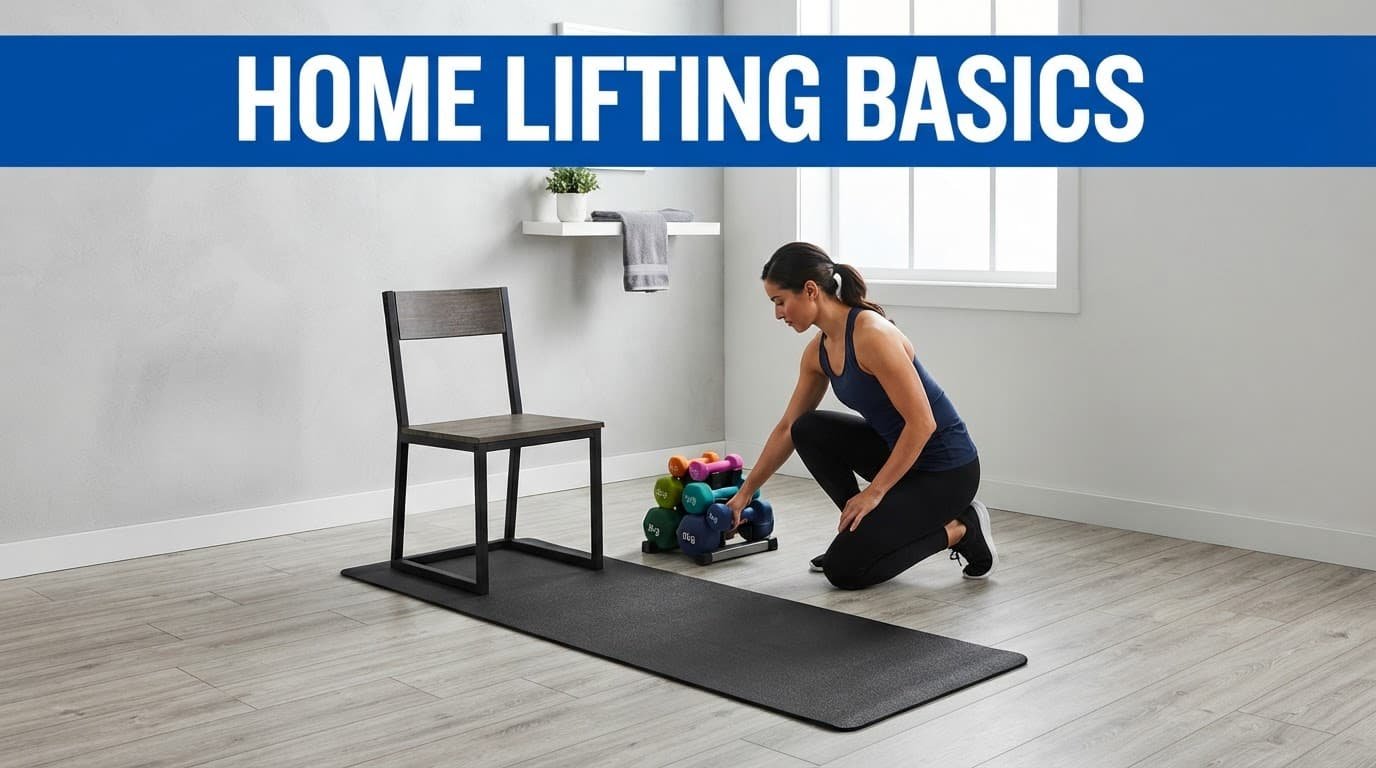
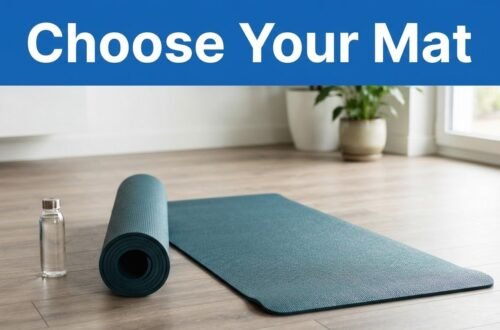
A sturdy chair is useful for squat depth, balance, and incline push-ups. A mat makes floor exercises more comfortable, but carpet or a folded towel can work. If you don’t have dumbbells yet, use sealed water bottles or a backpack packed securely with books. Keep the load light and close to your body, check that nothing shifts, and inspect handles before each session.
A simple starter kit includes:
- A pair of light-to-moderate dumbbells, ideally with a few weight options or an adjustable set.
- A long band or loop band for rows, presses, and lower-body work.
- A stable chair without wheels, plus a mat or folded towel.
- Supportive shoes or a stable barefoot surface, depending on what feels secure for you.
You can add equipment later. The first priority is learning movements you can control. A sustainable home strength plan for beginner weightlifting uses a small setup and repeatable exercises, not an ever-growing gear collection.
Choose a Weight You Can Control
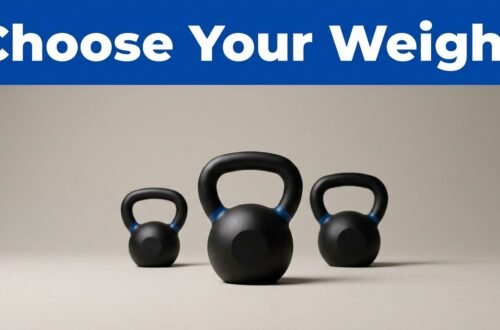
Start lighter than you think you need because beginner weightlifting is a skill-based practice, not a test of maximum strength. Choose a dumbbell weight that feels challenging near the end, yet still allows smooth movement and normal breathing. Your last repetition should look much like your first.
Use this simple guide when selecting a load:
| What you notice | What it means | What to do |
|---|---|---|
| You could do 2 to 4 more good repetitions. | The weight is appropriate. | Keep it for the next set. |
| Your back rounds, shoulders shrug, or knees collapse inward. | The load or range of motion is too demanding. | Reduce weight, shorten the range, or use support. |
| You finish every set easily and could do many more reps. | Your muscles need more challenge. | Add 1 to 2 reps first, then increase weight later. |
For most moves, begin with 6 to 10 repetitions. Slow the lowering phase while lifting weights, and pause when you need to reset. There is no prize for rushing a set.
A challenging set is not one that looks dramatic. It is one where you can maintain alignment, control the weight, and finish with a few repetitions still available.
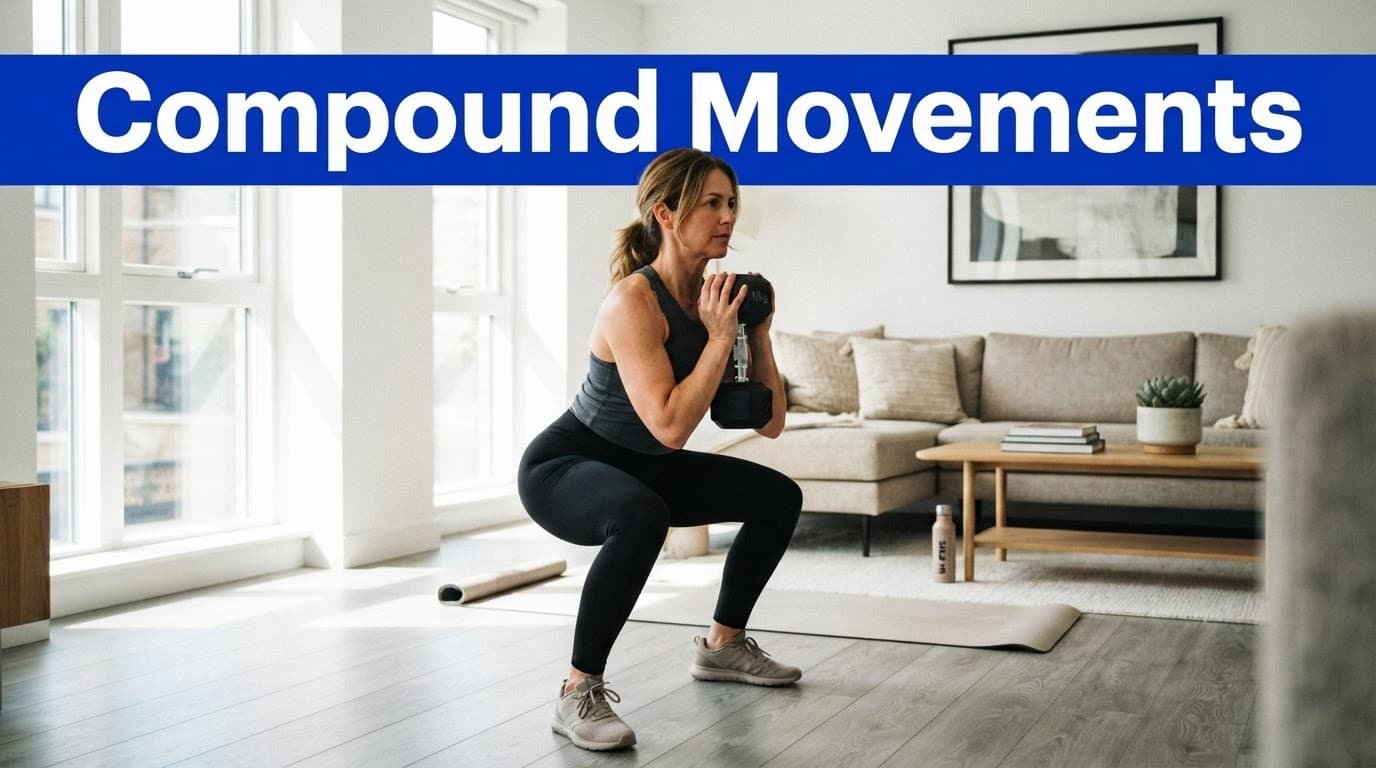
Compound movements are especially helpful because they train several muscle groups at once. Squats involve the legs, hips, and trunk. Rows train the upper back and arms while teaching shoulder control. A hip hinge strengthens the back of the legs and hips, which helps with everyday lifting.
A research review on resistance exercise and bone health also shows why progressive loading belongs in a wider plan for healthy aging. You don’t need explosive lifts or heavy barbells to begin. Controlled resistance is enough to build a solid base.
Your Four-Week Beginner Strength Training Plan
A repeatable workout schedule for strength training women over 40 is more useful than one that feels heroic for three days. Use nonconsecutive sessions, such as Monday and Thursday, so your body can recover while you’re new to lifting weights.
This flexible beginner weightlifting workout program keeps each session to about 25 to 35 minutes. Record the weight and repetitions you complete in a notebook or phone. That record makes gradual progress easier to see.
| Week | Sessions | Sets per exercise | Focus |
|---|---|---|---|
| Week 1 | 2 | 1 set | Learn the movements and leave plenty in reserve. |
| Week 2 | 2 | 2 sets if you feel recovered | Practice steady form and controlled tempo. |
| Week 3 | 2 or 3 | 2 sets | Add a session only if sleep, soreness, and energy feel manageable. |
| Week 4 | 2 or 3 | 2 sets | Add repetitions or a small amount of weight to one or two moves. |
Warm up for five minutes
Begin each session with easy movement. Walk around the room, march in place, or use stairs at a comfortable pace for two minutes. Then do a few shoulder rolls, gentle hip circles, bodyweight squats to a chair, and slow arm reaches.
The warm-up should increase body temperature and help you notice stiffness. It should not tire you out. If a joint feels restricted, use a smaller range of motion during your workout and reassess after a few sessions.
Workout A: Squat, push, pull, and brace
Complete one set of each exercise in Week 1. Rest for 45 to 90 seconds between moves. In later weeks, repeat the circuit for a second round.
| Exercise | Repetitions | Form focus |
|---|---|---|
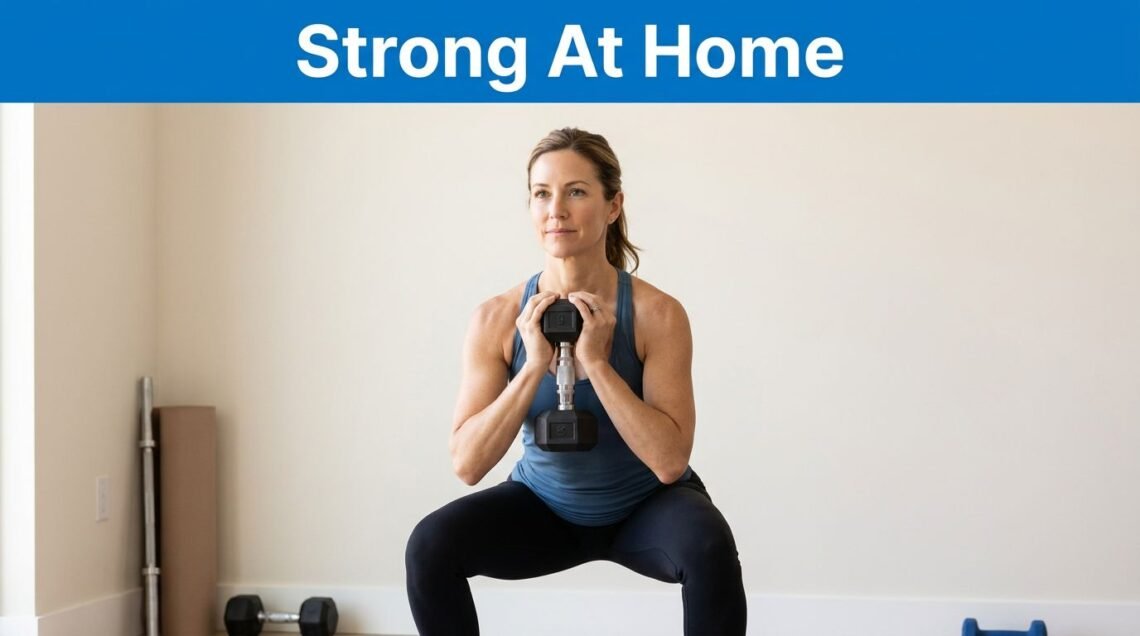
| Chair squat or goblet squat | 8 to 10 | Sit hips back, keep feet grounded, and stand by pressing through the floor. |
| Incline push-up on a chair or counter | 6 to 10 | Keep your body in a straight line and lower with control. |
| One-arm dumbbell row | 8 to 10 per side | Support one hand on the chair and pull the elbow toward your hip. |
| Glute bridge | 10 to 12 | Press through your heels and avoid arching your low back. |
| Dead bug | 6 to 8 per side | Move slowly and keep your ribs from flaring upward. |
Workout B: Hinge, press, carry, and balance
Do this workout on your next session. If you train three days in Week 3 or 4, alternate between Workout A and Workout B.
| Exercise | Repetitions | Form focus |
|---|---|---|
| Dumbbell Romanian deadlift | 8 to 10 | Push hips back while keeping the weights close to your legs. |
| Supported split squat | 6 to 8 per side | Hold the chair lightly and use a short range at first. |
| Dumbbell floor press | 8 to 10 | Keep elbows at a comfortable angle and control the descent. |
| Bent-over dumbbell row | 8 to 10 | Brace your midsection and avoid rounding your back. |
| Suitcase carry or march in place | 20 to 30 seconds per side | Stand tall and resist leaning toward the weight. |
Choose a range of motion that feels stable. For example, a higher chair squat is a smart place to begin if getting low feels uncomfortable. You can gradually lower the chair height or hold a light dumbbell as your strength improves.
Harvard’s guide to bone-supporting exercise includes both resistance and weight-bearing activities. Easy walks and mobility work can provide active recovery between sessions; stair climbing and dancing can fit well alongside lifting, especially on days you want gentle movement.
Progress without rushing the process
Progressive overload means asking your muscles to do slightly more over time. That may mean more repetitions, a small load increase, an additional set, or better control. It does not mean increasing weight every workout.
First, add repetitions until you reach the top of the listed range with clean form. Next, use the smallest weight increase available, often 2.5 to 5 pounds total. After that, return to the lower end of the repetition range and build up again.
Change only one variable at a time. A heavier dumbbell, more reps, an extra set, or a deeper range of motion all count as progress. Strength gains often show up first as better control and confidence.
Recovery, Perimenopause, and Joint Comfort
Perimenopause symptoms may include sleep disruption, temperature changes, and fluctuating energy. These shifts don’t make strength training less useful, but they can make flexible programming more practical.
Two weekly sessions are enough to start. If a rough night of sleep or a hot-flash-heavy week leaves you drained, keep the session shorter, use lighter weights, or take an active recovery day. A walk, gentle mobility work, or easy cycling can help you stay in the habit without adding more stress.
Give major muscle groups at least 48 hours before repeating a hard session to support muscle recovery. Mild muscle soreness often fades within a day or two. However, joint pain, pain that changes your movement, or soreness that intensifies each day calls for rest and, if needed, professional assessment.
Harvard Health’s discussion of weight-bearing exercise describes its role in slowing bone loss. The National Institute of Arthritis and Musculoskeletal and Skin Diseases also notes that regular exercise can help maintain healthy bone mass and support healthy body composition.
Joint comfort improves when you use a controlled range, lower the weight when needed, and avoid sudden jumps in volume. After poor sleep or during a difficult symptom week, a shorter session or lighter load can make lifting weights more manageable. A supported split squat may be more appropriate than an unsupported lunge at first. Modify the movement, rather than abandoning strength work altogether.
Fuel Muscle and Recovery With Food
Protein intake matters because amino acids help repair tissue and support lean muscle after training. A practical target for active midlife women is often 1.2 to 1.6 grams of protein per kilogram of body weight per day.
For a 150-pound person, that works out to roughly 82 to 109 grams daily. Spread it across meals instead of trying to make up the total at dinner. Three meals with 25 to 35 grams of protein each is a simple starting pattern.
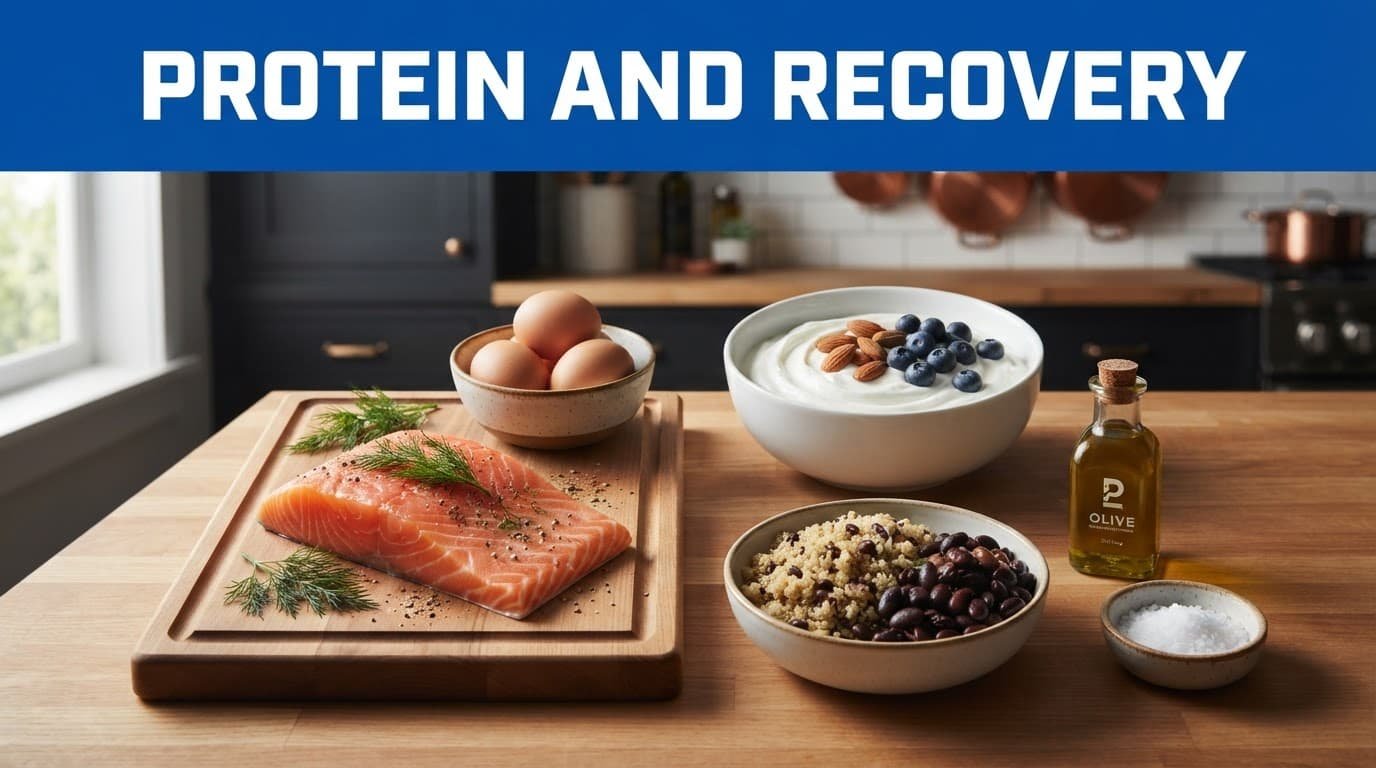
Greek yogurt, cottage cheese, eggs, fish, chicken, tofu, tempeh, lentils, beans, and protein-fortified soy milk can all help meet that target. Pair protein with carbohydrates, fruit, vegetables, and satisfying fats. Alongside regular training, adequate protein and this balanced pattern can support individual body composition goals. A balanced meal supports training better than a restrictive food rule.
Drink water regularly, then have extra fluids around workouts if you sweat heavily or exercise in heat. If you have kidney disease or another condition that affects dietary protein, ask your clinician or registered dietitian for a personal target.
Creatine monohydrate is the most studied creatine form. Some adults use 3 to 5 grams daily to support strength training, but it is optional. It can cause a small increase in water stored in muscle, and people with kidney disease or medication concerns should ask a clinician first.
Magnesium glycinate is sometimes marketed for sleep and recovery, yet it doesn’t replace adequate food, protein, or rest. Food sources such as nuts, beans, leafy greens, and whole grains provide magnesium. Discuss supplements with a healthcare professional if you have ongoing sleep problems, digestive symptoms, or kidney concerns.
Common Questions Before Your First Session
Can older women start beginner weightlifting?
Yes. Muscle can respond to resistance training throughout midlife and beyond. Hormonal changes may affect recovery and body composition, so progress can feel less predictable. Consistent practice, sufficient food, recovery, and gradual progression still give your body a reason to adapt.
How many days per week should I lift weights?
Start with two nonconsecutive days. That schedule gives you enough practice without making recovery difficult. Add a third day only when you finish the first two sessions with stable form and feel reasonably recovered.
Should I train through joint pain?
No. Stop any movement that causes sharp, pinching, or escalating pain. Try a smaller range of motion, more support, less weight, or a different exercise after symptoms settle. Persistent symptoms deserve an assessment from a qualified healthcare professional.
Build Strength One Repeat at a Time
A good first month of strength training is measured by consistency, not intensity. Two well-executed sessions each week can become a fitness routine that fits daily life. They build skill and create a reliable foundation.
Keep your weights manageable, protect recovery time, and progress in small steps. A manageable exercise routine is easier to maintain. Strength that fits your life is strength you can keep.Anytime Fitness Workouts for Beginners: A Simple 20-Minute Start