Your first session should leave you more confident than wrecked. Weightlifting for beginners works when the load feels manageable, each rep stays controlled, and you have enough energy to return.
Many people quit after copying an advanced workout or chasing a number on the bar. Learn a handful of movements, keep the plan short, and let technique set the pace.
That approach turns a noisy gym floor into a routine you can repeat.
This post may contain affiliate links. If you make a purchase through these links, I may earn a small commission at no extra cost to you.
Key Takeaways
- Start with a five- to 10-minute warm-up, four to six basic movements, and manageable loads that let you maintain control.
- Train the squat, hinge, push, pull, and core patterns twice a week, using non-consecutive sessions and enough rest between sets.
- Choose a starting weight that leaves about two to four good repetitions in reserve, and stop when your posture or technique changes.
- Build progress slowly over your first 90 days by adding repetitions, sets, tempo, or small amounts of weight only after clean form feels consistent.
- Sharp pain, joint pain, dizziness, or worsening discomfort are reasons to stop and seek guidance from a qualified healthcare professional.
Weightlifting for beginners starts with a simple plan
A gym can feel overwhelming because every machine promises a different result. Your first few weeks of weight training need only a warm-up, four to six basic movements, and enough rest between sessions. Include a few compound exercises, but don’t make every movement compound.
Start each visit with five to 10 minutes of easy movement to warm up. Walk on a treadmill, cycle, or use an elliptical at a pace that raises your temperature without leaving you breathless. The NHS warm-up routine recommends warming up for at least six minutes. Then practice the first exercise with no load or a very light load.
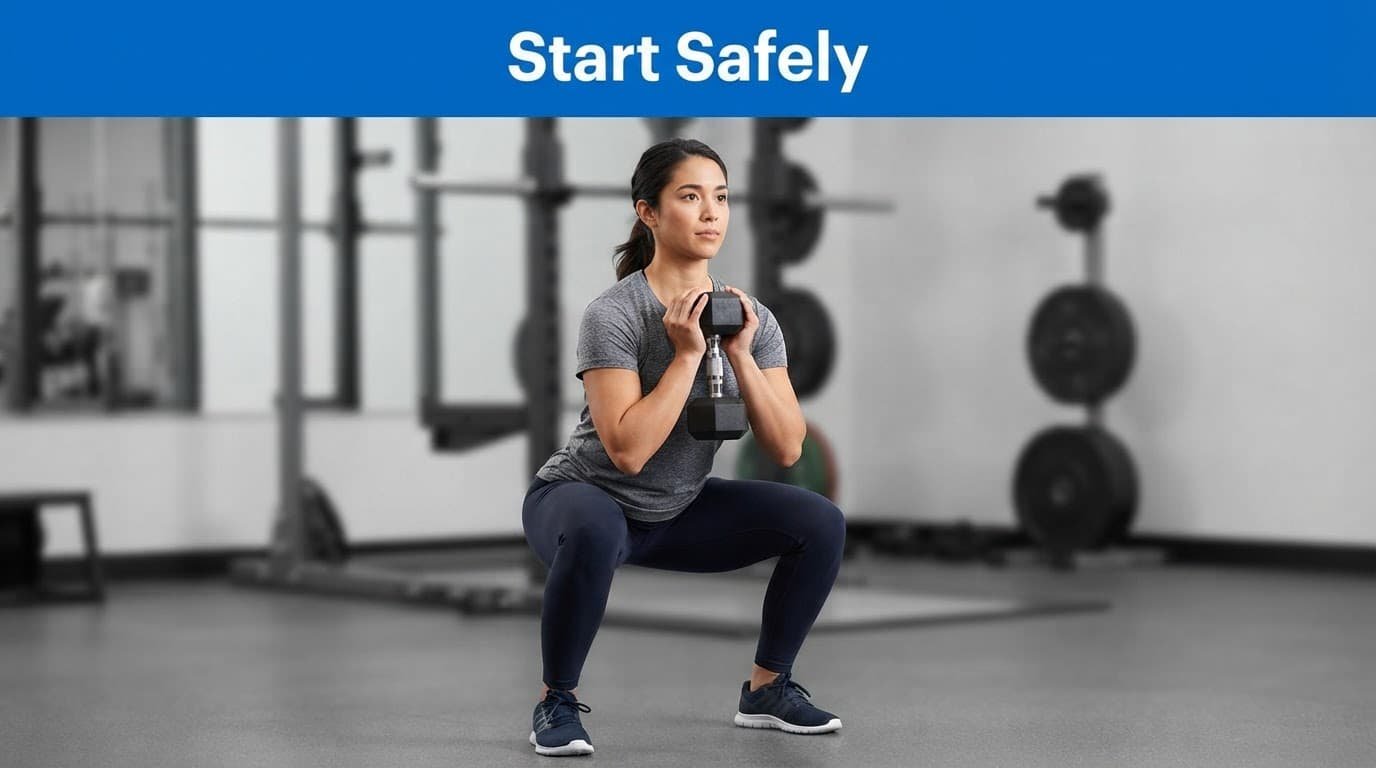
Machines and free weights both have a place; some guide movement along a predictable path and offer built-in safety features. This can make your first session less intimidating, though machines aren’t automatically safer for every user. Dumbbells require more balance and coordination, but they help you learn how your body moves under resistance.
Choose supportive shoes with good traction. Bring water, a small towel, and a notes app or paper log. You don’t need gloves, lifting belts, or specialized shoes to begin.
If you train in a home gym, body weight movements and resistance bands can build strength when the final repetitions become challenging. However, progression eventually requires more resistance or a harder variation. Adjustable dumbbells, sturdier bands, or slower exercise tempos can provide that progression.
Pick a starting weight with an effort test
The right starting weight is lighter than most beginners expect. That gives you room to learn proper form before fatigue affects your posture.
For each new exercise, do a practice set of eight repetitions. Pick a load that feels steady and controlled, with about two to four good repetitions still possible. Coaches often call this “reps in reserve.” You should finish knowing you could do a few more, not grind through the last rep.
For example, use an unloaded bar, light dumbbells, or the lowest sensible machine setting first. If eight repetitions feel like a warm-up, make a small increase for the next set. If your knees cave in, your back rounds, or you need momentum, reduce the weight.
If posture changes before the set feels hard, the weight is already too heavy for that exercise today.
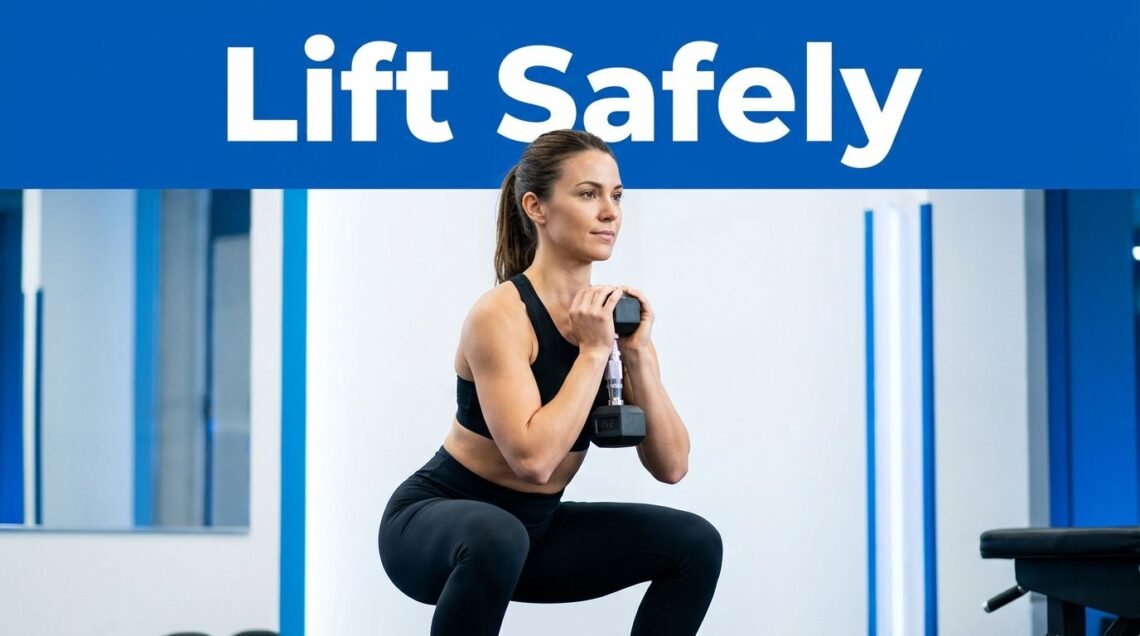
Free weights are not automatically better than machines. A leg press, chest press, seated row, and lat pulldown help you train major muscle groups with a predictable setup. Meanwhile, a goblet squat and dumbbell chest press teach useful control. Use the equipment that lets you move well today.
Keep your first working sets in the eight to 12 repetition range. Rest about one minute after easier exercises and up to three minutes after a squat, deadlift variation, or pressing movement that leaves you winded. Resting is part of the workout, because rushed sets often turn good form into sloppy reps.
A two-day beginner weightlifting routine
Two full-body sessions each week provide a practical full body workout and a simple form of resistance training. The CDC’s adult activity guidance recommends muscle-strengthening activity on at least two days a week.
The squat, hinge, push, and pull patterns are compound exercises that cover most of the session. Squats and hinges develop lower body strength, while presses and rows build upper body strength.
Schedule non-consecutive sessions, such as Monday and Thursday. This gives your muscles and joints time to recover while you build the habit. The routine below takes about 35 to 50 minutes after your warm-up.
| Movement | Beginner gym option | Starting work |
|---|---|---|
| Squat pattern | Goblet squat, leg press, or smith machine squat | 1-2 sets of 8-12 |
| Romanian deadlifts | (dumbbell variation) | 1-2 sets of 8-12 |
| Horizontal push | Machine chest press or dumbbell press | 1-2 sets of 8-12 |
| Horizontal pull | Seated cable row | 1-2 sets of 8-12 |
| Vertical push | Seated shoulder press machine | 1-2 sets of 8-12 |
| Core stability | Dead bug or plank | 1-2 controlled sets |
Use one exercise from each row, moving through this simple weight training program at a calm pace. Repeating the same structure creates a weight lifting routine you can follow each week. If six exercises feel like too much, begin with the squat pattern, hinge, chest press, cable row, and core work. Choose dumbbells or other free weights only when you can maintain control, and add shoulder pressing later.
After the rows, you can add one set of bicep curls for direct arm work. Keep this optional, and don’t let it replace the core full-body movements.
If you train in a home gym, substitute resistance bands or a body weight variation for selected machine movements.
Avoid training every set to failure. Save the all-out efforts for a future stage, when your technique is dependable and you understand your recovery. For now, complete clean repetitions and stop the set when control fades.
Mayo Clinic advises against working the same muscle groups on consecutive days in its guide to proper weight-training technique. Sore muscles can be normal after a new workout. Sharp pain, joint pain, or worsening discomfort are not signals to push harder.
Use form and breathing to protect your joints
Proper form is not one frozen posture. It is your ability to keep the load controlled through a comfortable range of motion, which can help prevent injuries. Start every repetition slowly enough that you can notice what your body is doing.
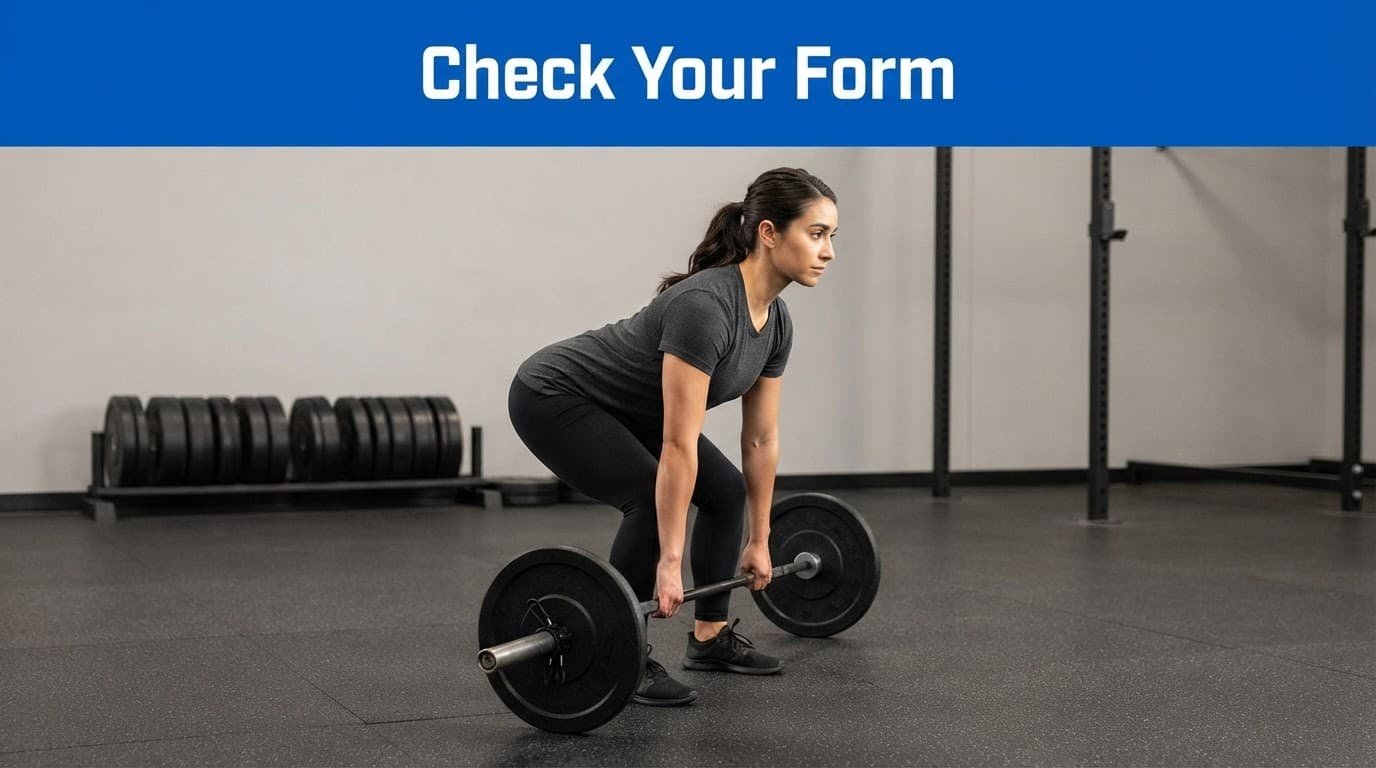
Use these simple cues during your first strength training exercises:
- Keep your whole foot on the floor during squats and leg presses. Your knees should travel in the same direction as your toes.
- For a hinge or deadlift, keep the weight close to your legs and move your hips back instead of reaching the weight toward the floor.
- During pressing movements, keep your ribs from flaring and avoid forcing your shoulders into an uncomfortable range.
- On rows and pulldowns, pull with a controlled motion instead of swinging your torso backward.
Breathe continuously. In most lifts, inhale as you lower or return the weight, then exhale as you stand, press, or pull through the hardest part. Don’t hold your breath for a long effort or rush through repetitions to finish sooner.
Use the rack’s safety features, including properly set stops, when lifting with a barbell. Ask for a spotter before attempting a challenging barbell bench press. If you use a smith machine, learn how its locking mechanism and stops work before adding load. The American Heart Association’s strength-training guidance also supports regular resistance training, including weight training, as part of an active routine.
A written plan cannot assess an old shoulder injury, balance issue, or limited range of motion. If you have an injury, a medical condition, chest pain, dizziness, or concerns about exercise, speak with a qualified healthcare professional first. A personal trainer or physical therapist can also check your technique in person.
Progress without rushing your first 90 days
Progressive overload means asking your body to do slightly more work after it has adapted. It does not mean adding weight at every workout. Form comes first, then progression through repetitions, sets, tempo, or load. At home, sturdier resistance bands, slower tempos, pauses, or more demanding body weight exercises can increase the challenge without extra equipment.
During the first four weeks, use the same exercises and learn the setup. Write down the weight, repetitions, sets, and any discomfort. When you can complete every set at the top of your repetition range with clean form, add the smallest available weight increase next time.
For example, if you complete two sets of 12 controlled goblet squats, move up one dumbbell size at your next session. If the heavier dumbbell changes your depth or balance, return to the previous weight and build more repetitions there.
Weeks five through eight may be a good time to add a second set to movements that feel comfortable. In the final month, keep progressing one variable at a time. Add weight, an extra repetition, or a set, but don’t change all three at once.
Track more than the scale. Long-term changes in muscle mass matter, while upper body strength and lower body strength offer more immediate measures. Better posture, smoother movement, improved energy, and a heavier working load are meaningful signs that weightlifting for beginners is working. Consistency matters more than a perfect week.
Frequently Asked Questions
How often should beginners lift weights?
Two full-body sessions per week are enough to build a consistent starting routine. Schedule them on non-consecutive days, such as Monday and Thursday, so your muscles and joints have time to recover.
How much weight should I lift as a beginner?
Choose a load that allows you to complete about eight controlled repetitions with two to four good repetitions still possible. If your back rounds, your knees cave in, or you need momentum, reduce the weight.
Should beginners use machines or free weights?
Both machines and free weights can be useful for beginners. Machines provide a predictable setup, while dumbbells and other free weights help develop balance and coordination, so choose the option that lets you move well and maintain control.
How should I progress my weightlifting routine?
Keep the same exercises during your first few weeks and track your repetitions, sets, weight, and discomfort. When you can complete every set at the top of your repetition range with clean form, add the smallest available increase or progress through an extra repetition or set.
Build strength you can repeat
The safest approach to weightlifting for beginners is also the most sustainable one. Start with manageable loads, train twice a week, rest between sessions, and treat every clean repetition as progress.
Your first 90 days are for building skill and trust in your body. Add progressive overload later, increasing the load as your movement skill and recovery improve. This steady approach builds strength you can sustain throughout your fitness journey.Anytime Fitness Workouts for Beginners: A Simple 20-Minute Start